CRISPR gene editing is a modern technology that allows scientists to make targeted changes to DNA. It is being studied and used to treat certain genetic diseases. Two important examples are Casgevy, a treatment for sickle cell disease and beta-thalassemia, and a personalized gene-editing treatment developed for an infant with a rare condition called CPS1 deficiency.
These developments show how gene editing may help treat inherited disorders. However, the technology also has risks and limitations, and researchers still need to study its long-term effects.

What Is CRISPR Gene Editing?
CRISPR gene editing is a method used to change specific parts of DNA. It is based on a natural defense system found in bacteria. Scientists adapted this system to target selected areas of genetic material.
CRISPR-Cas9 is one of the best-known gene-editing tools. It uses a guide RNA to direct the Cas9 enzyme to a chosen DNA sequence. Cas9 then cuts the DNA at that location.
During the repair process, scientists can use this method to disrupt or change a selected gene. This makes CRISPR useful for studying genes and developing treatments for some genetic conditions.
How Does CRISPR-Cas9 Work?
CRISPR-Cas9 generally involves three main steps:
- Targeting: Scientists design guide RNA to recognize a specific DNA sequence.
- Cutting: The guide RNA directs the Cas9 enzyme to the target, where it cuts the DNA.
- DNA repair: The cell repairs the cut. This process can be used to disrupt a gene or make a planned change.
The exact result depends on the target and the editing method. Researchers must also check for unwanted changes at other locations in the DNA.
CRISPR Treatment for Sickle Cell Disease
One major medical use of CRISPR is Casgevy, also known as exagamglogene autotemcel. It is a gene-editing treatment developed for certain patients with sickle cell disease.
Sickle cell disease affects hemoglobin, the protein in red blood cells that carries oxygen. The condition can cause red blood cells to become rigid and sickle-shaped, leading to health problems.
Casgevy uses CRISPR-Cas9 to edit a control region of the BCL11A gene in a patient’s blood stem cells. This increases the production of fetal hemoglobin, which can help red blood cells carry oxygen.
The treatment does not directly correct the genetic mutation responsible for sickle cell disease. Instead, it changes how hemoglobin is produced.
How Is Casgevy Given?
Casgevy is an ex vivo treatment, meaning the cells are edited outside the body.
The process includes:
- Collecting blood stem cells from the patient.
- Using CRISPR-Cas9 to edit the cells in a laboratory.
- Giving the patient high-dose chemotherapy to prepare the body.
- Returning the edited stem cells to the patient.
The treatment requires specialist medical care and careful monitoring.
The FDA initially approved Casgevy for eligible patients with sickle cell disease and later expanded its approval. In July 2026, the FDA expanded the indication to include children aged two years and older with sickle cell disease involving recurrent vaso-occlusive crises.
CRISPR and Beta-Thalassemia
Casgevy is also used for certain patients with transfusion-dependent beta-thalassemia.
Beta-thalassemia affects the body’s ability to produce beta-globin, a component of hemoglobin. Some people with the condition need regular blood transfusions.
Casgevy edits the BCL11A control region to increase fetal hemoglobin production. This approach may help reduce the effects of insufficient adult hemoglobin.
Like its use in sickle cell disease, the treatment does not directly repair the faulty beta-globin gene. It uses a different approach to support hemoglobin production.
Personalized Gene Editing for CPS1 Deficiency
Another important development involved an infant known as KJ, who had a rare genetic condition called carbamoyl phosphate synthetase 1 (CPS1) deficiency.
This disorder affects the body’s ability to process nitrogen from protein. Severe cases can cause dangerous ammonia buildup in the blood.
Researchers from Children’s Hospital of Philadelphia and Penn Medicine developed a personalized base-editing treatment for the infant.
Unlike standard CRISPR-Cas9 editing, base editing can change a specific DNA letter without making the same type of double-strand DNA cut.
The treatment used lipid nanoparticles to deliver the editing instructions to liver cells. KJ received two infusions at approximately seven and eight months of age.
Early follow-up showed that the infant could tolerate more dietary protein and that doctors reduced the nitrogen-scavenger medication. Researchers reported no serious adverse events during the initial follow-up period.
These early results were encouraging, but they do not prove that the condition was permanently cured. Longer monitoring is needed to understand the treatment’s safety and lasting effects.
CRISPR-Cas9, Base Editing and Prime Editing
Scientists use different gene-editing methods depending on the type of DNA change they want to make.
CRISPR-Cas9: This method uses an enzyme to cut DNA at a selected location. It can disrupt or change a targeted gene.
Base editing: This method changes one DNA letter into another without making a standard double-strand DNA cut. It was used in the personalized CPS1 deficiency treatment.
Prime editing: This is another gene-editing approach designed to make more specific DNA changes. Its possible medical uses remain an area of research.
Each method has different capabilities and limitations. Researchers must select an approach based on the genetic condition and the required change.
Ex Vivo vs. In Vivo Gene Editing
Gene editing can be performed inside or outside the body.
Ex vivo gene editing involves removing cells, editing them in a laboratory, and returning them to the patient. Casgevy uses this approach.
In vivo gene editing delivers gene-editing tools directly into the body. The personalized CPS1 treatment used lipid nanoparticles to deliver editing components to liver cells.
The choice depends on the disease, target cells, delivery method and treatment design.
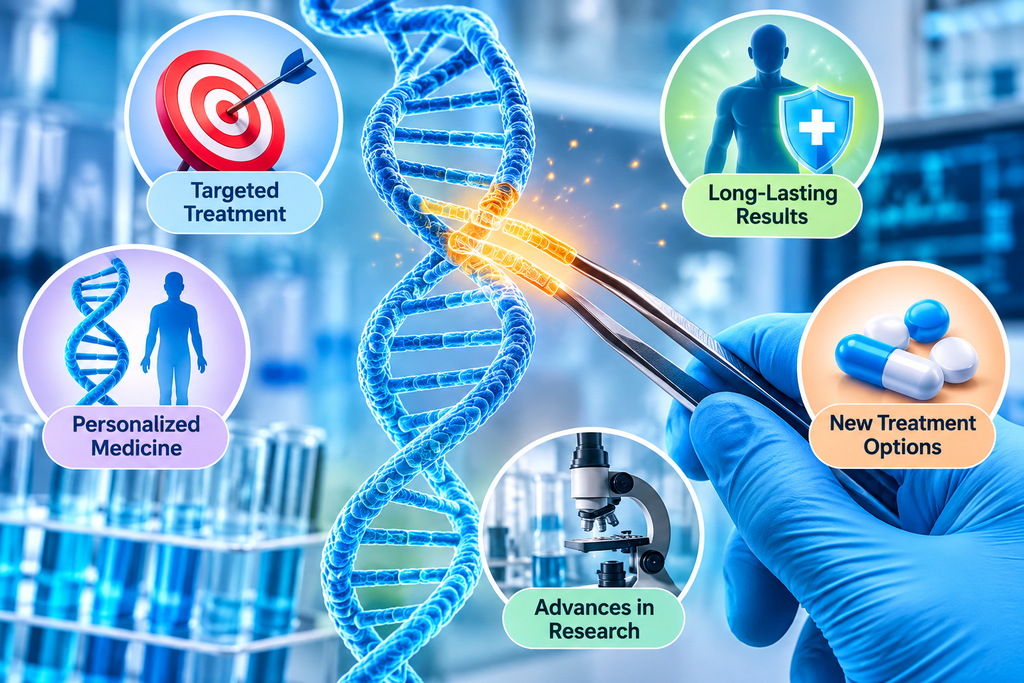
Benefits of CRISPR Gene Editing
CRISPR technology has several potential benefits:
- It allows scientists to target specific DNA sequences.
- It supports research into inherited genetic conditions.
- It may offer treatment options for some diseases caused by genetic changes.
- Different editing methods can address different types of DNA changes.
- Personalized approaches may help researchers develop treatments for rare genetic disorders.
However, these benefits depend on the condition, treatment method and available clinical evidence.
Risks and Limitations of CRISPR
CRISPR gene editing is not risk-free. Changes may occur at unintended DNA locations, which are known as off-target edits.
Casgevy also involves high-dose chemotherapy before edited cells are returned to the patient. This conditioning treatment can cause serious complications.
The FDA lists important safety concerns for Casgevy, including delayed platelet engraftment, neutrophil engraftment failure and hypersensitivity reactions.
Other limitations include the need for specialist treatment centers, careful patient selection and long-term follow-up. Results from one personalized treatment cannot establish safety or effectiveness for everyone with the same condition.
Frequently Asked Questions
What is CRISPR gene editing used for?
CRISPR gene editing is used in research and in certain approved treatments for genetic diseases. Casgevy is an example used for eligible patients with sickle cell disease and transfusion-dependent beta-thalassemia.
Does CRISPR cure genetic diseases?
Not necessarily. Some treatments may help manage or reduce the effects of a genetic condition, but they should not automatically be described as permanent cures. Long-term results depend on the treatment and disease.
What is the difference between CRISPR-Cas9 and base editing?
CRISPR-Cas9 generally cuts DNA at a selected location. Base editing changes a specific DNA letter without making a standard double-strand DNA cut.
Is CRISPR gene editing safe?
It can involve serious risks, including unintended DNA changes and treatment-related complications. Safety depends on the editing method and the patient’s condition. Long-term monitoring remains important.
What is the future of CRISPR technology?
Researchers are studying ways to improve editing accuracy, delivery methods and treatments for more genetic conditions. More clinical research is needed before many experimental approaches can become established treatments.
Conclusion
CRISPR gene editing is changing research into genetic diseases. Casgevy demonstrates how edited blood stem cells can be used to treat certain patients with sickle cell disease and beta-thalassemia. The personalized base-editing treatment for CPS1 deficiency also shows how researchers may develop treatments for rare genetic conditions.
Despite this progress, gene editing still has important risks and limitations. More research and long-term follow-up are needed to understand its safety and effectiveness.