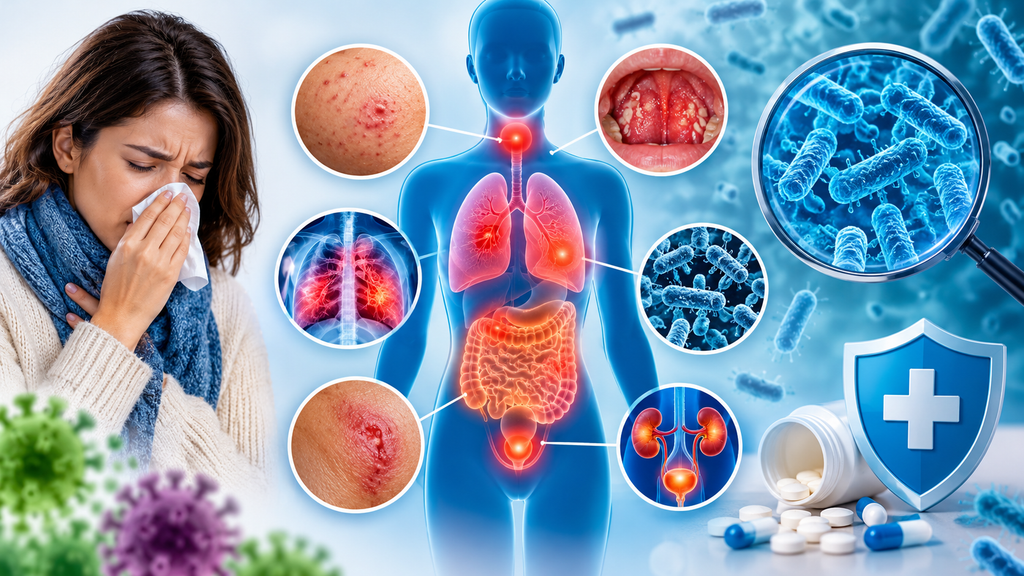
Bacterial infections are illnesses caused by harmful bacteria. These tiny organisms can enter the body, grow, and cause health problems. They can affect the skin, lungs, stomach, urinary tract, and other parts of the body.
Some bacterial infections are mild, while others can become serious. Early diagnosis and proper treatment can help prevent problems.
What Is a Bacterial Infection?
A bacterial infection happens when harmful bacteria enter the body and begin to grow. Bacteria are single-celled organisms. Some bacteria are useful, but others can cause disease.
These infections can spread through close contact, contaminated food or water, and contact with infected surfaces. The way they spread depends on the type of bacteria.
Types of Bacterial Infections
Bacterial infections can affect different parts of the body. Common types include:
1. Skin Infections
Bacteria can enter the skin through cuts, wounds, or damaged areas. Common examples include cellulitis, impetigo, and boils.
Symptoms may include redness, swelling, pain, warmth, and pus.
2. Respiratory Infections
These infections affect the nose, throat, and lungs. Examples include strep throat, whooping cough, bacterial pneumonia, and tuberculosis.
Common symptoms include coughing, fever, sore throat, and breathing problems.
3. Urinary Tract Infections (UTIs)
UTIs affect the urinary system. They often occur when bacteria enter the urinary tract. E. coli is a common cause.
Symptoms may include pain or burning during urination, frequent urination, and cloudy or bloody urine.
4. Digestive System Infections
Some bacteria affect the stomach and intestines. Examples include Salmonella, Campylobacter, and C. difficile infections.
They may cause diarrhea, stomach pain, nausea, and vomiting.
5. Sexually Transmitted Infections
Some bacterial infections spread through sexual contact. Chlamydia and gonorrhea are common examples.
Some people may have no clear symptoms, so testing is important when an infection is suspected.
6. Serious Bacterial Infections
Some bacteria can affect the brain or spread through the blood. Bacterial meningitis and bloodstream infections are examples.
These conditions can be serious and need urgent medical care.
Symptoms of Bacterial Infections
Symptoms depend on the type of infection and the part of the body affected.
Common signs include:
- Fever and chills
- Body aches
- Tiredness
- Pain or swelling
- Redness or warmth around the infected area
- Cough or sore throat
- Burning during urination
- Diarrhea or stomach pain
- Pus around a wound
Not everyone has the same symptoms. Some infections may also cause no clear signs at first.
What Causes Bacterial Infections?
Bacterial infections occur when harmful bacteria enter the body and multiply. They can spread in different ways, including:
- Close contact with an infected person
- Contaminated food or water
- Contact with infected wounds or body fluids
- Touching contaminated surfaces and then touching the face
The method of spread depends on the bacteria.

How Are Bacterial Infections Diagnosed?
A doctor may ask about your symptoms and medical history. They may also examine the affected area.
Depending on the infection, tests may include:
- Blood tests
- Urine tests
- Throat swabs
- Wound samples
- Stool tests
These tests can help identify the bacteria and guide treatment.
Treatment for Bacterial Infections
Doctors may prescribe antibiotics to treat bacterial infections. These medicines kill bacteria or stop them from growing.
The right treatment depends on the type and severity of the infection. Some mild infections may not need antibiotics.
Always take antibiotics as prescribed. Do not use leftover antibiotics or stop treatment without medical advice. Incorrect use can contribute to antibiotic resistance.
Rest, fluids, and suitable medicine for pain or fever may also help with symptoms.
How to Prevent Bacterial Infections
Simple habits can lower the risk of infection:
- Wash your hands with soap and water.
- Keep cuts and wounds clean.
- Cook food properly.
- Drink safe water.
- Avoid sharing personal items.
- Follow food safety rules.
- Get recommended vaccines.
- Practice safe sex.
These steps can help reduce the spread of harmful bacteria.
Bacterial Infection vs. Viral Infection
Bacterial infections are caused by bacteria, while viral infections are caused by viruses.
Bacteria are single-celled organisms that can reproduce on their own under suitable conditions. Viruses need living host cells to reproduce.
Examples of bacterial infections include strep throat, UTIs, and tuberculosis. Examples of viral infections include the common cold, flu, and chickenpox.
Antibiotics can treat some bacterial infections, but they do not work against viruses. Some viral infections may need antiviral medicines, while others are treated with supportive care.
Frequently Asked Questions
Are bacterial infections contagious?
Some bacterial infections can spread from one person to another. Others spread through food, water, or contaminated surfaces. It depends on the type of bacteria.
Can bacterial infections go away without antibiotics?
Some mild bacterial infections may improve without antibiotics. However, others need medical treatment. A doctor can decide what treatment is suitable.
How long does a bacterial infection last?
The duration depends on the type of infection, its severity, and the treatment. Some improve within a few days, while others may take longer.
When should I see a doctor?
See a doctor if you have a high fever, worsening pain, swelling, or symptoms that do not improve. Seek urgent medical help for severe breathing problems, confusion, or other serious symptoms.
Conclusion
Bacterial infections can affect many parts of the body. Their symptoms and treatment depend on the type of bacteria. Good hygiene, safe food habits, and proper medical care can help prevent and manage these infections. If you notice signs of an infection, seek medical advice.