An abdominal aortic aneurysm (AAA) occurs when the main artery in the abdomen becomes weak and enlarged. It often develops without symptoms, so many people do not know they have it.
A small aneurysm may only need regular scans. A larger one may require surgery because it can rupture and cause serious internal bleeding.

What Is an Abdominal Aortic Aneurysm?
The aorta is the largest artery in the body. It carries blood from the heart to the rest of the body. Its lower section passes through the abdomen.
An abdominal aortic aneurysm develops when part of this artery becomes weak and bulges outward. An abdominal aorta measuring around 3 cm or more may be considered an aneurysm.
Some aneurysms remain small, while others grow over time. If the artery wall becomes too weak, it may rupture.
Symptoms of Abdominal Aortic Aneurysm
Most abdominal aortic aneurysms do not cause symptoms in the early stages. They are sometimes found during tests for other health problems.
When symptoms appear, they may include:
- A pulsing feeling near the belly button
- Pain in the abdomen
- Persistent lower back pain
- Pain in the groin or legs
Signs of a Ruptured Aneurysm
A ruptured AAA is a medical emergency. It can cause severe internal bleeding.
Warning signs include:
- Sudden, severe abdominal or back pain
- Dizziness or fainting
- Rapid heartbeat
- Low blood pressure
- Clammy or sweaty skin
- Shortness of breath
Seek emergency medical help immediately if these symptoms occur.
Causes and Risk Factors
The exact cause of an abdominal aortic aneurysm is not always known. It develops when the wall of the aorta becomes weak.
Several factors can increase the risk:
- Smoking: Tobacco use can damage blood vessels and increase the risk of AAA.
- Age: The condition is more common in older adults.
- High blood pressure: It puts extra pressure on artery walls.
- Family history: Having a close family member with AAA can increase risk.
- Atherosclerosis: Fatty deposits in the arteries are linked to changes in blood vessel walls.
- High cholesterol: It is another factor associated with blood vessel disease.
AAA is also more common in men.
How Is an Abdominal Aortic Aneurysm Diagnosed?
Doctors use imaging tests to find an aneurysm and check its size.
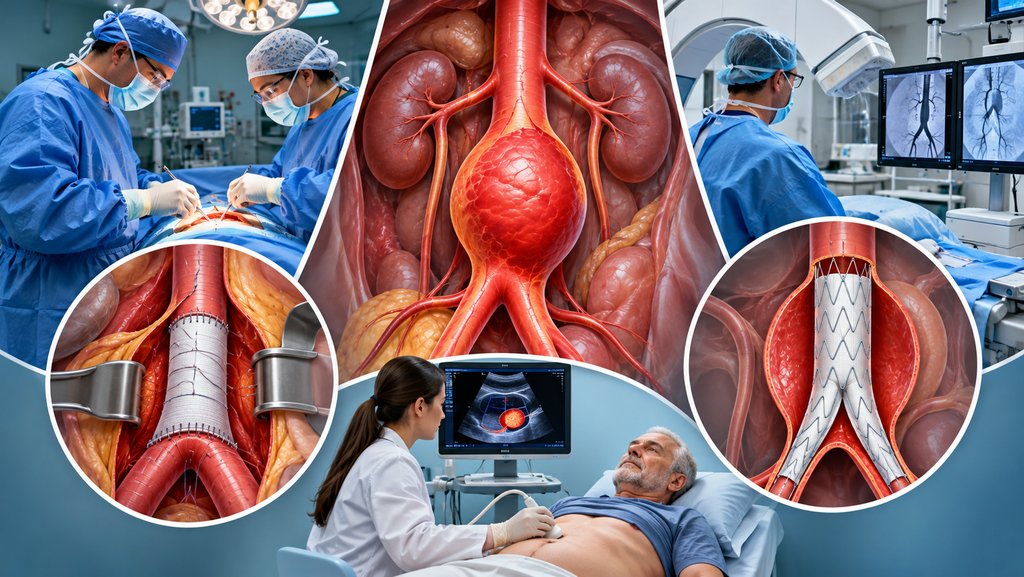
Ultrasound: This is a common test for AAA. It uses sound waves to create images of the aorta. It is painless and helps doctors measure the aneurysm.
CT scan: A CT scan provides detailed images of the aorta. Doctors may use it to examine the aneurysm and plan treatment.
MRI scan: An MRI can also create detailed images of blood vessels. The doctor decides which test is suitable.
Screening can detect an aneurysm before symptoms appear. For example, the NHS in England offers a one-time ultrasound screening to men at age 65. Screening recommendations may differ between countries.
Treatment for Abdominal Aortic Aneurysm
Treatment depends on the aneurysm’s size, growth, symptoms, and the person’s overall health.
Regular Monitoring
Small aneurysms may not need immediate surgery. Doctors may recommend regular ultrasound scans to check whether the aneurysm is growing.
The timing of scans depends on its size and the patient’s condition. Follow the schedule advised by your healthcare team.
Open Surgery
During open repair, the surgeon makes an incision in the abdomen. The weakened section of the aorta is replaced with a synthetic tube graft.
This is a major operation and usually requires a longer hospital stay and recovery period.
Endovascular Aneurysm Repair (EVAR)
EVAR is a less invasive treatment for some patients. The doctor inserts a stent graft through small cuts in the groin and guides it into the aorta.
The graft helps blood flow through the repaired section. Recovery and hospital stays are often shorter than with open surgery. However, EVAR is not suitable for everyone, and follow-up scans are needed.
A ruptured aneurysm usually requires emergency surgery.
Can Lifestyle Changes Help?
Lifestyle changes cannot remove an existing aneurysm. However, they can support heart and blood vessel health.
Doctors may recommend:
- Stop smoking and avoid tobacco.
- Keep blood pressure under control.
- Eat a balanced diet.
- Stay active with a safe exercise plan.
- Manage cholesterol with medical advice.
These steps do not replace regular scans or medical treatment.
Possible Complications
The most serious complication is a rupture. When an aneurysm ruptures, blood escapes from the aorta and causes internal bleeding.
This can lead to a sudden drop in blood pressure and shock. Immediate medical treatment is essential.
Frequently Asked Questions
1. What is an abdominal aortic aneurysm?
It is a bulge or enlargement in the abdominal part of the aorta, caused by weakness in the artery wall.
2. What are the common symptoms of AAA?
Most people have no symptoms. Others may experience abdominal pain, persistent back pain, or a pulsing feeling near the belly button.
3. What causes an abdominal aortic aneurysm?
The exact cause is not always known. Smoking, aging, high blood pressure, family history, and atherosclerosis are linked to the condition.
4. How is AAA diagnosed?
An abdominal ultrasound is commonly used. Doctors may also use CT or MRI scans.
5. Does every AAA need surgery?
No. Small aneurysms may only need regular monitoring. Surgery may be considered if an aneurysm becomes large, grows quickly, or causes symptoms.
6. What is EVAR?
EVAR is a procedure that places a stent graft inside the aorta through small cuts in the groin.
7. Can lifestyle changes cure an aneurysm?
No. Lifestyle changes cannot remove an aneurysm, but they can support blood vessel health.
8. Is a ruptured AAA dangerous?
Yes. It can cause severe internal bleeding and is a life-threatening emergency.
Conclusion
An abdominal aortic aneurysm is an enlargement of the main artery in the abdomen. It often has no early symptoms, so screening and regular monitoring are important.
Treatment may include scans, open surgery, or EVAR. The right option depends on the aneurysm and the patient’s health. If you have risk factors or a family history of AAA, discuss screening with your doctor. Sudden, severe abdominal or back pain requires emergency medical care.
This article is for educational purposes only and does not replace professional medical advice.