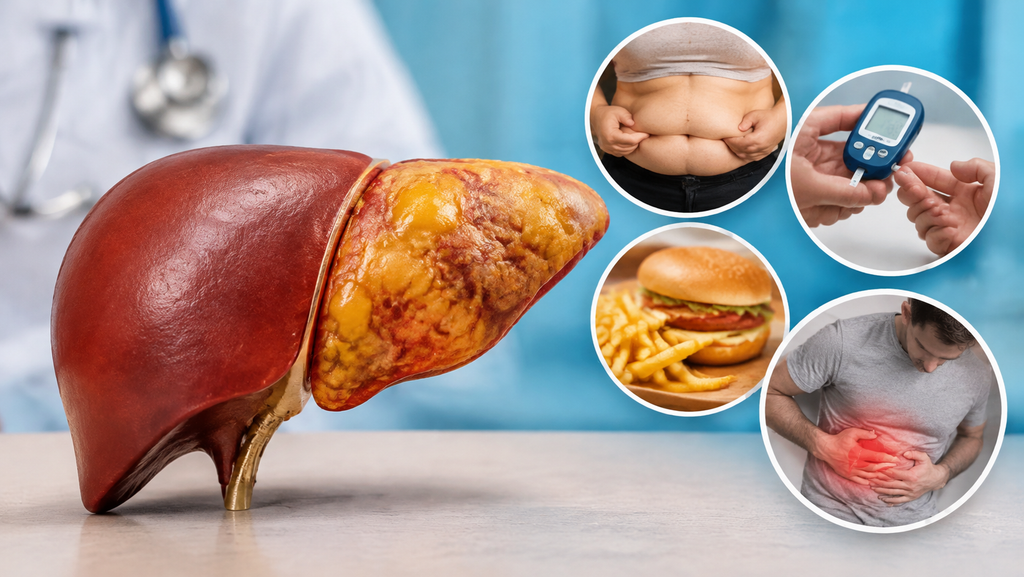
MASLD is a common liver condition in which excess fat builds up in the liver. MASLD Causes, Symptoms is linked to metabolic problems such as insulin resistance, type 2 diabetes, high blood pressure, and excess body weight. Healthy lifestyle changes can help manage the condition and protect liver health.
What Is MASLD?
MASLD stands for metabolic dysfunction-associated steatotic liver disease. It was previously known as non-alcoholic fatty liver disease (NAFLD).
The condition develops when too much fat collects in liver cells. It is commonly associated with metabolic risk factors, including high blood sugar, abnormal blood fats, and excess abdominal fat.
MASLD can affect people with obesity as well as those who have a healthy body weight. Some people may have the condition without obvious symptoms.
What Causes MASLD?
MASLD is associated with several metabolic and lifestyle factors. Common causes and risk factors include:
- Insulin resistance: The body does not respond properly to insulin, which can affect how it stores and uses fat.
- Type 2 diabetes: High blood sugar and insulin resistance increase the risk of fat building up in the liver.
- Excess body weight: Being overweight, particularly having excess abdominal fat, is linked to MASLD.
- High triglycerides: Increased levels of blood fats can contribute to metabolic problems.
- High blood pressure: It often occurs alongside other metabolic risk factors.
- High-sugar diet: Regularly consuming sugary drinks and foods may contribute to metabolic problems and fat accumulation in the liver.
These factors can occur together and increase the risk of developing MASLD.
What Are the MASLD Causes, Symptoms?
Many people with MASLD do not notice symptoms, especially during the early stages. The condition may be discovered during routine blood tests or an imaging examination.
When symptoms occur, they may include:
- Tiredness or low energy
- Discomfort in the upper right side of the abdomen
- General weakness
- Loss of appetite
More serious liver damage may cause warning signs such as yellowing of the skin or eyes and swelling in the abdomen. These symptoms need medical attention.
What Are the Stages of MASLD?
MASLD can range from simple fat accumulation to serious liver damage. Its main forms include:
1. Simple Steatosis
This means excess fat has collected in liver cells. There may be little or no inflammation or liver damage.
2. MASH
MASH stands for metabolic dysfunction-associated steatohepatitis. It involves fat accumulation along with liver inflammation and cell injury.
3. Fibrosis
Ongoing liver injury may cause scar tissue to develop. This is called fibrosis. The amount of scarring can vary.
4. Cirrhosis
Cirrhosis is advanced liver scarring. It can affect how well the liver works and may lead to serious complications.
These conditions do not always develop in a fixed order. Not everyone with MASLD develops MASH, fibrosis, or cirrhosis.
How Is MASLD Diagnosed?
A healthcare provider may suspect MASLD after reviewing a person’s medical history, health conditions, and test results.
Common assessment methods include:
- Blood tests: These help assess liver health and identify related metabolic problems.
- Imaging tests: Ultrasound and other imaging methods can help detect fat in the liver.
- Liver stiffness tests: Some tests help assess whether scarring may be present.
- Liver biopsy: In selected cases, a small liver tissue sample may be examined to check inflammation and damage.
Blood tests alone cannot always confirm MASLD or show how much liver scarring is present. A healthcare provider decides which tests are appropriate.

MASLD Treatment and Management
There is no single lifestyle plan that works for everyone. Treatment focuses on improving metabolic health, reducing excess liver fat, and preventing further liver damage.
1. Follow a Balanced Diet
Healthy eating is an important part of MASLD management. Choose foods that provide nutrients and support overall health.
Helpful choices include:
- Fresh vegetables and fruits
- Whole grains
- Beans and lentils
- Nuts and seeds
- Healthy sources of protein
A Mediterranean-style eating pattern can be a useful approach. Try to limit sugary drinks, sweets, refined carbohydrates, and highly processed foods.
2. Manage Body Weight
If you have excess body weight, gradual weight management may help reduce liver fat and improve metabolic health.
Avoid crash diets or extreme weight-loss methods. A healthcare provider or dietitian can help you choose a safe and realistic plan.
3. Stay Physically Active
Regular physical activity supports overall health and can help improve insulin sensitivity.
You can choose activities that suit your fitness level, such as:
- Walking
- Cycling
- Swimming
- Other regular exercises
Start slowly if you are not active and increase activity as you become comfortable.
4. Control Related Health Conditions
MASLD often occurs alongside other metabolic conditions. Managing these problems is an important part of treatment.
Follow your healthcare provider’s advice to monitor and manage:
- Blood sugar
- Blood pressure
- Cholesterol and triglycerides
- Type 2 diabetes
Regular check-ups can help track your health and identify possible changes in liver condition.
Can MASLD Be Reversed?
MASLD may improve, especially when it is identified early and managed with appropriate lifestyle changes.
Reducing excess body weight when needed, eating a balanced diet, staying active, and managing blood sugar and blood fats may help reduce liver fat.
However, advanced liver scarring can be difficult to reverse. Cirrhosis may cause permanent damage, so early assessment and ongoing medical care are important.
When Should You See a Doctor?
Speak with a healthcare provider if you have diabetes, excess abdominal weight, high triglycerides, or other metabolic risk factors.
You should also seek medical advice if you experience persistent upper abdominal discomfort, unexplained tiredness, yellowing of the skin or eyes, or abdominal swelling.
Do not ignore possible signs of liver disease. Early assessment can help identify the condition and guide appropriate care.
Frequently Asked Questions
1. Is MASLD the same as fatty liver disease?
MASLD is a type of fatty liver disease associated with metabolic risk factors. It was previously called non-alcoholic fatty liver disease (NAFLD).
2. Can MASLD occur in people who are not overweight?
Yes. People with a healthy body weight can also develop MASLD. Metabolic health and other risk factors are important.
3. Can MASLD cause serious liver damage?
Yes. Some people develop liver inflammation, fibrosis, and cirrhosis. However, serious damage does not occur in everyone.
4. What foods should people with MASLD limit?
It is helpful to limit sugary drinks, sweets, refined carbohydrates, and highly processed foods. A balanced diet with whole foods is a better choice.
5. Can lifestyle changes help manage MASLD?
Yes. Healthy eating, regular physical activity, gradual weight management when needed, and control of related metabolic conditions can help manage MASLD.
Conclusion
MASLD is a liver condition linked to metabolic health. It may develop without noticeable symptoms, but it can lead to inflammation and liver scarring in some people.
Healthy eating, regular activity, appropriate weight management, and control of blood sugar and blood fats are important parts of its management. Consult a healthcare provider for proper diagnosis, monitoring, and treatment advice.
This article is for general information only and is not a substitute for professional medical advice.