High-Sugar Diet and MASLD: Causes and Prevention

High-Sugar Diet and MASLD may increase the risk of metabolic dysfunction-associated steatotic liver disease (MASLD), a condition in which excess fat builds up in the liver. Sugary drinks, sweets, and processed foods can add extra calories and affect how the body handles sugar and fat. Reducing added sugar, choosing balanced meals, and staying physically active can support liver health. Understanding the link between sugar and MASLD can help you make better food choices and lower your risk. What Is MASLD? MASLD is a liver condition linked to metabolic problems. It develops when too much fat builds up in the liver in people who have at least one cardiometabolic risk factor. These risk factors may include: MASLD can affect people with obesity and those who are not overweight. It may cause no clear symptoms, especially in its early stages. How Does a High-Sugar Diet Contribute to MASLD? Eating too much added sugar may contribute to fat buildup in the liver. The liver processes sugars such as glucose and fructose. When a person regularly consumes large amounts of sugary foods and drinks, the liver may turn some of this sugar into fat. This process is called de novo lipogenesis. It means the body makes new fat from sources such as excess carbohydrates. A high-sugar diet may also contribute to insulin resistance. When the body does not respond properly to insulin, blood sugar regulation becomes harder. This can affect how the liver stores and produces fat. Fructose, found in table sugar and many sweetened drinks, is also processed mainly by the liver. High intake may increase fat production, particularly when it adds excess calories to the diet. However, sugar is not the only cause of MASLD. Overall diet, physical activity, body weight, genetics, and metabolic health also play a role. Foods and Drinks That May Increase Liver Fat Some foods and drinks can make it easier to consume too much added sugar and excess calories. Common examples include: Sugar-sweetened drinks are especially important because they can provide a large amount of sugar without making you feel full. Whole fruit is different from fruit juice. Whole fruit contains fibre, which supports digestion and helps you feel satisfied. It is generally a better choice than drinks containing added sugar. The Link Between MASLD and Metabolic Health MASLD often occurs alongside other metabolic conditions. Insulin resistance, type 2 diabetes, high blood pressure, and high triglycerides can increase the risk of liver fat buildup. These conditions may also affect one another. For example, insulin resistance can make it harder for the body to control blood sugar and fat levels. This is why managing liver health involves more than avoiding sugar. A balanced diet, regular movement, and medical care for existing health conditions are also important. How to Reduce Sugar and Support Liver Health Small changes in your daily eating habits can help reduce added sugar and improve overall metabolic health. 1. Limit sugary drinks Replace soft drinks and sweetened juices with water or other unsweetened drinks. Check food labels to identify added sugars in packaged beverages. 2. Reduce sweets and processed foods You do not need to change your entire diet at once. Start by eating smaller portions of desserts, biscuits, and packaged snacks. 3. Choose fibre-rich foods Include vegetables, beans, lentils, whole grains, and whole fruits in your meals. These foods provide fibre and support a balanced diet. 4. Include healthy protein sources Eggs, fish, beans, lentils, and lean poultry can help make meals more balanced and satisfying. 5. Choose healthier fats Use moderate amounts of unsaturated fats, such as olive oil, nuts, and seeds, instead of relying heavily on foods high in saturated fat. 6. Follow a balanced eating pattern A Mediterranean-style diet includes vegetables, fruits, whole grains, legumes, nuts, fish, and unsaturated fats. This eating pattern may support metabolic and liver health. Lifestyle Changes That Help Prevent MASLD Diet is important, but other lifestyle habits also matter. You do not need an extreme diet or intense exercise routine to start making healthier changes. Choose activities and meals you can maintain over time. Can Reducing Sugar Improve Fatty Liver? Reducing added sugar may help improve diet quality and reduce excess calorie intake. This can support weight management and better metabolic health. For people with MASLD, changes in eating habits and physical activity may help reduce liver fat. The results depend on individual health, the severity of the condition, and other lifestyle factors. However, reducing sugar alone does not guarantee that MASLD will disappear. People diagnosed with the condition should follow a healthcare professional’s advice and attend recommended check-ups. When Should You See a Doctor? MASLD often develops without noticeable symptoms. Some people may feel tired or experience discomfort in the upper-right area of the abdomen, but these symptoms can have other causes. A healthcare professional may recommend blood tests, imaging, or other assessments based on your medical history and risk factors. Seek medical advice if you have diabetes, high blood pressure, abnormal blood fats, or concerns about liver health. Early assessment can help identify problems and guide suitable care. Frequently Asked Questions Can too much sugar cause fatty liver? A high intake of added sugar may contribute to liver fat buildup, especially when it increases overall calorie intake. However, MASLD has several contributing factors. Does fructose affect liver health? The liver processes fructose and can convert some of it into fat. Regularly consuming large amounts, particularly through sweetened drinks, may contribute to liver fat. Are fruits safe for people with MASLD? Whole fruits can be part of a balanced diet because they provide fibre and nutrients. Fruit juice and sweetened fruit drinks are different and may contain more concentrated sugar. Can I prevent MASLD by avoiding sugar? Reducing added sugar can help, but prevention also involves balanced eating, physical activity, metabolic health, and weight management when needed. Conclusion A high-sugar diet may contribute to MASLD by increasing excess calorie intake and encouraging fat production in the liver. Sugary drinks and heavily processed foods are
MASLD: Causes, Symptoms, Stages & Treatment
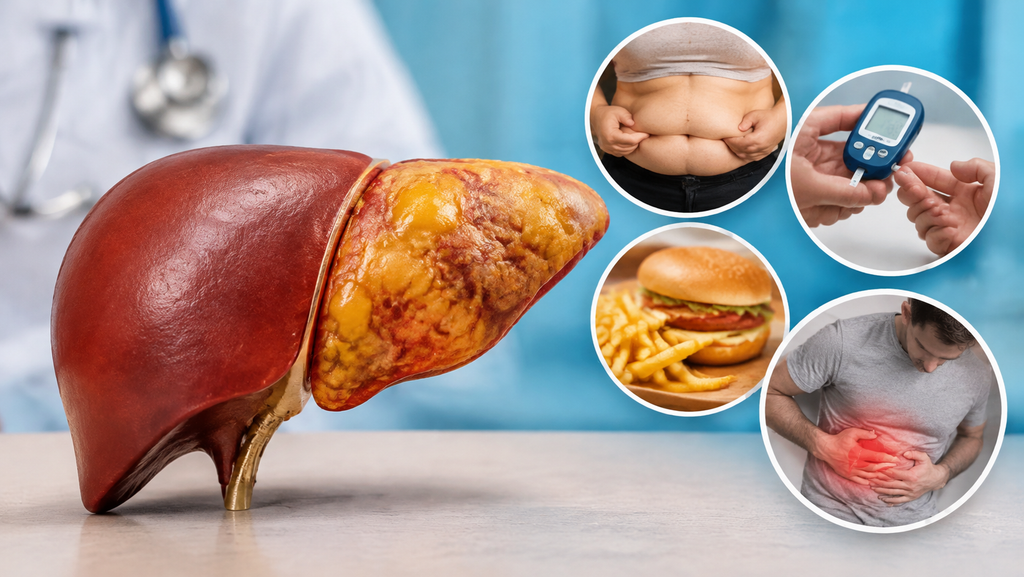
MASLD is a common liver condition in which excess fat builds up in the liver. MASLD Causes, Symptoms is linked to metabolic problems such as insulin resistance, type 2 diabetes, high blood pressure, and excess body weight. Healthy lifestyle changes can help manage the condition and protect liver health. What Is MASLD? MASLD stands for metabolic dysfunction-associated steatotic liver disease. It was previously known as non-alcoholic fatty liver disease (NAFLD). The condition develops when too much fat collects in liver cells. It is commonly associated with metabolic risk factors, including high blood sugar, abnormal blood fats, and excess abdominal fat. MASLD can affect people with obesity as well as those who have a healthy body weight. Some people may have the condition without obvious symptoms. What Causes MASLD? MASLD is associated with several metabolic and lifestyle factors. Common causes and risk factors include: These factors can occur together and increase the risk of developing MASLD. What Are the MASLD Causes, Symptoms? Many people with MASLD do not notice symptoms, especially during the early stages. The condition may be discovered during routine blood tests or an imaging examination. When symptoms occur, they may include: More serious liver damage may cause warning signs such as yellowing of the skin or eyes and swelling in the abdomen. These symptoms need medical attention. What Are the Stages of MASLD? MASLD can range from simple fat accumulation to serious liver damage. Its main forms include: 1. Simple Steatosis This means excess fat has collected in liver cells. There may be little or no inflammation or liver damage. 2. MASH MASH stands for metabolic dysfunction-associated steatohepatitis. It involves fat accumulation along with liver inflammation and cell injury. 3. Fibrosis Ongoing liver injury may cause scar tissue to develop. This is called fibrosis. The amount of scarring can vary. 4. Cirrhosis Cirrhosis is advanced liver scarring. It can affect how well the liver works and may lead to serious complications. These conditions do not always develop in a fixed order. Not everyone with MASLD develops MASH, fibrosis, or cirrhosis. How Is MASLD Diagnosed? A healthcare provider may suspect MASLD after reviewing a person’s medical history, health conditions, and test results. Common assessment methods include: Blood tests alone cannot always confirm MASLD or show how much liver scarring is present. A healthcare provider decides which tests are appropriate. MASLD Treatment and Management There is no single lifestyle plan that works for everyone. Treatment focuses on improving metabolic health, reducing excess liver fat, and preventing further liver damage. 1. Follow a Balanced Diet Healthy eating is an important part of MASLD management. Choose foods that provide nutrients and support overall health. Helpful choices include: A Mediterranean-style eating pattern can be a useful approach. Try to limit sugary drinks, sweets, refined carbohydrates, and highly processed foods. 2. Manage Body Weight If you have excess body weight, gradual weight management may help reduce liver fat and improve metabolic health. Avoid crash diets or extreme weight-loss methods. A healthcare provider or dietitian can help you choose a safe and realistic plan. 3. Stay Physically Active Regular physical activity supports overall health and can help improve insulin sensitivity. You can choose activities that suit your fitness level, such as: Start slowly if you are not active and increase activity as you become comfortable. 4. Control Related Health Conditions MASLD often occurs alongside other metabolic conditions. Managing these problems is an important part of treatment. Follow your healthcare provider’s advice to monitor and manage: Regular check-ups can help track your health and identify possible changes in liver condition. Can MASLD Be Reversed? MASLD may improve, especially when it is identified early and managed with appropriate lifestyle changes. Reducing excess body weight when needed, eating a balanced diet, staying active, and managing blood sugar and blood fats may help reduce liver fat. However, advanced liver scarring can be difficult to reverse. Cirrhosis may cause permanent damage, so early assessment and ongoing medical care are important. When Should You See a Doctor? Speak with a healthcare provider if you have diabetes, excess abdominal weight, high triglycerides, or other metabolic risk factors. You should also seek medical advice if you experience persistent upper abdominal discomfort, unexplained tiredness, yellowing of the skin or eyes, or abdominal swelling. Do not ignore possible signs of liver disease. Early assessment can help identify the condition and guide appropriate care. Frequently Asked Questions 1. Is MASLD the same as fatty liver disease? MASLD is a type of fatty liver disease associated with metabolic risk factors. It was previously called non-alcoholic fatty liver disease (NAFLD). 2. Can MASLD occur in people who are not overweight? Yes. People with a healthy body weight can also develop MASLD. Metabolic health and other risk factors are important. 3. Can MASLD cause serious liver damage? Yes. Some people develop liver inflammation, fibrosis, and cirrhosis. However, serious damage does not occur in everyone. 4. What foods should people with MASLD limit? It is helpful to limit sugary drinks, sweets, refined carbohydrates, and highly processed foods. A balanced diet with whole foods is a better choice. 5. Can lifestyle changes help manage MASLD? Yes. Healthy eating, regular physical activity, gradual weight management when needed, and control of related metabolic conditions can help manage MASLD. Conclusion MASLD is a liver condition linked to metabolic health. It may develop without noticeable symptoms, but it can lead to inflammation and liver scarring in some people. Healthy eating, regular activity, appropriate weight management, and control of blood sugar and blood fats are important parts of its management. Consult a healthcare provider for proper diagnosis, monitoring, and treatment advice. This article is for general information only and is not a substitute for professional medical advice.