Parkinsons disease is a brain disorder that affects movement. It develops when brain cells that produce dopamine become damaged or die. Dopamine helps control smooth body movements. When dopamine levels fall, a person may develop shaking, stiffness and slow movement.
The condition usually gets worse over time. However, symptoms can differ from person to person. Learning about its signs, causes and treatments can help people manage the disease.

What Is Parkinson’s Disease?
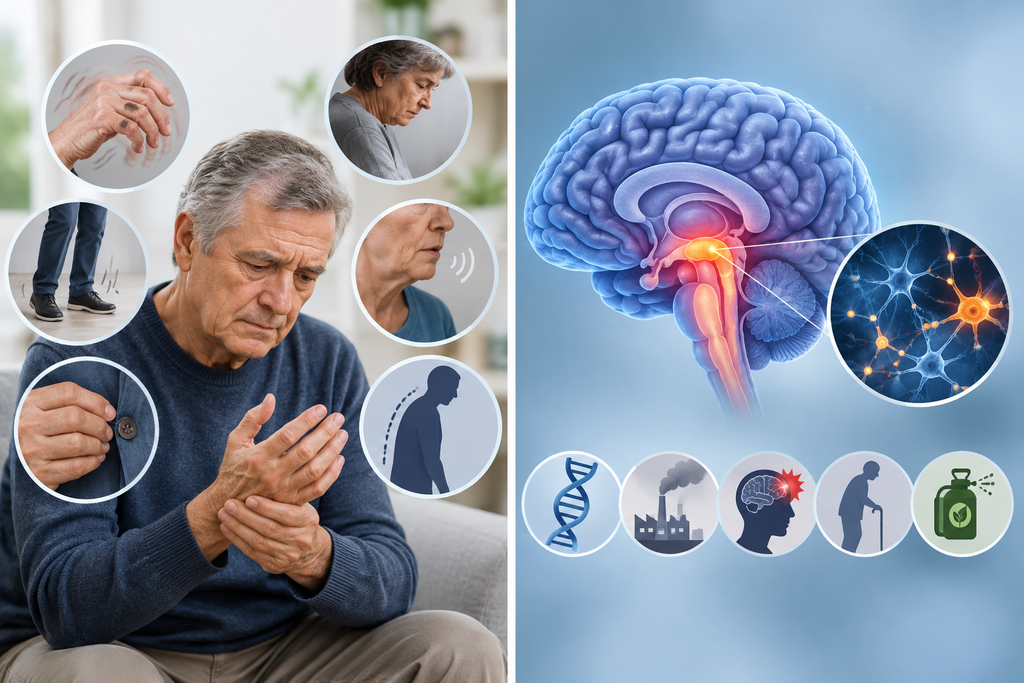
Parkinson’s disease is a progressive neurological disorder. It mainly affects a brain area called the substantia nigra. This area contains cells that produce dopamine.
When these cells are lost, the brain has less dopamine to control movement. This can make everyday activities more difficult. The disease can also affect sleep, mood, digestion and memory.
Common Symptoms of Parkinson’s Disease
Symptoms often begin slowly. They may become more noticeable as the condition progresses.
1. Tremors
A tremor is an involuntary shaking movement. It often starts in one hand or arm and may be more noticeable when the body part is resting.
2. Slow Movement
Slow movement, also called bradykinesia, is a common symptom. It can make walking, dressing and writing take longer. Some people also take shorter steps or struggle to start walking.
3. Muscle Stiffness
Muscle stiffness can affect the arms, legs, neck and other body parts. It may make movement uncomfortable and limit flexibility.
4. Balance Problems
Some people develop poor balance and changes in posture. They may lean forward while standing or walking. Balance problems can increase the risk of falls.
5. Changes in Walking
Parkinson’s disease can change a person’s walking pattern. Steps may become shorter, and arm movement may decrease. Some people find it hard to start walking or turn.
Non-Motor Symptoms
Parkinson’s disease can affect more than movement. Other possible symptoms include:
- Sleep problems: Some people have trouble sleeping or act out their dreams.
- Loss of smell: A reduced sense of smell may appear before movement problems.
- Constipation: Changes in digestion can make passing stool difficult.
- Mood changes: Depression, anxiety, and reduced motivation may occur.
- Memory problems: Some people have trouble with memory and focus.
- Cognitive changes: In some cases, thinking problems or dementia may develop.
Symptoms vary from person to person. Not everyone experiences all of them.
Early Signs of Parkinson’s Disease
Early signs can be mild and easy to miss. Possible signs include:
- Slight shaking in a hand or finger
- Reduced sense of smell
- Constipation
- Sleep changes
- Smaller handwriting
- Reduced arm movement while walking
- Muscle stiffness
- Slower movement
- Changes in facial expression
These signs do not always mean a person has Parkinson’s disease. Other conditions can cause similar problems. A healthcare professional can assess the symptoms.
What Causes Parkinson’s Disease?
The exact cause of Parkinson’s disease is not fully known. The condition is linked to the loss of dopamine-producing brain cells.
Researchers have studied several possible risk factors:
- Genetics: Some gene changes are linked to a higher risk of Parkinson’s disease.
- Environmental exposure: Researchers have studied possible links with pesticides, toxins and air pollution.
- Age: Parkinson’s disease is more common in older adults.
- Sex: The condition is diagnosed more often in men than in women.
These factors do not mean that a person will develop the disease.
How Is Parkinson’s Disease Diagnosed?
Doctors usually diagnose Parkinson’s disease by reviewing symptoms and performing a physical and neurological examination. They may check movement, tremors, muscle stiffness, walking, balance and coordination.
There is no single routine test that confirms every case. A doctor may recommend other tests or brain imaging to check for conditions that cause similar symptoms.
If you notice ongoing shaking, stiffness or slow movement, speak with a healthcare professional.
Treatment Options for Parkinson’s Disease
There is no established cure that reverses the loss of dopamine-producing brain cells. However, treatment can help control symptoms and support daily activities.
1. Medication
Doctors may prescribe different medicines based on a person’s symptoms.
- Carbidopa-levodopa: Levodopa is converted into dopamine in the brain. Carbidopa is combined with it as part of treatment.
- Dopamine agonists: These medicines act on dopamine receptors.
- MAO-B inhibitors: These medicines help manage dopamine levels.
- COMT inhibitors: These may be used with other Parkinson’s medicines.
Patients should take medicines as prescribed and discuss any changes with their doctor.
2. Deep Brain Stimulation
Deep brain stimulation (DBS) may help selected people with Parkinson’s disease. It uses electrodes placed in specific brain areas to send electrical signals. A specialist can decide whether this treatment is suitable.
3. Physical and Other Therapies
Therapy can help people manage daily activities.
- Physical therapy supports movement and balance.
- Occupational therapy helps with everyday tasks.
- Speech therapy may help with speech and swallowing problems.
Can Exercise Help With Parkinson’s Disease?
Exercise can support movement and general health. Suitable activities may include walking, stretching, dancing and aerobic exercise. Some people may also take part in adapted movement programmes.
The right activity depends on a person’s ability and health. Exercise does not cure Parkinson’s disease. People with balance problems should seek professional advice before starting a new routine.
Living With Parkinson’s Disease
Living with Parkinson’s disease can be challenging, but proper care can help. Regular medical check-ups allow doctors to review symptoms and treatment.
Taking prescribed medicines as directed is important. Physical activity and suitable therapy may also support daily movement. A balanced diet, enough fluids and good sleep can support general health.
Family members and caregivers can provide practical and emotional support. If symptoms become worse, discuss them with a healthcare professional.
Frequently Asked Questions
What are the first signs of Parkinson’s disease?
Possible early signs include slight tremors, reduced smell, constipation, sleep changes and smaller handwriting. These signs can also have other causes.
Is Parkinson’s disease hereditary?
Some genetic changes are linked to Parkinson’s disease. However, not every case is inherited.
Can Parkinson’s disease be cured?
There is no established cure. Medicines and other treatments can help manage symptoms.
Is Parkinson’s disease deadly?
Parkinson’s disease is a progressive condition that can cause serious health problems. Its effects vary from person to person. A doctor can explain the risks and care needs.
Can exercise prevent Parkinson’s disease?
The information covered here does not establish that exercise prevents Parkinson’s disease. However, suitable exercise can support movement and general health.
Conclusion
Parkinson’s disease affects dopamine-producing brain cells and can cause tremors, slow movement, stiffness and balance problems. It may also affect sleep, mood and memory.
Although there is no established cure, medicines, therapy and deep brain stimulation may help manage symptoms in suitable cases. Regular medical care and support can help people live with the condition.