Vitamin E for skin is a popular skincare topic because vitamin E acts as an antioxidant and is used in many creams, lotions, and moisturizers. It helps protect cells from oxidative damage, but the benefits of applying it to the skin depend on the product and its formulation.
Vitamin E may be useful in a skincare routine, especially when included in a suitable moisturizer. However, evidence does not show that topical vitamin E reliably removes scars, fades dark spots, or eliminates wrinkles. Understanding its benefits, uses, and possible side effects can help you choose the right products for your skin.
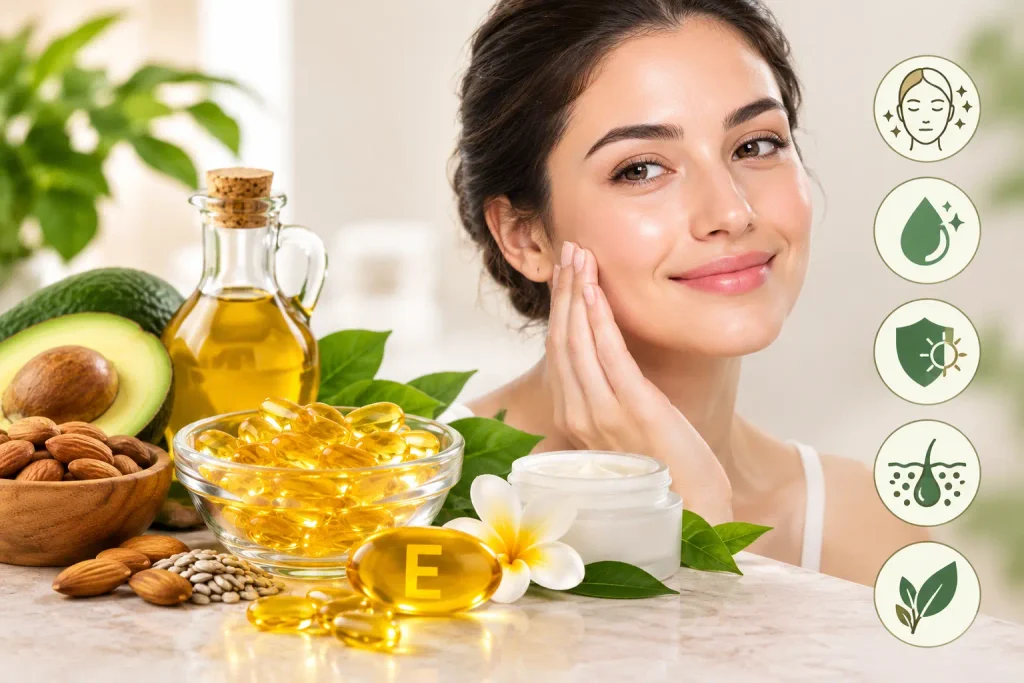
How Vitamin E Helps the Skin
Vitamin E is a fat-soluble nutrient that acts as an antioxidant. Antioxidants help protect cells from damage caused by free radicals, which form naturally in the body and can also result from environmental factors, including ultraviolet radiation.
Vitamin E helps protect cell membranes from oxidative damage. It is also used in skincare products in forms such as tocopherol and tocopheryl acetate.
Although vitamin E has an established antioxidant role, this does not mean that every product containing it will produce visible skin improvements. The results depend on the complete formulation and how the product suits your skin.
Vitamin E products should not replace sunscreen or treatments recommended for specific skin concerns.
Benefits of Vitamin E for Skin
Vitamin E has antioxidant properties, but evidence for individual cosmetic benefits varies. Here are the main points to understand.
1. May Help Moisturize Dry Skin
Vitamin E is an oil-soluble ingredient used in some moisturizers and skincare products. A suitable product containing vitamin E may help soften dry skin, depending on its other ingredients.
Ingredients such as glycerin help attract water, while ceramides support the skin barrier. These ingredients may work together in a moisturizer to improve skin hydration.
If your skin is dry, choose a moisturizer formulated for your skin type rather than relying on vitamin E oil alone.
2. Provides Antioxidant Activity
Vitamin E helps protect cells from oxidative damage. This property explains why it is included in many skincare formulations.
However, antioxidant activity does not prove that applying vitamin E prevents wrinkles or reverses sun damage. These specific benefits require separate clinical evidence.
3. May Be Included in Skin-Barrier Products
The skin barrier helps retain moisture and protect the skin from external irritants. Maintaining it is an important part of basic skincare.
Some moisturizers contain vitamin E alongside other ingredients that condition the skin. Their effectiveness depends on the overall formulation rather than vitamin E alone.
4. Limited Evidence for Scars and Dark Spots
Vitamin E is often marketed for scars, wrinkles, and uneven skin tone. However, evidence does not establish that topical vitamin E alone reliably treats these concerns.
Avoid expecting vitamin E to remove scars or dark spots. A dermatologist can recommend suitable treatments based on the cause of the problem.
Vitamin E Oil for the Face
Vitamin E oil for the face is sometimes used to moisturize dry areas. However, concentrated oils can feel greasy and may not suit every skin type.
People with oily or acne-prone skin may prefer a lightweight moisturizer. The suitability of an oil-based product depends on its ingredients and individual skin response.
Topical vitamin E can cause contact dermatitis in some people. Possible symptoms include redness, itching, swelling, or irritation.
If you want to try vitamin E, choose a product designed for facial use and follow its instructions. Test it on a small area first, and stop using it if a reaction develops. A small-area test cannot guarantee that irritation will never occur.
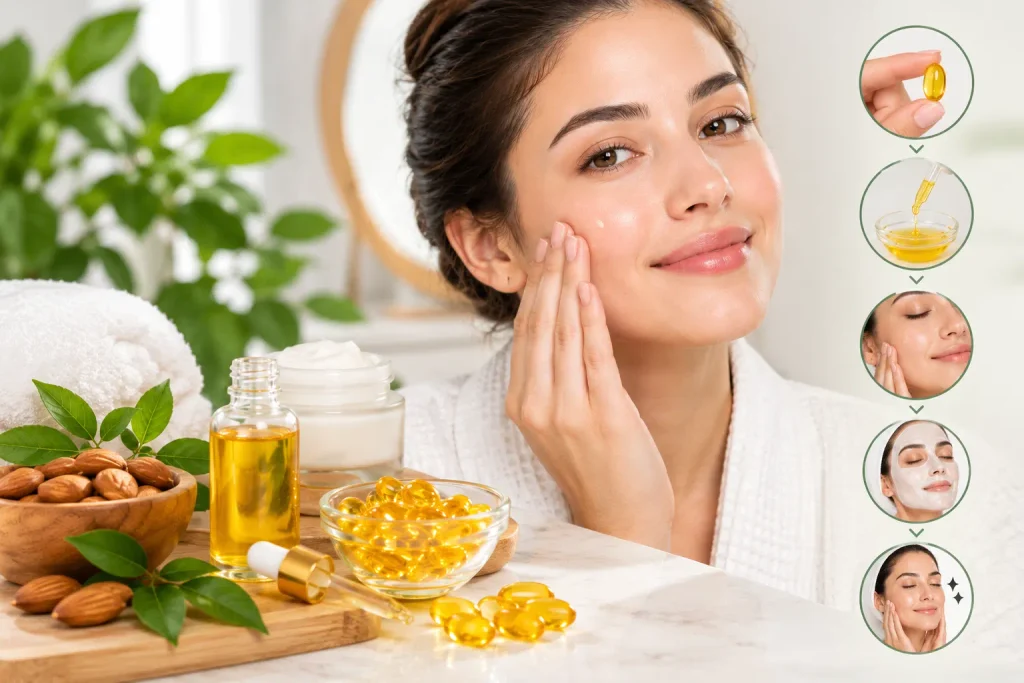
How to Use Vitamin E in Skin Care
You can include vitamin E in your routine by choosing a suitable skincare product. A separate oil or capsule is not necessary.
Follow these simple steps:
- Cleanse gently: Use a cleanser suitable for your skin type.
- Apply moisturizer: Choose a product containing vitamin E if you want to include this ingredient in your routine.
- Use sunscreen: Apply broad-spectrum sunscreen with SPF 30 or higher to exposed skin.
- Introduce products gradually: Try one new product at a time to identify possible reactions.
- Monitor your skin: Stop using a product if persistent redness, itching, swelling, or discomfort develops.
Keep your routine simple and avoid introducing several new products at once. Vitamin E does not replace sunscreen or guarantee protection from ultraviolet damage.
Vitamin E Capsules for Skin
Vitamin E capsules are primarily dietary supplements, not necessarily skincare products. Some people open them and apply the contents to their faces, but this does not guarantee better results than using a product designed for topical use.
Capsules may contain concentrated oil or other ingredients that are not formulated specifically for facial application. Their contents may cause irritation or feel too greasy for some skin types.
There is insufficient evidence to recommend vitamin E capsules as a reliable treatment for scars, wrinkles, or dark spots.
Oral supplements also have separate safety concerns. High doses of vitamin E can increase bleeding risk, particularly for people taking certain medicines. Consult a healthcare professional before taking supplements for skin concerns.
Possible Side Effects and Precautions
Vitamin E products may not suit everyone. Possible side effects include:
- Skin irritation: Some products may cause redness, itching, or discomfort.
- Contact dermatitis: Some people may develop an allergic skin reaction.
- Greasy residue: Concentrated oils may feel heavy on the face.
- Unsuitable formulation: Oil-based products may not suit every person with oily or acne-prone skin.
Choose products intended for facial use, follow the label instructions, and test a small area before applying them more widely. Discontinue use if irritation develops.
If you experience a significant reaction or have a persistent skin concern, seek medical advice. Consult a healthcare professional before taking vitamin E supplements, especially if you take medicines that affect blood clotting.
Frequently Asked Questions
Is vitamin E good for the skin?
Vitamin E has antioxidant properties and is used in skincare products. A moisturizer containing vitamin E may suit some people, but results depend on the formulation. It is not a proven cure for scars or wrinkles.
Can I apply vitamin E oil to my face every day?
This depends on the product and your skin’s response. Concentrated oil may not suit everyone. Follow the product instructions and stop using it if irritation develops.
Does vitamin E remove dark spots?
Evidence does not establish that topical vitamin E alone reliably removes dark spots. Treatment depends on the cause of pigmentation, so seek professional advice if discoloration persists.
Can vitamin E help with scars?
Evidence supporting topical vitamin E as a scar treatment is limited. A dermatologist can recommend suitable options based on the type of scar.
Is vitamin E oil suitable for oily skin?
Concentrated oils may feel heavy on oily or acne-prone skin. A lightweight moisturizer formulated for your skin type may be more suitable.
Is it safe to use vitamin E capsules on the face?
Capsules are intended primarily as dietary supplements. A skincare product formulated for topical use is generally a more appropriate choice for facial application.
Conclusion
Vitamin E for skin is a useful ingredient to understand because of its antioxidant role and its use in moisturizers. However, evidence for specific cosmetic benefits remains limited, particularly for scars and dark spots.
Choose products suited to your skin type, introduce them carefully, and use sunscreen daily. Consult a healthcare professional before taking supplements for skin concerns.
Disclaimer: This article is for general educational purposes only and is not a substitute for medical advice, diagnosis, or treatment. Consult a qualified healthcare professional about persistent skin concerns or before taking supplements.