Vitamin A Deficiency and Toxicity can affect vision and immune function, while excessive intake can cause toxicity and liver damage. Understanding the symptoms, causes, and safe intake limits can help you make informed decisions about vitamin A foods and supplements.
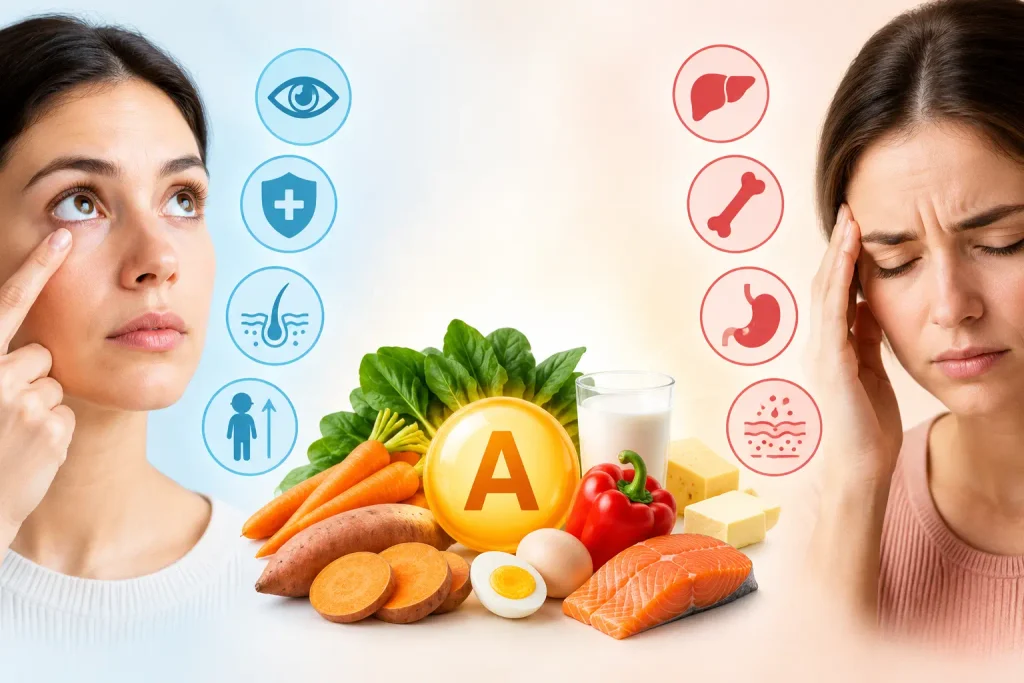
Why Vitamin A Balance Matters
Vitamin A is a fat-soluble vitamin that supports vision, immune function, growth, and development. The body stores it mainly in the liver.
There are two main forms of vitamin A:
- Preformed vitamin A: Found in foods such as eggs, dairy products, fish, and liver.
- Provitamin A carotenoids: Found in plant foods such as carrots, sweet potatoes, and spinach. The body can convert beta-carotene into vitamin A.
Too little vitamin A can cause deficiency, while excessive preformed vitamin A can cause toxicity.
Vitamin A Deficiency
Vitamin A deficiency occurs when the body does not get enough vitamin A. It remains a public health concern in some parts of the world, particularly where nutritious food is limited. Young children are among the groups at risk. (1, 2)
Common Causes of Vitamin A Deficiency
Several factors can contribute to deficiency:
- Low dietary intake: Not eating enough vitamin A-rich foods over time.
- Poor nutrient absorption: Conditions such as celiac disease, Crohn’s disease, and cystic fibrosis can affect the absorption of fat-soluble vitamins.
- Liver conditions: Some liver disorders can affect vitamin A storage and metabolism.
- Nutritional needs: Infants, children, and pregnant or breastfeeding women may need particular attention to their vitamin A intake.
Symptoms of Vitamin A Deficiency
Symptoms depend on the severity of the deficiency. Common signs include:
- Night blindness: Difficulty seeing in dim light or darkness.
- Dry eyes: The eyes may become unusually dry.
- Xerophthalmia: A group of eye problems caused by vitamin A deficiency that can lead to corneal damage and blindness in severe cases.
- Increased infection risk: Deficiency can affect normal immune function.
- Growth problems: Severe deficiency can affect children’s growth and development.
Dry skin may also occur, but it has many possible causes. Night blindness or persistent eye problems require medical assessment because untreated severe deficiency can damage vision.
How Is Vitamin A Deficiency Diagnosed?
A healthcare professional may review your diet, medical history, and symptoms. An eye examination and blood test may also help assess vitamin A status.
Blood retinol levels can support diagnosis, but they do not always reflect the body’s total vitamin A stores. Results should be considered alongside other clinical findings.
Prevention and Treatment of Vitamin A Deficiency
A varied diet can help provide enough vitamin A. Useful food sources include:
- Carrots, sweet potatoes, and pumpkin.
- Spinach and other dark green leafy vegetables.
- Eggs and dairy products.
- Fish and certain animal foods.
Plant foods provide carotenoids, while animal foods provide preformed vitamin A.
If deficiency is diagnosed, a healthcare professional may recommend supplements and assess whether an underlying health condition is affecting absorption. Treatment depends on the person’s needs and should be medically guided.
Vitamin A Toxicity
Vitamin A toxicity, also called hypervitaminosis A, occurs when excessive amounts of vitamin A build up in the body. The risk is mainly associated with excessive preformed vitamin A from supplements and certain foods. (1)
What Causes Excess Vitamin A?
Excessive intake may result from:
- Taking high-dose vitamin A supplements.
- Combining multiple supplements containing vitamin A.
- Frequently eating large amounts of liver.
- Combining vitamin A supplements with retinoid medicines without medical advice.
Beta-carotene from ordinary foods does not carry the same established toxicity risk as excessive preformed vitamin A. However, high-dose beta-carotene supplements have been linked to increased lung cancer risk in smokers and certain other high-risk groups.

Symptoms of Vitamin A Toxicity
Possible symptoms include:
- Nausea and vomiting.
- Headache and dizziness.
- Blurred vision.
- Dry or peeling skin.
- Hair loss.
- Bone or joint pain.
- Liver damage.
Symptoms vary according to the amount taken and the duration of excessive intake. These signs can have other causes, so they do not confirm toxicity on their own. Seek medical advice if you suspect excessive vitamin A intake.
Acute vs. Chronic Vitamin A Toxicity
- Acute toxicity can occur after taking a very large amount of vitamin A over a short period. Symptoms may include headache, nausea, vomiting, and changes in vision.
- Chronic toxicity develops after excessive intake over a longer period. It may cause skin changes, hair loss, joint pain, and liver damage.
Both forms can be serious. Do not take additional vitamin A to treat suspected deficiency without professional guidance.
Vitamin A Supplement Safety
Recommended Intake and Upper Limits
The following are US dietary reference intakes for adults aged 19 and older. Requirements may differ according to age and life stage.
Group Daily recommended intakeAdult men900 mcg RAEAdult women700 mcg RAEPregnant women770 mcg RAEBreastfeeding women1,300 mcg RAE.
RAE means retinol activity equivalents. This unit accounts for differences in how the body uses vitamin A from different sources.
The tolerable upper intake level for preformed vitamin A is 3,000 mcg RAE per day for adults aged 19 and older. This includes preformed vitamin A from food and supplements combined. It is a safety limit, not a recommended daily target. Children and teenagers have lower upper limits.
Who Should Be Careful With Vitamin A Supplements?
- Pregnant women or those planning pregnancy: Excessive preformed vitamin A can cause congenital disabilities. Discuss supplements with a healthcare professional.
- Smokers and former smokers: High-dose beta-carotene supplements may increase lung cancer risk in certain high-risk groups.
- People taking retinoid medicines: Medicines such as isotretinoin and acitretin can cause harmful effects when combined with vitamin A supplements.
- People with liver disease: Seek medical advice before taking additional vitamin A because the liver stores this vitamin.
Vitamin A Medication Interactions
Orlistat can reduce the absorption of fat-soluble vitamins, including vitamin A. Retinoid medicines may also increase the risk of adverse effects when combined with vitamin A supplements.
Tell your doctor or pharmacist about all medicines, multivitamins, and supplements you use before starting additional vitamin A.
Frequently Asked Questions
What are the first signs of vitamin A deficiency?
Night blindness, or difficulty seeing in dim light, is a recognized early sign. Dry eyes may also occur. Other conditions can cause similar symptoms, so medical assessment is important.
Can too much vitamin A be harmful?
Yes. Excessive preformed vitamin A can cause nausea, headaches, blurred vision, skin changes, and liver damage.
Can vitamin A supplements damage the liver?
Yes. Taking excessive amounts of preformed vitamin A over time can damage the liver.
Is beta-carotene safer than retinol?
Beta-carotene from foods does not carry the same established toxicity risk as excessive preformed vitamin A. However, high-dose beta-carotene supplements can increase lung cancer risk in certain high-risk groups, including smokers.
Should you take vitamin A supplements every day?
Not everyone needs supplements. A varied diet may provide enough vitamin A. Supplements may be appropriate for people with a diagnosed deficiency or specific medical needs, but the dose should be professionally guided.
Conclusion
Vitamin A supports vision, immune function, growth, and development. Deficiency can cause night blindness and serious eye problems, while excessive preformed vitamin A can lead to toxicity and liver damage.
Eat a varied diet, avoid unnecessary high-dose supplements, and seek professional advice if you have possible deficiency symptoms or take medicines that may interact with vitamin A.
Medical disclaimer: This article is for general educational purposes only. It does not replace professional medical advice, diagnosis, or treatment. Consult a qualified healthcare professional before starting or changing a supplement