Vitamin C Benefits: 9 Proven Ways It Supports Your Health
Vitamin C is probably the most famous of all the vitamins — the one people reach for at the first sign of a cold, the one splashed across juice cartons and supplement bottles. Yet its actual role in the body goes far beyond the immune-boosting reputation it is known for. This single vitamin supports your skin, your blood vessels, your healing, your absorption of iron, and much more, working quietly behind the scenes in ways most people never realise. Understanding what vitamin C really does helps you appreciate why it matters and how to get enough.
What makes vitamin C particularly important is that, unlike many animals, the human body cannot make its own — we must get it from our diet. This is why a varied diet rich in fruits and vegetables matters, and why severe, long-term deficiency, though rare today, causes real problems. The good news is that vitamin C is abundant in many everyday foods, so most people can meet their needs easily through what they eat, without needing high-dose supplements.
This guide covers what vitamin C does, its proven benefits, the best food sources, how much you need, and how to get enough safely.
Quick Overview
| Question | Short answer |
|---|---|
| What is vitamin C? | An essential vitamin the body cannot make itself |
| Key roles | Immunity, skin, healing, iron absorption, antioxidant |
| Best sources | Citrus fruits, berries, peppers, many vegetables |
| Can the body store it? | Not well — regular intake is needed |
| Deficiency today | Rare, but possible with a very poor diet |
| Best way to get it | A varied diet rich in fruits and vegetables |
Why Vitamin C Matters
Vitamin C, also known as ascorbic acid, is an essential nutrient involved in many important functions in the body. Because humans cannot produce it, and because the body does not store it well, we need a regular supply from food. It is water-soluble, meaning excess is generally passed out in the urine rather than stored, which is another reason regular intake matters.
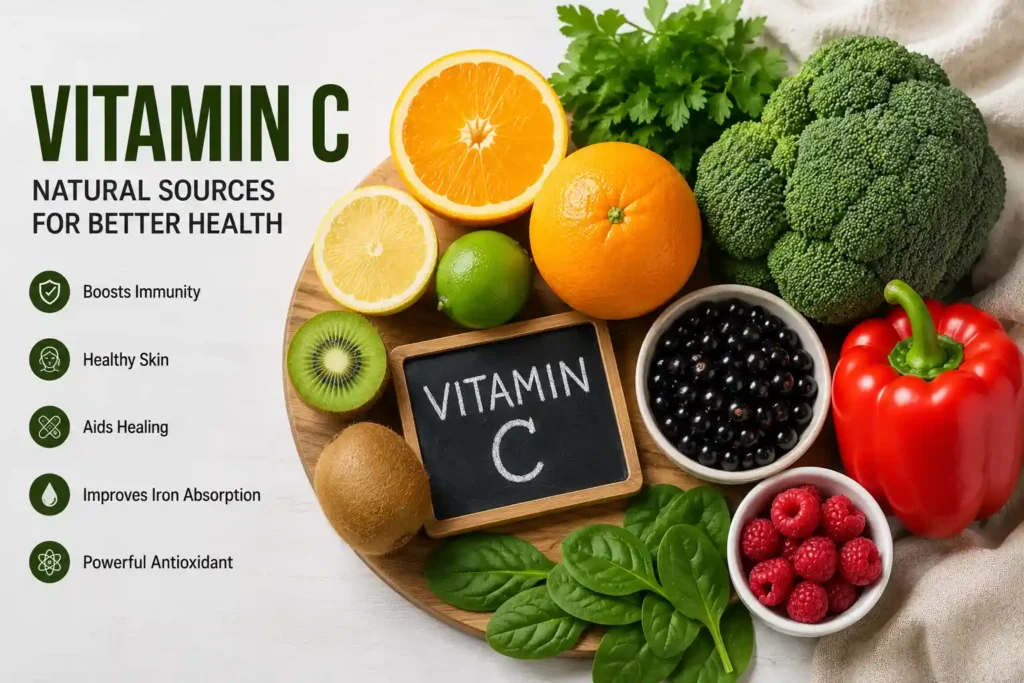
Vitamin C plays several key roles. It is a powerful antioxidant, helping protect cells from damage. It is essential for making collagen, a protein that gives structure to skin, blood vessels, bones, and connective tissue, which is why it is so important for skin health and wound healing. It supports the immune system, contributes to the health of blood vessels and gums, and significantly improves the body’s absorption of iron from plant foods — a connection explored in our guide on iron deficiency. This wide range of roles explains why vitamin C is genuinely important, well beyond its cold-fighting fame, and why getting enough supports many aspects of health.
9 Proven Benefits of Vitamin C
1. Supports the immune system. Vitamin C contributes to normal immune function, which is the basis of its famous reputation. While it will not necessarily prevent colds, it supports the immune system’s proper working, and adequate intake matters for immune health.
2. Acts as a powerful antioxidant. Vitamin C helps protect the body’s cells from damage caused by unstable molecules called free radicals, contributing to overall health.
3. Essential for collagen and skin health. Vitamin C is needed to make collagen, the protein that gives skin its structure and strength. This makes it important for healthy skin, and it is why vitamin C features so heavily in skincare.
4. Aids wound healing. Because of its role in collagen production, vitamin C is essential for proper wound healing and tissue repair.
5. Improves iron absorption. Vitamin C significantly enhances the absorption of iron from plant-based foods, making it valuable for preventing iron deficiency, particularly for those eating little or no meat.
6. Supports blood vessels and gums. Vitamin C contributes to the health of blood vessels and gums, through its role in collagen and connective tissue. Bleeding gums are a classic sign of deficiency.
7. Supports bones and connective tissue. Through collagen, vitamin C contributes to the health of bones, cartilage, and connective tissue throughout the body.
8. May support heart and blood vessel health. As an antioxidant with a role in blood vessel health, adequate vitamin C, as part of a diet rich in fruits and vegetables, is associated with cardiovascular wellbeing.
9. Supports energy and reduces tiredness. Vitamin C contributes to normal energy-yielding metabolism and helps reduce tiredness and fatigue, part of its wider role in the body.
Signs of Vitamin C Deficiency
Severe vitamin C deficiency is rare today but does occur, particularly with a very poor diet lacking fruits and vegetables. Because vitamin C is involved in collagen and many functions, deficiency can cause:
- Tiredness and weakness
- Bleeding, swollen, or sore gums
- Easy bruising
- Slow wound healing
- Dry skin and, in severe cases, skin problems
- Joint or muscle aches
- A weakened resistance to infection
Severe, prolonged deficiency causes a condition called scurvy, historically known among sailors who lacked fresh food. While rare now, it can still occur in people with very limited diets. Milder inadequacy is more common and worth avoiding through good dietary habits. Because these signs overlap with other conditions, they are prompts to consider your diet rather than proof of deficiency.
Best Food Sources of Vitamin C
Vitamin C is abundant in many fruits and vegetables, making it easy to obtain from a varied diet:
- Citrus fruits — oranges, lemons, grapefruit
- Berries — strawberries, blackcurrants
- Peppers — especially red and green peppers, which are very rich
- Kiwi fruit
- Broccoli, Brussels sprouts, and cabbage
- Tomatoes
- Leafy greens
- Potatoes — a everyday source, particularly with their skin
A helpful point: vitamin C is sensitive to heat and water, so some is lost in cooking, particularly boiling. Eating a range of raw or lightly cooked fruits and vegetables, and not overcooking them, helps preserve their vitamin C. Because so many common foods contain it, a diet with plenty of fruits and vegetables easily provides enough for most people, without any need for supplements.
How Much Vitamin C Do You Need?
Most people can get all the vitamin C they need from a balanced diet that includes fruits and vegetables, and food is the ideal source. Needs are modest and easily met — a couple of portions of vitamin-C-rich fruits and vegetables typically cover daily requirements comfortably.
Because vitamin C is water-soluble and not stored well, a regular daily supply matters more than large occasional amounts. The body uses what it needs and passes out much of the excess. This is also why very high-dose supplements offer little benefit for most people and can cause side effects — the body simply excretes the surplus. For the vast majority, a varied diet makes supplements unnecessary.
How to Get Enough Vitamin C Safely
For most people, meeting vitamin C needs is straightforward:
- Eat a variety of fruits and vegetables daily. This easily provides enough vitamin C along with many other nutrients.
- Include some raw or lightly cooked produce. Since cooking reduces vitamin C, raw fruits and lightly cooked vegetables retain more.
- Pair vitamin C with iron-rich plant foods. Having vitamin-C-rich foods alongside plant sources of iron improves iron absorption.
- Don’t rely on high-dose supplements. Very high doses offer little benefit for most people and can cause side effects like digestive upset, as the body excretes the excess.
- Store and prepare produce well. Eating fruits and vegetables reasonably fresh and not overcooking them preserves their vitamin C.
If you have a limited diet, or a condition affecting your nutrition, and are concerned about vitamin C, discuss it with a doctor rather than taking high doses on your own. The NHS guidance on vitamin C sets out recommended amounts.
Vitamin C and Your Skin
Vitamin C’s connection to skin health deserves a closer look, because it is one of its most important and popular roles — and one where understanding the science helps separate genuine benefit from marketing.
The key lies in collagen. Vitamin C is essential for the body to produce collagen, the protein that gives skin its structure, firmness, and strength. Without enough vitamin C, collagen production suffers, which is why skin problems and poor wound healing are features of deficiency. Adequate vitamin C, as part of good overall nutrition, therefore genuinely supports healthy skin from within. Its antioxidant role adds to this, helping protect skin cells from damage.
This is why vitamin C appears so widely in skincare and nutrition advice. Getting enough vitamin C through a diet rich in fruits and vegetables supports your skin’s health and its natural repair processes. While no single nutrient is a magic solution for skin, and skin health depends on many factors including overall diet, hydration, sun protection, and general health, vitamin C is a genuine contributor.
The most reliable way to support your skin with vitamin C is simply to eat plenty of vitamin-C-rich foods as part of a balanced diet, giving your body what it needs to produce collagen and protect skin cells. Our guide on natural remedies for skin covers a wider view of supporting skin health.
Common Myths About Vitamin C
Vitamin C attracts more than its share of myths, so it is worth setting a few straight. One widespread belief is that taking large doses of vitamin C will prevent or cure colds. In reality, while vitamin C supports normal immune function and deficiency impairs immunity, high doses do not reliably prevent colds for most people, and the body simply excretes the excess. Adequate intake matters, but megadoses are not the cold cure they are often made out to be.
Another myth is that more vitamin C is always better. Because it is water-soluble and not stored, the body passes out surplus vitamin C, so very high doses offer little extra benefit and can cause digestive side effects. Adequacy, easily achieved through diet, is the goal rather than maximum intake.
A further misconception is that you need supplements to get enough vitamin C — yet for the vast majority, a varied diet with fruits and vegetables provides plenty, making supplements unnecessary. Finally, some believe that once you have taken vitamin C, you are “stocked up” for a while, but since the body does not store it well, a regular daily supply from food matters more than occasional large amounts. Understanding these realities helps you get the genuine benefits of vitamin C without falling for the hype around it.
When to See a Doctor
Consider speaking to a doctor if:
- You have a very limited diet and are concerned about deficiency
- You have signs like bleeding gums, easy bruising, or slow healing
- You have a condition affecting your nutrition or absorption
- You are considering high-dose vitamin C supplements
- You have persistent tiredness or other symptoms you are unsure about
A doctor can advise whether your diet meets your needs and check for any underlying issue. For most people, though, a varied diet makes vitamin C deficiency very unlikely.
Final Thoughts
Vitamin C deserves its fame, but for broader reasons than most people realise. Far beyond its cold-fighting reputation, this essential vitamin supports your immune system, acts as a powerful antioxidant, is vital for collagen and therefore for skin, healing, blood vessels, and gums, and significantly improves your absorption of iron from plant foods. Because the body cannot make it or store it well, a regular dietary supply genuinely matters.
The reassuring and practical takeaway is that meeting your vitamin C needs is easy and enjoyable: a varied diet rich in fruits and vegetables — citrus, berries, peppers, broccoli, and more — comfortably provides enough for most people, without the need for high-dose supplements that the body largely excretes anyway. Eating some produce raw or lightly cooked preserves more of the vitamin, and pairing vitamin-C-rich foods with plant sources of iron brings an added benefit. For the vast majority, simply eating well is all it takes to enjoy vitamin C’s wide-ranging support for health.
Medical disclaimer: This article is for general educational information and is not a substitute for professional medical advice, diagnosis, or treatment. Consult a healthcare provider if you are concerned about deficiency or considering high-dose supplements.
Frequently Asked Questions
What are the main benefits of vitamin C? Vitamin C supports the immune system, acts as a powerful antioxidant, is essential for collagen and therefore skin health and wound healing, improves iron absorption from plant foods, and supports blood vessels, gums, bones, and energy. Its benefits extend well beyond its cold-fighting reputation.
What foods are high in vitamin C? Citrus fruits, berries, peppers (especially red and green), kiwi, broccoli, Brussels sprouts, cabbage, tomatoes, leafy greens, and potatoes are all good sources. Because vitamin C is found in so many fruits and vegetables, a varied diet easily provides enough for most people.
Does vitamin C prevent colds? Vitamin C supports normal immune function, but it will not necessarily prevent colds. Adequate intake matters for immune health, and severe deficiency impairs immunity, but for most people taking high doses does not reliably prevent colds. A balanced diet with enough vitamin C supports the immune system’s proper working.
How much vitamin C do I need per day? Needs are modest and easily met through a balanced diet — a couple of portions of vitamin-C-rich fruits and vegetables typically cover daily requirements. Because vitamin C is not stored well, a regular daily supply matters more than large occasional amounts, and most people do not need supplements.
Can you take too much vitamin C? Very high doses from supplements offer little benefit for most people, as the body excretes the excess, and can cause side effects like digestive upset and diarrhoea. Getting vitamin C from food is the safest approach, and food sources do not cause these problems.
What are the signs of vitamin C deficiency? Signs can include tiredness, bleeding or sore gums, easy bruising, slow wound healing, dry skin, and joint aches. Severe, prolonged deficiency causes scurvy. Deficiency is rare today but can occur with a very poor diet lacking fruits and vegetables, and is worth avoiding through good eating habits.
Does vitamin C help with iron absorption? Yes. Vitamin C significantly improves the absorption of iron from plant-based foods, making it valuable for preventing iron deficiency, especially for those eating little or no meat. Having vitamin-C-rich foods alongside plant sources of iron is a simple way to boost iron uptake.