Foods for Fatty Liver: 12 Best Choices to Support Your Liver
The liver is one of the few organs with a remarkable ability to repair itself — and in the case of fatty liver disease, what you eat is one of the most powerful tools you have to help it do exactly that. Unlike many conditions where diet plays a supporting role, in early fatty liver, food is close to the main event. The right eating pattern can reduce the fat stored in the liver, calm inflammation, and in its early stages, help reverse the condition altogether.
That is genuinely encouraging news, because fatty liver is common and often silent, and many people feel powerless when they first hear the diagnosis. The truth is the opposite: the same everyday food choices that drive fat into the liver can, reversed, help clear it out. There is no single miracle food, but there is a clear, evidence-informed pattern of eating that supports liver health.
This guide covers the best foods for a fatty liver, the ones worth limiting, and how to build meals that give your liver the best chance to recover.
Quick Overview
| Food group | Why it helps the liver |
|---|---|
| Non-starchy vegetables | Low in calories, high in fibre and antioxidants |
| Whole grains | Steadier blood sugar, less fat storage |
| Oily fish | Omega-3s that support liver fat balance |
| Beans and legumes | Fibre and protein, filling and liver-friendly |
| Nuts | Healthy fats linked with better liver health |
| Olive oil | A liver-friendly fat central to the Mediterranean diet |
| Coffee (in moderation) | Associated with lower liver damage in studies |
How Diet Affects Your Liver
Fatty liver disease means too much fat has built up inside the liver cells. In the most common form, this is closely tied to weight, insulin resistance, and a diet high in sugar and refined carbohydrates — the same factors behind type 2 diabetes and heart disease. When you regularly eat more sugar and refined carbs than your body needs, the excess is converted to fat, much of which can end up stored in the liver.
This is why diet is so central. Reducing the foods that promote liver fat, and increasing those that support the liver, directly targets the root of the problem. In its early stages, this can reduce liver fat and allow the liver to recover — a clear example of a condition that is often reversible through the right changes, as explored in our guide on fatty liver symptoms and how it develops. Because fatty liver shares its roots with diabetes and high blood pressure, the liver-friendly diet overlaps heavily with the advice in our guides on foods for diabetes and lowering blood pressure naturally.
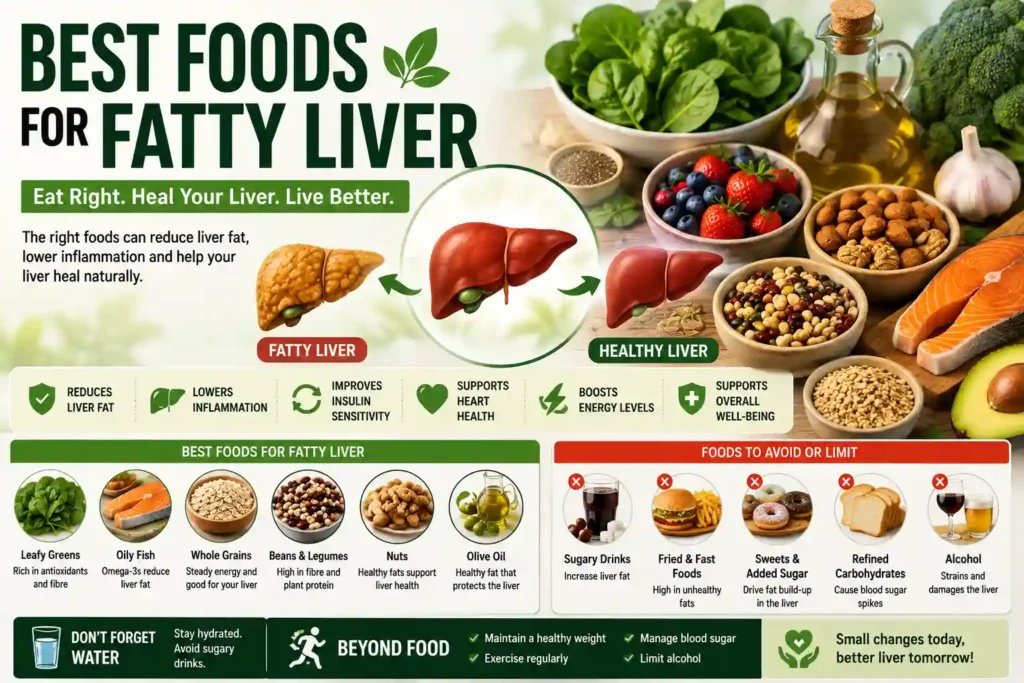
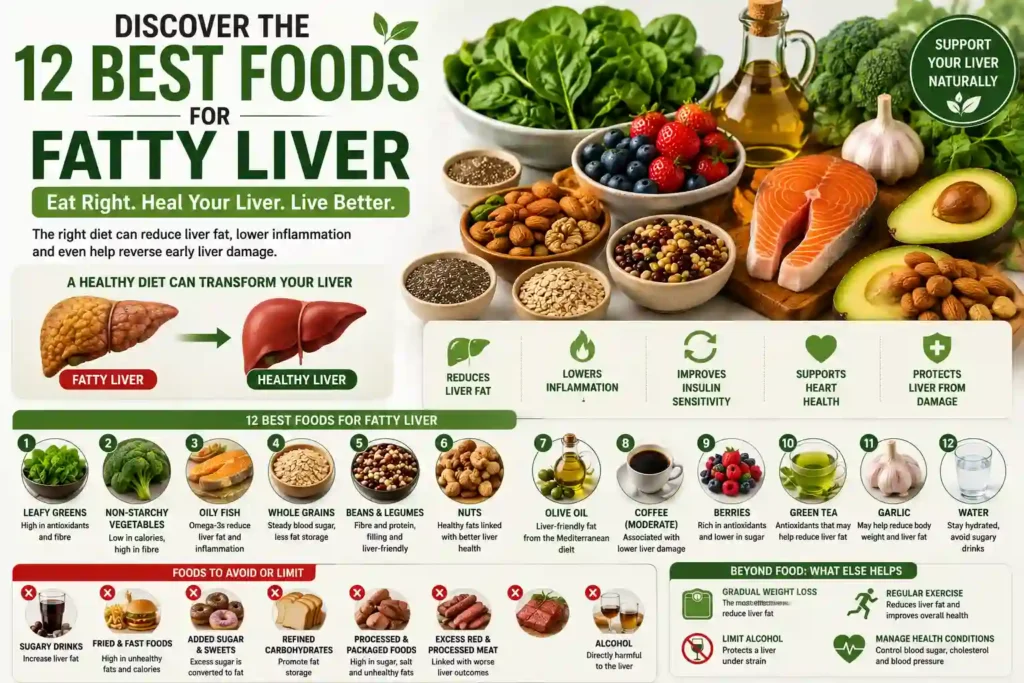
12 Best Foods for Fatty Liver
1. Leafy greens. Spinach, kale, and other leafy greens are low in calories and rich in antioxidants and fibre. Some research suggests compounds in leafy greens may help reduce fat build-up in the liver, making them a valuable everyday choice.
2. Non-starchy vegetables. Broccoli, cauliflower, peppers, courgette, and similar vegetables add fibre, nutrients, and volume with very few calories, helping with the weight management that is central to reversing fatty liver.
3. Oily fish. Salmon, mackerel, and sardines provide omega-3 fatty acids, which help the body handle fats and are associated with reduced liver fat and inflammation. Including oily fish a couple of times a week is a smart move for liver health.
4. Whole grains. Oats, barley, brown rice, and quinoa raise blood sugar more slowly than refined grains, reducing the insulin spikes that drive fat storage in the liver. Their fibre also supports overall metabolic health.
5. Beans and legumes. Lentils, chickpeas, and beans combine fibre and plant protein, keeping you full and producing a gentle, steady effect on blood sugar. They are an excellent liver-friendly staple.
6. Nuts. Almonds, walnuts, and other nuts provide healthy fats, and studies link nut consumption with better liver health. Keep portions modest, as they are calorie-dense, but they are a genuinely beneficial food.
7. Olive oil. A cornerstone of the Mediterranean diet, olive oil is a healthy fat associated with lower liver fat compared with saturated fats. Using it in place of butter or refined oils supports the liver.
8. Coffee (in moderation). This surprises people, but research has consistently linked moderate coffee consumption with a lower risk of liver damage and scarring in people with fatty liver. Black or lightly sweetened coffee, without excess sugar and cream, appears most beneficial.
9. Berries. Blueberries, strawberries, and other berries are rich in antioxidants and lower in sugar than many fruits, making them a liver-friendly way to satisfy a sweet craving.
10. Green tea. Green tea contains antioxidants that some studies associate with reduced liver fat, though it is a supportive addition rather than a treatment on its own.
11. Garlic. Some research suggests garlic may help reduce body weight and fat in people with fatty liver. As a flavourful, low-calorie way to season food without salt, it is a useful kitchen ally.
12. Water. Not a food, but essential. Staying well hydrated and replacing sugary drinks with water is one of the single most impactful changes for a fatty liver, since sugary drinks are among the biggest drivers of liver fat.
Foods to Avoid or Limit
| Limit or avoid | Why |
|---|---|
| Sugary drinks and fruit juice | Among the biggest drivers of liver fat |
| Added sugar and sweets | Excess sugar is converted to liver fat |
| Refined carbs (white bread, white rice) | Fast-absorbed, promote fat storage |
| Fried and fast foods | High in unhealthy fats and calories |
| Processed and packaged foods | Often high in sugar, salt, and unhealthy fats |
| Excess red and processed meat | Linked with worse liver outcomes |
| Alcohol | Directly harmful to the liver |
Alcohol deserves special mention. In alcohol-related fatty liver, reducing or stopping drinking is essential. Even in non-alcohol-related fatty liver, alcohol adds strain to a liver that is already under pressure, so limiting it is wise. Sugary drinks are the other standout to cut — they deliver liver fat with remarkable efficiency and are one of the easiest things to eliminate for a real benefit.
Building a Liver-Friendly Plate
A simple, effective model:
- Half the plate: non-starchy vegetables and leafy greens
- A quarter: lean protein — fish, poultry, beans, or tofu
- A quarter: whole grains or a small portion of starchy vegetables
- A little healthy fat: olive oil, nuts, or avocado
This structure naturally reduces refined carbs and sugar while increasing fibre, healthy fats, and nutrients — exactly what a recovering liver needs. Pair it with water instead of sugary drinks, and you have a pattern that supports both the liver and the gradual weight loss that helps reverse fatty liver.
The overall pattern matters more than any single food. The Mediterranean style of eating — rich in vegetables, whole grains, fish, olive oil, and nuts, and low in sugar and processed food — is consistently associated with better liver health, and it is a realistic, enjoyable way to eat long-term rather than a restrictive short-term diet.
Beyond Food: What Else Helps
Diet works best alongside a few other changes:
- Gradual weight loss is the single most effective step for non-alcohol-related fatty liver — even a modest, steady reduction reduces liver fat
- Regular physical activity reduces liver fat independently of weight loss
- Limiting alcohol protects a liver under strain
- Managing related conditions — blood sugar, cholesterol, and blood pressure — supports recovery
These are not separate from the diet but part of the same overall approach, and together they give the liver the best chance to heal.
A Sample Day of Liver-Friendly Eating
Seeing how the pieces fit together into a real day makes the approach far easier to follow. This is an example, not a rigid prescription — the point is the pattern, not the exact meals.
For breakfast, porridge made with oats topped with berries and a few chopped nuts offers slow-release carbohydrate, fibre, antioxidants, and healthy fat — a steady start that avoids the blood sugar spike of sugary cereals or pastries. A cup of black coffee alongside fits well, given coffee’s association with better liver health.
For lunch, a large salad of leafy greens and mixed vegetables with beans or grilled fish, dressed with olive oil, delivers the vegetable-heavy, protein-balanced plate the liver benefits from. A portion of whole grains such as quinoa or brown rice rounds it out.
For dinner, grilled oily fish like salmon with a generous serving of non-starchy vegetables and a small portion of whole grains follows the same balanced-plate principle. If you want something sweet afterwards, a bowl of berries satisfies without the sugar load of desserts.
Throughout the day, water is the drink of choice, replacing the sugary drinks and juices that are among the biggest contributors to liver fat. Snacks, if needed, might be a small handful of nuts, some vegetable sticks, or a piece of whole fruit. Across a full day, this pattern is naturally low in sugar and refined carbs and rich in the vegetables, healthy fats, and fibre that support liver recovery — and it is enjoyable enough to sustain long-term.
Common Diet Mistakes With Fatty Liver
A few well-intentioned errors can undermine an otherwise good effort, and knowing them helps you avoid wasted time.
The most common is focusing only on cutting fat while ignoring sugar and refined carbs. Because the condition is called “fatty” liver, people often assume dietary fat is the enemy and load up on low-fat but sugary processed products. In reality, excess sugar and refined carbohydrate are major drivers of liver fat, and healthy fats like olive oil and those in fish and nuts are beneficial. Cutting sugar matters more than cutting all fat.
Another mistake is relying on fruit juice and smoothies as “healthy” choices. While whole fruit is fine in moderation, juices and many smoothies deliver concentrated sugar without the fibre of whole fruit, behaving much like sugary drinks. Whole fruit is the better choice.
A third is attempting extreme crash diets in the hope of fast results. Very rapid weight loss can actually stress the liver, and restrictive diets are hard to maintain. Gradual, steady weight loss through a sustainable pattern is both safer and more effective. Finally, some people expect a single “superfood” or supplement to fix the problem. No such food exists — it is the overall pattern of eating, sustained over time, that genuinely helps the liver recover.
When to See a Doctor
See a doctor if:
- You have been diagnosed with fatty liver and want guidance on diet and next steps
- You have risk factors — excess weight, type 2 diabetes, high cholesterol
- You have symptoms such as persistent fatigue or discomfort under the right ribs
- A blood test has shown raised liver enzymes
- You drink alcohol regularly and are concerned about your liver
Seek prompt medical attention for yellowing of the skin or eyes, abdominal swelling, or easy bruising, which suggest more advanced liver problems. Diet is powerful, but a doctor should guide the management of fatty liver, especially to monitor progress. The NHS guidance on fatty liver disease explains the wider approach.
Final Thoughts
Few conditions respond to diet as directly as early fatty liver, which makes the food on your plate one of your greatest sources of hope after a diagnosis. The pattern is clear and achievable: plenty of vegetables and leafy greens, oily fish, whole grains, beans, nuts, and olive oil, with sugary drinks, refined carbs, and alcohol cut right back. There is no single magic food, but this Mediterranean-style way of eating consistently supports liver health and, in early disease, can help reverse it.
The most empowering takeaway is that you are not powerless. Combined with gradual weight loss, regular movement, and medical guidance, the right diet can genuinely change the course of fatty liver — and because these same choices protect your heart and blood sugar, the benefits reach well beyond the liver. Start with the easiest win of all, swapping sugary drinks for water, and build from there.
Medical disclaimer: This article is for general educational information and is not a substitute for professional medical advice, diagnosis, or treatment. Always consult a qualified healthcare provider about managing fatty liver and before making significant dietary changes.
Frequently Asked Questions
What are the best foods for a fatty liver? Leafy greens, non-starchy vegetables, oily fish, whole grains, beans, nuts, olive oil, berries, and moderate coffee are among the best. They share qualities that support the liver: fibre, healthy fats, antioxidants, and a gentle effect on blood sugar.
What foods should I avoid with a fatty liver? Limit sugary drinks and fruit juice, added sugar and sweets, refined carbohydrates, fried and processed foods, excess red and processed meat, and alcohol. Sugary drinks and alcohol are especially important to cut back, as both drive liver fat and strain.
Can diet reverse a fatty liver? In its early stages, yes — the liver can recover when the underlying drivers are addressed. A liver-friendly diet, combined with gradual weight loss and regular activity, can reduce liver fat and reverse early disease. Advanced scarring is harder to reverse, so early action matters.
Is coffee good for a fatty liver? Research has consistently linked moderate coffee consumption with a lower risk of liver damage and scarring in people with fatty liver. Black or lightly sweetened coffee, without excess sugar and cream, appears most beneficial, though it is one part of an overall approach.
What is the best diet for a fatty liver? A Mediterranean-style pattern — rich in vegetables, whole grains, fish, olive oil, nuts, and beans, and low in sugar, refined carbs, and processed food — is consistently associated with better liver health and is realistic to maintain long-term.
Can I drink alcohol with a fatty liver? For alcohol-related fatty liver, reducing or stopping drinking is essential. Even in non-alcohol-related fatty liver, alcohol adds strain to a liver already under pressure, so limiting it is strongly advised. Discuss your situation with your doctor.
How quickly can diet improve a fatty liver? It varies, but liver fat can begin to reduce within weeks to months of consistent dietary change and weight loss. Improvement is gradual and depends on the starting point, so a sustained approach matters more than quick fixes, ideally monitored by your doctor.