Zinc Benefits: 10 Proven Ways It Supports Your Health
Zinc does not get as much attention as vitamins like C or D, but it is just as essential. This mineral is involved in hundreds of processes in your body. It supports your immune system, helps wounds heal, keeps your skin healthy, and even affects your sense of taste and smell. Yet many people know little about what zinc actually does.
Your body cannot make or store much zinc. So you need a regular supply from food. Because zinc is involved in so many functions, getting enough matters for your health in many ways. A shortage can affect your immune system, your skin, and more.
The good news is that zinc is found in many everyday foods, so most people can get enough from a balanced diet. This guide explains what zinc is good for, its key benefits, the best food sources, how much you need, and how to get enough safely.
Quick Overview
| Question | Short answer |
|---|---|
| What is zinc? | An essential mineral for many body functions |
| What is it good for? | Immunity, healing, skin, taste, and growth |
| Best food sources | Meat, shellfish, beans, nuts, seeds, dairy |
| Can the body store it? | Not well, so regular intake is needed |
| Who is at risk of low zinc? | Vegans, some older adults, certain conditions |
| Can you take too much? | Yes, high-dose supplements can cause problems |
Why Zinc Matters
Zinc is an essential mineral, which means your body needs it but cannot make it. You have to get it from your diet. Despite being needed only in small amounts, zinc plays a role in a huge range of body processes.
Zinc helps hundreds of enzymes work. These are the tiny helpers that drive chemical reactions in the body. Zinc is involved in your immune system, in healing and repair, in growth and development, and in making proteins and DNA. It also supports your skin, your sense of taste and smell, and more.
Because zinc is so widely involved, a shortage can affect many parts of the body. And because your body does not store much zinc, a regular supply from food matters. Our guides on other important minerals, calcium benefits and magnesium benefits, cover nutrients that work alongside zinc for good health.
10 Key Benefits of Zinc
1. Supports the immune system. This is one of zinc’s best-known roles. Zinc is essential for your immune system to work properly. It helps your body defend against infection, which is why zinc is often linked with immune health.
2. Helps wounds heal. Zinc plays a key role in healing and repairing tissue. It is needed for the skin to repair itself, which is why zinc is important for wound healing.
3. Supports healthy skin. Zinc helps keep the skin healthy. It is involved in skin repair and is sometimes used in skin care for this reason. Low zinc can affect the skin.
4. Supports growth and development. Zinc is essential for normal growth and development. This makes it especially important during childhood, adolescence, and pregnancy.
5. Supports taste and smell. Zinc plays a role in your sense of taste and smell. A shortage of zinc can affect these senses, which can reduce appetite too.
6. Acts in many enzymes. Zinc helps hundreds of enzymes work. These drive countless reactions in the body, from making proteins to processing nutrients.
7. Supports DNA and protein production. Zinc is needed to make DNA and proteins, the building blocks your body uses to grow, repair, and function.
8. Supports eye health. Zinc is found in high amounts in the eye and plays a role in eye health, as part of overall good nutrition.
9. Supports reproductive health. Zinc plays a role in reproductive health and normal development, as part of its wider importance in the body.
10. Acts as an antioxidant. Zinc helps protect the body’s cells, contributing to overall health as part of a balanced diet.
What Is Zinc Good For? A Closer Look
People often ask what zinc is actually good for, so it helps to focus on its most important everyday roles.
The role zinc is best known for is supporting the immune system. Zinc is essential for immune cells to work properly, which is why it is so often linked with fighting off infection. Some people use zinc when they feel a cold coming on, though it is best thought of as supporting normal immune function rather than a cure.
Zinc is also strongly linked with healing and skin. It is needed to repair tissue and skin, which is why it matters for wound healing and healthy skin. And because zinc affects taste and smell, a shortage can dull these senses. These everyday roles, immunity, healing, skin, and taste, are what zinc is most valued for, and they show why getting enough is worthwhile.
Signs You Might Be Low in Zinc
Zinc deficiency is not common in people who eat a balanced diet, but it can happen. Because zinc is involved in so many functions, low levels can cause a range of signs, including:
- More frequent infections, as immunity is affected
- Slow wound healing
- Skin problems
- A reduced sense of taste or smell
- Hair loss
- Poor appetite
These signs can have many other causes, so they are prompts to consider zinc rather than proof of a deficiency. Some groups are more at risk of low zinc, including people who eat little or no animal produce, some older adults, and people with certain conditions that affect how zinc is absorbed. If you think you may be low, a doctor can advise.
Best Food Sources of Zinc
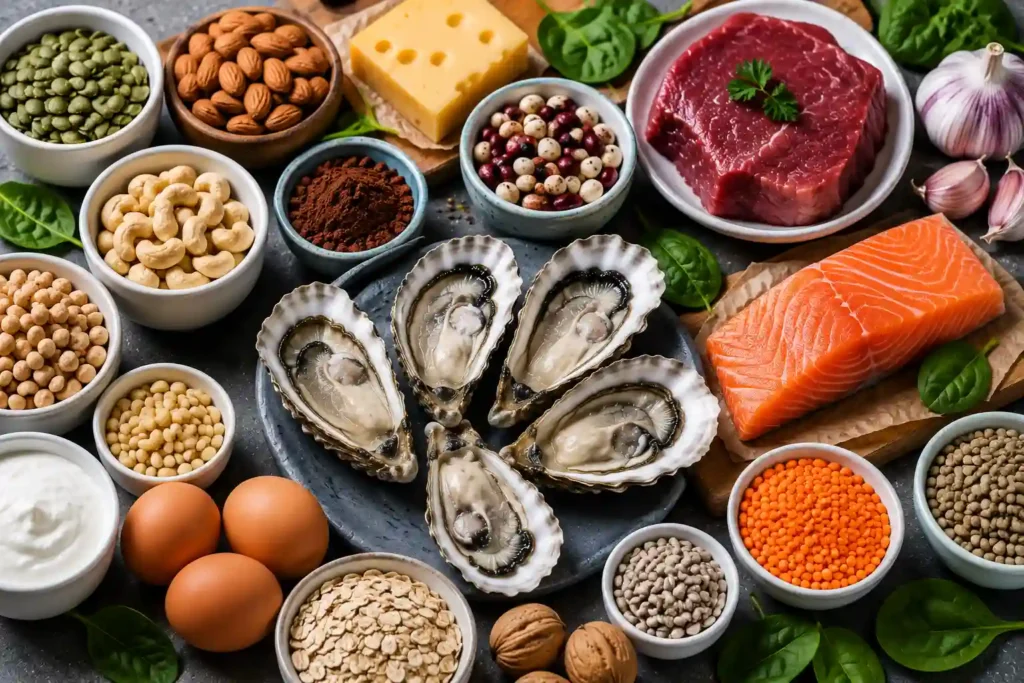
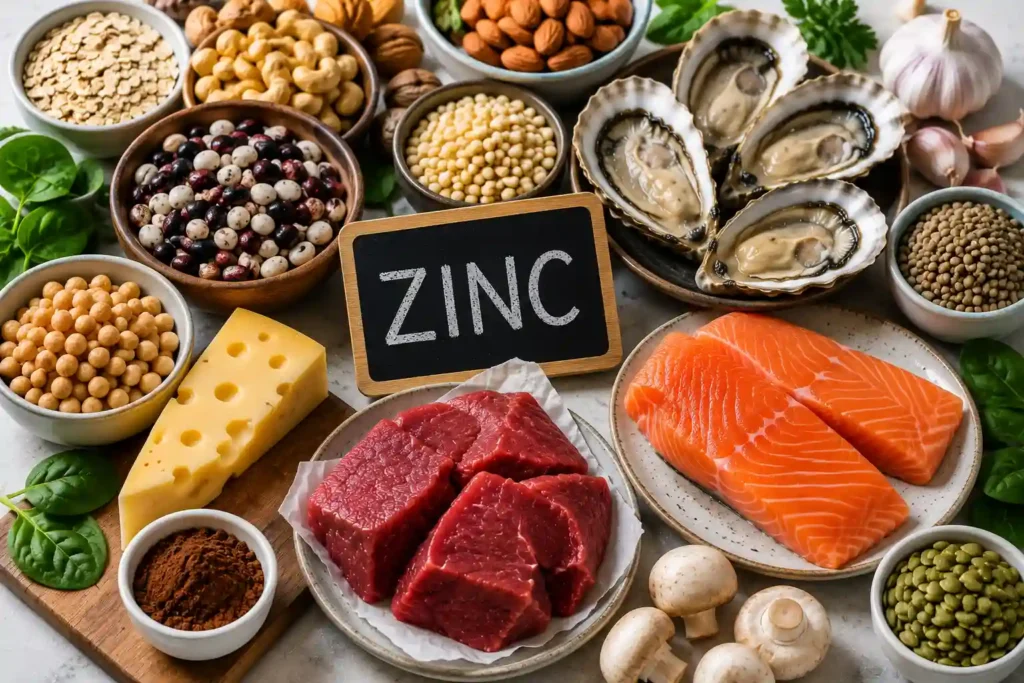
Zinc is found in many foods, so a balanced diet usually provides enough. Good sources include:
- Meat — a rich and well-absorbed source
- Shellfish — such as oysters, crab, and prawns, which are especially high in zinc
- Beans and legumes — such as chickpeas and lentils
- Nuts and seeds — such as pumpkin seeds and cashews
- Dairy products — such as cheese and milk
- Wholegrains
- Eggs
One point worth knowing: zinc from animal foods is generally absorbed better than zinc from plant foods. This is because plant foods contain compounds that can reduce zinc absorption. So people who eat little or no animal produce may need to pay more attention to their zinc intake. Including a variety of zinc-rich foods helps most people get enough.
How Much Zinc Do You Need?
Most people can get all the zinc they need from a balanced diet, and food is the ideal source. Zinc needs are modest and vary by age and life stage, being higher during growth and pregnancy.
Because your body does not store much zinc, a regular supply matters more than large occasional amounts. The important thing is to meet your needs without going too far. While too little zinc causes problems, taking very high amounts, usually from supplements, can also cause harm. The goal is enough, not as much as possible.
How to Take Zinc Safely
For most people, a balanced diet provides enough zinc without supplements. If you are considering a zinc supplement, a few points matter.
Food first. Getting zinc from food is the safest approach, and food provides other nutrients too.
Do not overdo supplements. Taking too much zinc from supplements can cause side effects and can interfere with the absorption of other minerals, such as copper. More is not better.
Be careful with long-term high doses. High-dose zinc over a long time can cause problems, so it should only be taken on medical advice.
Check with a professional. If you think you need a supplement, or you are at risk of low zinc, a doctor or pharmacist can advise on whether and how much to take.
The safest approach is to prioritise zinc-rich foods and to use supplements thoughtfully, ideally with professional advice, rather than taking high doses routinely. The NHS guidance on zinc sets out recommended amounts.
Zinc and Your Immune System
Of all zinc’s roles, its support for the immune system is the most talked about. It is worth understanding why zinc matters so much for immunity.
Zinc is essential for immune cells to develop and work properly. Your immune system relies on zinc to defend the body against infection. When zinc is low, the immune system does not work as well, which can leave you more prone to infections. This is why adequate zinc is so important for immune health.
This is also why zinc is often mentioned in connection with colds. Some people take zinc when they feel a cold starting. While zinc supports normal immune function, it is best thought of as supporting your immunity rather than a guaranteed cure for colds. The most reliable way to support your immune system with zinc is simply to get enough through your diet, as part of overall good nutrition.
It is worth remembering that immunity depends on many nutrients and factors, not zinc alone. A balanced diet, good sleep, and a healthy lifestyle all support your immune system. Zinc is one important piece of that picture. Getting enough zinc, alongside other nutrients like vitamin C, helps your immune system do its job.
Who Is Most at Risk of Low Zinc
While most people who eat a balanced diet get enough zinc, some groups are more likely to fall short. Knowing whether you are at higher risk helps you decide whether to pay closer attention.
People who eat little or no animal produce, such as vegans and some vegetarians, are more at risk. This is because zinc from plant foods is less well absorbed than zinc from animal foods, and plant foods contain compounds that reduce zinc absorption. With careful food choices, including plenty of beans, nuts, seeds, and wholegrains, these individuals can still meet their needs, but it takes more attention.
Some older adults are also at higher risk, partly through lower intake and partly through reduced absorption. People with certain conditions that affect how the gut absorbs nutrients can be prone to low zinc too, as can those with some other health conditions. If you fall into one of these groups and have possible signs of low zinc, it is worth discussing with your doctor rather than either ignoring it or taking high-dose supplements on your own. For most people, though, a varied diet keeps zinc levels healthy.
When to See a Doctor
Consider speaking to a doctor if:
- You have signs of low zinc, such as frequent infections, slow healing, or a reduced sense of taste
- You eat little or no animal produce and are concerned about your zinc
- You have a condition that affects how you absorb nutrients
- You are considering zinc supplements, especially at higher doses
- You have ongoing symptoms you are unsure about
A doctor can advise whether a supplement is appropriate and check for any underlying issue. For most people, though, a balanced diet makes zinc deficiency unlikely.
Final Thoughts
Zinc may not be the most famous mineral, but it is one of the most important. It supports your immune system, helps wounds heal, keeps your skin healthy, and affects your sense of taste and smell, among hundreds of other roles. Because your body cannot store much zinc, a regular supply from food genuinely matters.
The reassuring news is that meeting your zinc needs is usually easy. A balanced diet with foods like meat, shellfish, beans, nuts, seeds, and dairy provides enough for most people, without the need for supplements. Zinc from animal foods is better absorbed, so those who avoid animal produce may need to take a little more care.
For most people, simply eating well is all it takes to enjoy zinc’s wide-ranging support for health. If you have signs of low zinc or are at higher risk, a doctor can advise, and any supplement is best used thoughtfully rather than in high doses. Zinc quietly does its essential work in the background, keeping many parts of your body running as they should.
Medical disclaimer: This article is for general educational information only. It is not a substitute for professional medical advice, diagnosis, or treatment. Consult a healthcare provider before taking zinc supplements, especially at high doses.
Frequently Asked Questions
What is zinc good for? Zinc supports the immune system, helps wounds heal, keeps the skin healthy, and supports your sense of taste and smell. It is also essential for growth, development, and making DNA and proteins. It is involved in hundreds of processes throughout the body.
What are the main benefits of zinc? The main benefits of zinc include supporting immunity, wound healing, healthy skin, taste and smell, growth and development, and the work of hundreds of enzymes. It also supports eye and reproductive health and acts as an antioxidant, as part of a balanced diet.
What foods are high in zinc? Meat, shellfish (especially oysters), beans and legumes, nuts and seeds, dairy products, wholegrains, and eggs are all good sources. Zinc from animal foods is generally absorbed better than from plant foods, so those who avoid animal produce may need to take more care.
What are the signs of zinc deficiency? Signs can include more frequent infections, slow wound healing, skin problems, a reduced sense of taste or smell, hair loss, and poor appetite. These can have many causes, so they are prompts to consider zinc rather than proof of a deficiency. A doctor can advise.
Should I take a zinc supplement? Most people get enough zinc from a balanced diet and do not need a supplement. Those at higher risk of low zinc, such as vegans or people with certain conditions, may benefit, but a doctor or pharmacist should advise. Avoid high-dose zinc without medical advice.
Can you take too much zinc? Yes. Taking too much zinc, usually from supplements, can cause side effects and interfere with the absorption of other minerals like copper. High-dose zinc over a long time can cause problems. The goal is enough zinc, not as much as possible, so food is the safest source.
Does zinc help with colds? Zinc supports normal immune function, and some people use it when they feel a cold coming on. However, it is best thought of as supporting the immune system rather than a cure for colds. Getting enough zinc through diet supports your immunity as part of overall health.