Iron Deficiency: 10 Symptoms, Causes & How to Fix It Safely
Iron deficiency is the most common nutritional deficiency in the world, and yet it is one of the easiest to overlook. Its symptoms creep in gradually — a growing tiredness, skin that looks a little paler, breathlessness climbing stairs you used to manage easily — and because they arrive slowly, people adapt to them, assuming they are simply run down or getting older. Many carry on for months, quietly low on the one mineral their body needs to move oxygen around.
That last point is the heart of it. Iron’s main job is to help red blood cells carry oxygen from your lungs to every tissue in your body. When iron runs low, oxygen delivery falters, and the whole body feels it — most obviously as fatigue, but in a surprising number of other ways too. The good news is that iron deficiency is both easy to confirm with a blood test and very treatable once identified.
This guide covers the symptoms of iron deficiency, why it happens, the best iron-rich foods, and how to raise your levels safely — because, as with many things, more is not always better.
Quick Overview
| Question | Short answer |
|---|---|
| What is it? | Not enough iron for the body’s needs |
| Why it matters | Iron carries oxygen in the blood |
| Most common symptom | Fatigue and weakness |
| Who’s at risk? | Women with heavy periods, pregnancy, vegetarians, gut issues |
| Serious form | Iron deficiency anaemia |
| How is it diagnosed? | A blood test measuring iron and haemoglobin |
| How is it treated? | Iron-rich diet, supplements, treating the cause |
Why Iron Matters So Much
Iron is essential for making haemoglobin, the protein in red blood cells that binds oxygen and carries it around the body. Without enough iron, the body cannot make enough healthy haemoglobin, and oxygen delivery to your tissues drops. When this progresses far enough, it causes iron deficiency anaemia — a condition where you have too few healthy red blood cells.
Because every part of your body depends on oxygen, the effects of low iron are wide-ranging. Muscles tire quickly, the brain struggles to concentrate, the heart works harder to compensate, and even hair, skin, and nails can suffer. Iron also plays roles beyond oxygen transport, supporting the immune system and energy production at the cellular level. This is why iron deficiency so often shows up first as unexplained fatigue — a symptom it shares with several other conditions, which is exactly why a blood test rather than guesswork is the reliable way to identify it. Our guide on fatigue causes covers how low iron fits among the many possible reasons for tiredness.
10 Symptoms of Iron Deficiency
No single symptom confirms iron deficiency, but when several appear together, especially with risk factors, it is worth checking.
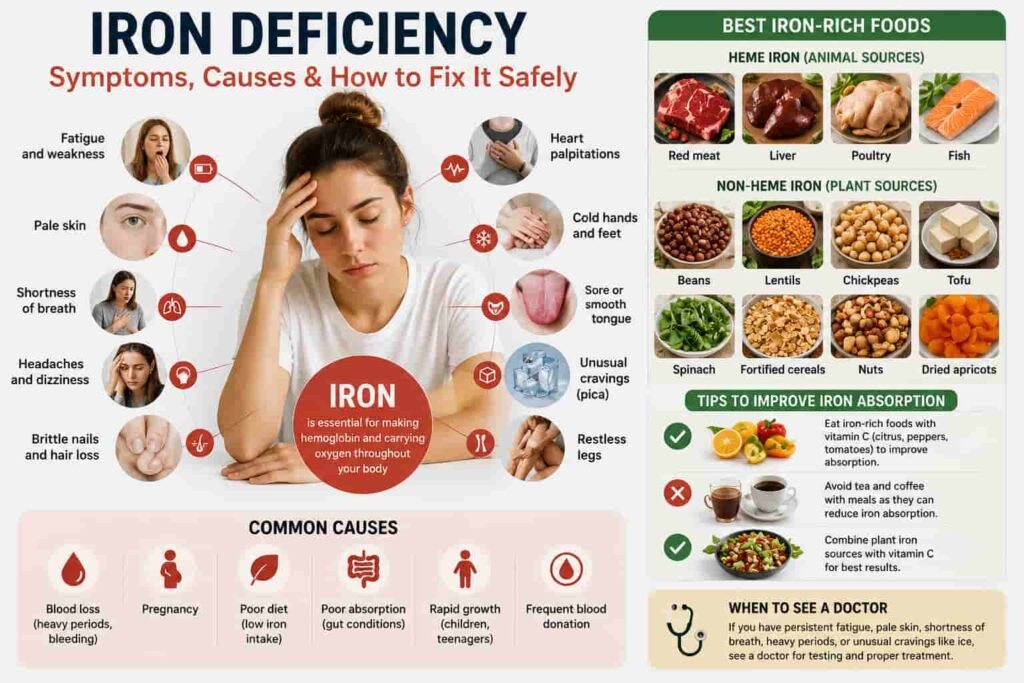
1. Persistent fatigue and weakness. The most common sign by far. With less oxygen reaching your tissues, you feel tired, weak, and low on energy, often out of proportion to your activity.
2. Pale skin. Reduced haemoglobin can make the skin, and especially the inside of the lower eyelids and the gums, look paler than usual.
3. Shortness of breath. When oxygen delivery drops, you may find yourself breathless during activities that never used to bother you, like climbing stairs.
4. Heart palpitations. A noticeably fast or pounding heartbeat can occur as the heart works harder to circulate the limited oxygen.
5. Headaches and dizziness. Reduced oxygen to the brain can cause headaches, lightheadedness, or dizziness.
6. Cold hands and feet. Poor oxygen circulation can leave the extremities feeling cold.
7. Brittle nails and hair loss. Iron deficiency can make nails brittle or spoon-shaped, and can contribute to increased hair shedding.
8. A sore or smooth tongue. Some people develop a sore, swollen, or unusually smooth tongue, along with cracks at the corners of the mouth.
9. Unusual cravings (pica). A distinctive sign is craving non-food items such as ice, dirt, or chalk — a phenomenon called pica that is specifically linked to iron deficiency.
10. Restless legs. An uncomfortable urge to move the legs, particularly at night, has been associated with low iron in some people.
These symptoms overlap with many other conditions, from other deficiencies to thyroid problems, which is why the reliable path is a blood test rather than assuming iron is the cause.
What Causes Iron Deficiency
| Cause | Why it lowers iron |
|---|---|
| Blood loss | Heavy periods are a leading cause in women; also gut bleeding |
| Pregnancy | Increased demand to support the growing baby |
| Not enough dietary iron | Especially in vegetarian and vegan diets without planning |
| Poor absorption | Coeliac disease, gut conditions, and some surgeries |
| Rapid growth | Children and teenagers have higher needs |
| Frequent blood donation | Can deplete iron stores over time |
Blood loss is the most important cause to understand, because it is common and sometimes hidden. Heavy menstrual periods are a very frequent reason for iron deficiency in women. In others, particularly men and postmenopausal women, unexplained iron deficiency can sometimes signal slow bleeding in the digestive tract, which is why a doctor may want to investigate the underlying cause rather than simply topping up the iron. This is a key reason not to self-treat iron deficiency indefinitely without knowing why it happened.
Best Iron-Rich Foods
There are two types of dietary iron, and knowing the difference helps you plan.
Haem iron, from animal sources, is absorbed more efficiently:
- Red meat, such as beef and lamb
- Liver and other organ meats
- Poultry
- Fish and shellfish
Non-haem iron, from plant sources, is absorbed less efficiently but still valuable:
- Beans, lentils, and chickpeas
- Tofu
- Dark leafy greens such as spinach
- Fortified cereals
- Nuts, seeds, and dried fruit such as apricots
A useful trick for plant-based iron: eating it alongside vitamin C — a squeeze of lemon, some peppers, or citrus — significantly improves absorption. Conversely, tea and coffee taken with meals reduce iron absorption, so it can help to have them between meals rather than alongside iron-rich food. For vegetarians and vegans, combining these strategies makes plant iron work much harder. Our guide on foods for diabetes touches on building balanced, nutrient-rich meals more generally.
How to Raise Iron Levels Safely
Dietary changes are the foundation for mild deficiency and prevention — building iron-rich foods into your meals and pairing plant iron with vitamin C.
Iron supplements are often needed to correct an established deficiency, since diet alone can be slow. However, iron supplements should ideally be taken on the advice of a doctor, for two reasons. First, the dose and type matter, and taking iron when you do not need it can cause harm, because the body has no easy way to remove excess iron. Second, the underlying cause needs identifying — simply supplementing without knowing why you became deficient can mask a problem that needs attention.
Iron supplements commonly cause side effects like constipation, stomach upset, and dark stools, which put some people off. Taking them with food, adjusting the dose or type, or taking them every other day can help — again, best guided by your doctor. Treatment usually continues for several months, even after levels normalise, to rebuild the body’s stores.
Treating the cause is essential. If heavy periods, a gut condition, or another source of blood loss is behind the deficiency, addressing that is part of the solution — otherwise the deficiency simply returns.
From Low Iron to Anaemia: Understanding the Stages
Iron deficiency does not happen all at once — it develops in stages, and understanding this helps explain why symptoms sometimes appear before a diagnosis of anaemia, and why treatment continues even after you feel better.
In the first stage, the body’s iron stores begin to run down while blood levels still look relatively normal. You may already feel slightly tired at this point, even though a basic test might not flag full anaemia. As stores continue to deplete, the body struggles to make enough haemoglobin, and this is where symptoms typically become more noticeable. Finally, if the deficiency continues, it progresses to iron deficiency anaemia — the stage where red blood cell levels drop and symptoms like marked fatigue, breathlessness, and pallor become clear.
This staged process is why a doctor may test not just haemoglobin but also ferritin, a marker of your iron stores, which can reveal a developing deficiency before full anaemia sets in. It also explains why iron treatment continues for several months after your blood counts return to normal — the goal is not just to correct the immediate shortage but to rebuild the depleted stores, so the deficiency does not simply return the moment treatment stops. Stopping too early is a common reason iron deficiency comes back.
Who Should Be Especially Careful
Some groups face a considerably higher risk of iron deficiency and benefit from being proactive about it.
Women of reproductive age, particularly those with heavy periods, lose iron regularly and are among the most commonly affected — this is such a frequent cause that persistent fatigue in a woman with heavy periods should always raise the question of iron. Pregnant women have substantially increased iron needs to support their growing baby and expanding blood volume, which is why iron is monitored during pregnancy. Vegetarians and vegans need to plan their iron intake carefully, since plant iron is less well absorbed, though with good planning and vitamin C pairing it is entirely manageable.
Infants, young children, and teenagers going through growth spurts have higher demands and can fall short, and regular blood donors can gradually deplete their stores over time. People with gut conditions like coeliac disease absorb iron poorly regardless of intake. If you fall into one of these groups and have symptoms, mentioning it to your doctor and having your levels checked is a sensible, proactive step rather than waiting for the deficiency to deepen.
When to See a Doctor
See a doctor if:
- You have several symptoms of iron deficiency, especially fatigue with pale skin or breathlessness
- You have heavy periods and feel persistently tired
- You are pregnant or planning pregnancy
- You follow a vegetarian or vegan diet and are concerned about your intake
- You have a gut condition affecting absorption
- You experience unusual cravings for non-food items like ice
Important: unexplained iron deficiency, particularly in men and postmenopausal women, should always be investigated by a doctor to rule out a source of hidden bleeding. Never self-treat with high-dose iron long-term without medical advice, as excess iron can be harmful. The NHS guidance on iron deficiency anaemia explains the tests and treatment.
Final Thoughts
Iron deficiency is common, easily overlooked, and very treatable — a combination that makes recognising it genuinely worthwhile. The classic pattern of unexplained fatigue, pale skin, breathlessness, and perhaps cold hands or brittle nails is worth acting on, especially if you have heavy periods, are pregnant, or follow a plant-based diet without careful planning. A simple blood test confirms it and points the way to treatment.
Two things are worth carrying away. First, iron-rich foods paired cleverly with vitamin C, and away from tea and coffee, go a long way for prevention and mild cases. Second, and importantly, do not self-prescribe high-dose iron indefinitely — the body cannot easily shed excess iron, and unexplained deficiency sometimes points to a cause that a doctor needs to find. Approached properly, with testing and the right treatment, restoring healthy iron levels can lift a fog of fatigue that many people did not even realise iron was behind.
Medical disclaimer: This article is for general educational information and is not a substitute for professional medical advice, diagnosis, or treatment. Always consult a qualified healthcare provider for testing and before taking iron supplements, and have unexplained iron deficiency properly investigated.
Frequently Asked Questions
What are the first signs of iron deficiency? The earliest signs are usually persistent fatigue and weakness, often with pale skin and breathlessness during activities that never used to tire you. Headaches, cold hands and feet, and brittle nails can also appear as the deficiency develops.
What causes iron deficiency? Common causes include blood loss (heavy periods are a leading cause in women, and gut bleeding in others), pregnancy, not enough dietary iron, poor absorption from gut conditions, and rapid growth in children. Unexplained deficiency should be investigated to find the source.
What foods are highest in iron? Red meat, liver, poultry, and shellfish provide well-absorbed haem iron. Beans, lentils, tofu, dark leafy greens, fortified cereals, nuts, seeds, and dried fruit provide plant-based iron, which is absorbed better when eaten with vitamin C.
How can I raise my iron levels quickly? Eating iron-rich foods, pairing plant iron with vitamin C, and avoiding tea and coffee with meals all help. Established deficiency often needs iron supplements under a doctor’s guidance, taken for several months to rebuild stores. Do not take high-dose iron without medical advice.
Can too much iron be harmful? Yes. The body cannot easily remove excess iron, so taking iron supplements when you do not need them can cause harm, including stomach problems and, over time, iron overload. This is why iron supplements are best taken on a doctor’s advice after testing.
Does iron deficiency cause hair loss? Iron deficiency can contribute to increased hair shedding in some people, alongside brittle nails. Hair loss has many causes, so it is not a reliable sign on its own, but it can improve once an underlying iron deficiency is corrected.
Why do I crave ice with iron deficiency? Craving ice or other non-food items, known as pica, is a recognised and fairly specific sign of iron deficiency, though the exact reason is not fully understood. If you experience this, it is worth having your iron levels checked.
How long does it take to recover from iron deficiency? Blood counts often start to improve within a few weeks of starting treatment, but supplements are usually continued for several months afterwards to rebuild the body’s iron stores. Stopping too early is a common reason the deficiency returns, so it is important to follow your doctor’s advice on duration.
Can I get enough iron from a vegetarian or vegan diet? Yes, with planning. Plant iron is less well absorbed than iron from meat, so vegetarians and vegans should include plenty of beans, lentils, tofu, leafy greens, and fortified foods, and pair them with vitamin C while avoiding tea and coffee at meals. Some may still need a supplement on medical advice.