Dehydration: 7 Symptoms, Causes & Treatment
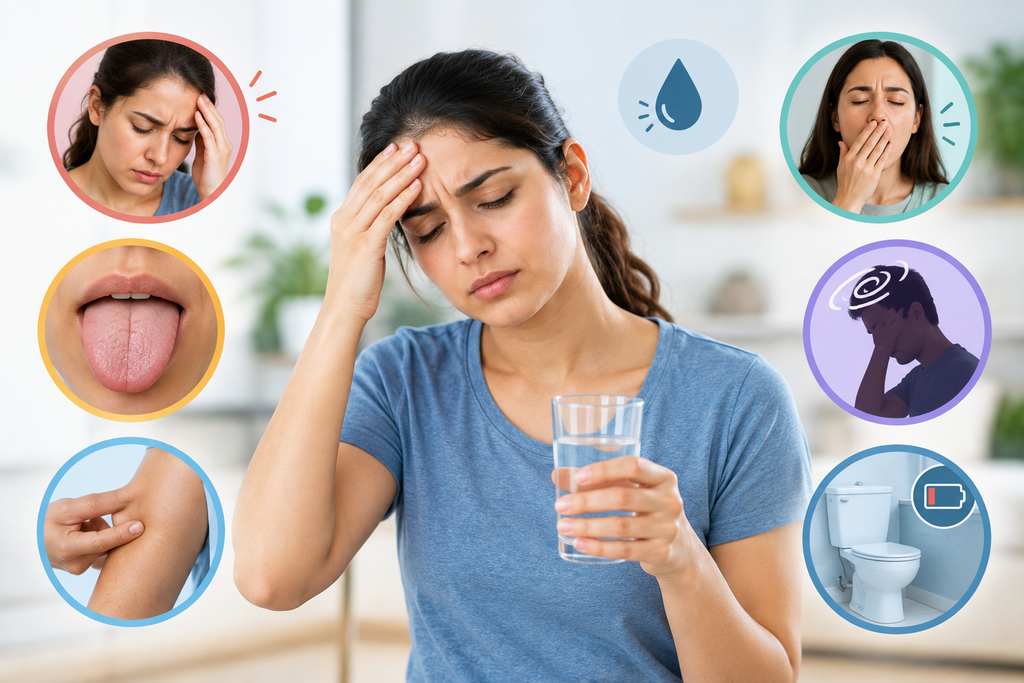
Dehydration occurs when your body loses more fluid than it takes in. Your body needs fluids to control temperature, support circulation, help digestion, and remove waste. Dehydration can happen from not drinking enough fluids, vomiting or diarrhea, heavy sweating, fever, illness, or increased urination. Common signs include thirst, dry mouth, dark urine, tiredness, dizziness, and urinating less than usual. Medical safety note: This article is for general information only and does not replace medical advice. Seek urgent medical care for confusion, fainting, very little or no urine, severe weakness, difficulty breathing, Disability to keep fluids down. What Is Dehydration? Dehydration means your body does not have enough fluid for its normal needs. Fluid is lost through urine, sweat, breathing, and bowel movements. When you are not drinking enough fluids to replace these losses, dehydration can develop. Mild dehydration may improve with fluids, while severe dehydration can affect blood pressure, kidney function, circulation, and mental alertness. What Are the Symptoms of Dehydration? Common symptoms include: Some people may also develop sunken eyes, especially with more significant fluid loss. Dehydration in Babies and Children Babies and young children have a higher risk of dehydration. Warning signs include: If a child cannot drink, has very little urine, is difficult to wake, or appears seriously ill, seek medical care promptly. What Causes Dehydration? Several situations can cause dehydration. Not Drinking Enough Not drinking enough water or other fluids is a common cause. Fluid needs may increase during hot weather, illness, or physical activity. Vomiting or Diarrhea Vomiting or diarrhea can cause the body to lose large amounts of water and Mineral salts. Severe or ongoing diarrhea can increase the risk of dehydration. Sweating and Fever Heavy sweating during exercise, physical work, or hot weather can increase fluid loss. Fever can also increase fluid needs. Increased Urination Some illnesses and medicines can increase urination. For example, diabetes may cause frequent urination and contribute to fluid loss. What Are the Risk Factors for Dehydration? The risk of dehydration may be higher in: People with heart or kidney conditions may have special fluid needs and should follow their healthcare professional’s advice. Can Dehydration Cause Fever, Diarrhea, or Nausea? Dehydration itself does not usually cause fever or diarrhea. More often, an illness causes fever or diarrhea, which can then lead to dehydration. Dehydration may be linked with nausea. Nausea can also make it difficult to drink enough fluids. If you can drink, take small sips regularly instead of drinking a large amount at once. Does Dehydration Cause High Blood Pressure? Dehydration does not usually cause high blood pressure. Significant fluid loss may reduce the amount of blood circulating in the body and can contribute to low blood pressure, dizziness, or a fast heartbeat. People with blood pressure, heart, or kidney conditions should ask their healthcare professional about the right amount of fluid for them. What Are the Complications of Dehydration? Untreated dehydration can become serious. Possible complications include: Mineral salts such as sodium and potassium help control fluid balance and support normal nerve and muscle function. How Is Dehydration Diagnosed? A healthcare professional may check your symptoms, medical history, urine, heart rate, blood pressure, and general condition. In more serious cases, blood or urine tests may be used to check electrolyte levels and kidney function. How Is Dehydration Treated? Treatment depends on the cause and severity. For mild to moderate dehydration, drinking enough fluids may help restore hydration. Water is suitable for many everyday situations. When vomiting or diarrhea causes significant fluid loss, oral rehydration solutions can help replace both fluids and Mineral salts. If severe dehydration develops, medical treatment may be needed. Some people may require fluids through an IV. How Can You Prevent Dehydration? Simple habits can help you stay hydrated: Your hydration levels can change throughout the day, so regular fluid intake is important. Can Fruit Juice Help With Dehydration? Fruit juice provides fluid, but it may not be the best choice when significant fluid and electrolyte losses occur. For dehydration caused by vomiting or diarrhea, an appropriate oral rehydration solution may be more useful because it is designed to replace both fluids and Mineral salts. When Should You Seek Medical Help? Seek urgent medical care if you have: Young children and older adults may need medical advice sooner because they can be more vulnerable to dehydration. Frequently Asked Questions What Is Dehydration? Dehydration occurs when your body loses more fluid than it takes in. What Are the Main Symptoms of Dehydration? Common symptoms include thirst, dry mouth, dark urine, tiredness, dizziness, headache, and reduced urination. What Is the Best Way to Treat Dehydration? For mild dehydration, drinking enough fluids may help. Oral rehydration solutions can help replace fluids and Mineral salts lost through vomiting or diarrhea. How Do You Prevent Dehydration? Drink fluids regularly, increase fluids during heat or physical activity, and eat water-rich fruits and vegetables. Can Dehydration Cause High Blood Pressure? Dehydration does not usually cause high blood pressure. Significant fluid loss may instead lower blood pressure. Key Takeaway Dehydration occurs when your body loses more fluid than it replaces. Thirst, dry mouth, dark urine, tiredness, dizziness, and reduced urination are common signs. You can help prevent dehydration by staying hydrated, drinking enough fluids, and increasing fluid intake when needed during heat, illness, or physical activity. For significant fluid loss from vomiting or diarrhea, oral rehydration solutions may help replace lost fluids and Mineral salts. Severe symptoms or an Inabilit to drink require prompt medical attention. This article is for general educational purposes only and does not replace professional medical advice, diagnosis, or treatment.