AI in Cancer Detection: How Artificial Intelligence Predicts Cancer Early
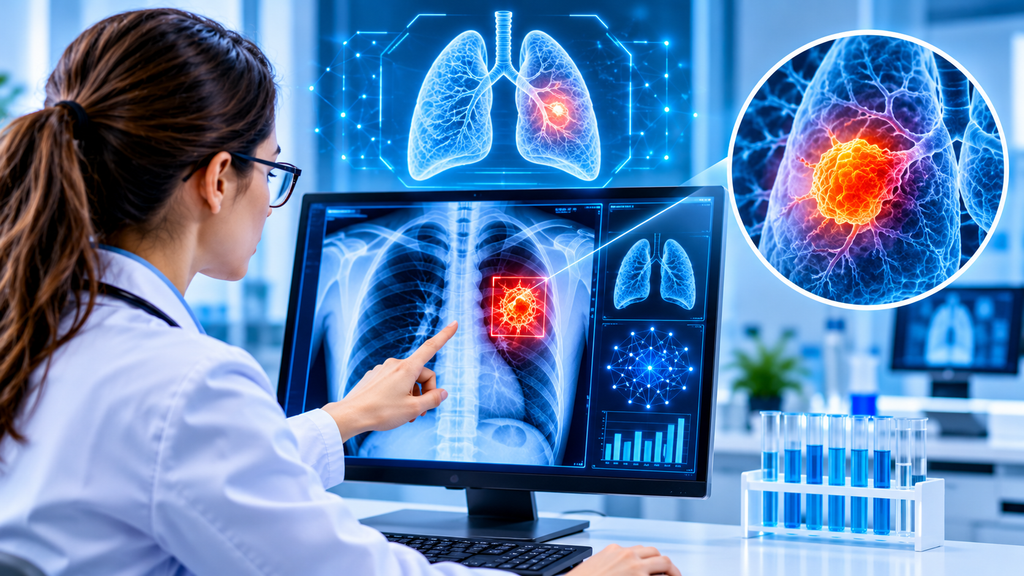
Artificial intelligence (AI) is changing the way researchers study cancer. AI tools can examine medical scans and find patterns that may be hard to notice during a normal review. These patterns may help doctors understand cancer risk and decide if more tests are needed. Researchers are studying AI for cancers such as pancreatic and lung cancer. Two examples are REDMOD and Sybil. Both use medical images, but they have different purposes. AI cannot confirm cancer on its own. It is a tool that may help doctors make better decisions. What Is AI in Cancer Detection? AI in cancer detection means using computer systems to study medical information and find patterns linked to cancer. These systems can examine: For example, an AI tool can study a CT scan and find unusual patterns. A doctor can review the result and decide whether the patient needs more tests. AI in Pancreatic Cancer Detection Pancreatic cancer can be hard to find in its early stages. Some people have no clear symptoms at first. Others may have symptoms that are also caused by common health problems. Pancreatic ductal adenocarcinoma (PDAC) is the most common type of pancreatic cancer. Researchers are studying whether AI can find signs linked to this disease in scans taken before diagnosis. Why Is Pancreatic Cancer Hard to Detect? The pancreas is deep inside the abdomen. Small changes may be difficult to see on a scan, especially before a clear tumor forms. Possible symptoms include: These symptoms do not always mean a person has cancer. A doctor must check the cause. How Does the REDMOD AI Model Work? REDMOD is an AI model developed by Mayo Clinic researchers. It studies abdominal CT scans to find patterns linked to pancreatic cancer. The model uses a method called radiomics. This method measures features in medical images, such as the shape and texture of tissue. REDMOD does not look only for a clear tumor. It also studies smaller image details that may be linked to the disease. Researchers hope this method can help identify signs that may not be easy to notice during a routine scan review. Can REDMOD Find Signs Before Diagnosis? A study published in Gut examined REDMOD using CT scans taken before patients were diagnosed with pancreatic cancer. The study reported that the model identified about 73% of the pre-diagnostic cases studied. The median time between the scan and diagnosis was around 16 months. These results are promising, but they need careful explanation. The 73% figure does not mean AI can detect 73% of all pancreatic cancer cases. It refers to the cases examined in the study. More research is needed to find out how well REDMOD works in everyday medical care. AI in Lung Cancer Detection Lung cancer is another area where researchers are testing AI. Finding lung cancer early can help doctors assess treatment options sooner. Low-dose computed tomography (LDCT) is used to screen people who meet certain risk criteria. Researchers are also studying whether AI can use these scans to estimate future lung cancer risk. What Is Sybil AI? Sybil is a deep-learning model developed through research involving MIT and Mass General Brigham. It uses a single low-dose chest CT scan to estimate a person’s future risk of lung cancer. Sybil studies patterns in the scan. It then produces a risk estimate that may help doctors assess a patient. The model focuses on information found in the CT image. This is different from risk methods that mainly use details such as age and smoking history. Sybil is a research tool. It is not a test that confirms cancer. Can Sybil Predict Lung Cancer Six Years Ahead? Research has shown that Sybil can estimate lung cancer risk for up to six years after an initial CT scan. This does not mean that Sybil finds a tumor six years before it appears. It means the model estimates the chance of developing lung cancer during that future period. Its results can vary between patient groups. Doctors must consider other health information before making decisions. REDMOD vs. Sybil REDMOD and Sybil both use AI to study medical images. However, they focus on different cancers. FeatureREDMODSybilCancer typePancreaticLungScan usedAbdominal CTLow-dose chest CTMain purposeFind patterns before diagnosisEstimate future cancer riskResearch focusEarlier pancreatic cancer signsLung cancer risk over time The two models have different roles. Their results should not be treated as the same. Benefits of AI in Cancer Detection AI may offer several benefits in cancer research and medical care. 1. Finding Risk Patterns AI can study medical images and look for patterns linked to cancer. This may help doctors decide which patients need more checks. 2. Studying Scans in More Detail Medical scans contain many details. AI can examine these details in a systematic way and find patterns that may be difficult to notice. 3. Making Use of Existing Scans Some AI research uses scans that patients already had for other medical reasons. These scans may contain useful information for further study. 4. Supporting Doctors AI results may give doctors extra information when they decide whether a patient needs another scan, a specialist visit, or more tests. Limits of AI Cancer Detection AI has potential, but it also has limits. Researchers must test these tools carefully before they become part of routine care. False Results An AI tool may mark a scan as suspicious even when the patient does not have cancer. This is called a false positive. It may lead to extra tests, worry, or procedures that are not needed. Doctors must review AI results before taking action. Need for More Research A model may perform well in a research study but give different results in a hospital. More testing in real medical settings is needed. Data Quality AI models learn from the data used to develop them. Differences in scanners, scan methods, and patient groups can affect their results. Cost and Access Hospitals need suitable equipment, trained staff, secure systems, and proper medical checks to use AI tools. These needs may affect
Next-Generation Sequencing in Cancer: A Simple Guide

Cancer treatment is changing as doctors learn more about the genetic changes that help tumors grow. Instead of choosing treatment based only on the location or type of cancer, healthcare teams can use information about a tumor’s genetic profile to guide treatment decisions. This approach is known as precision oncology. Next-generation sequencing in cancer (NGS) is one of the tools used in precision oncology. It examines genetic material from a tumor to identify changes that may be involved in cancer growth. These findings can help doctors identify possible treatment options, including targeted therapies. NGS has an important role in the care of some people with breast cancer and non-small cell lung cancer (NSCLC). Both cancers can contain genetic changes that influence how the disease develops and responds to treatment. What Is Next-Generation Sequencing? Next-generation sequencing is a laboratory method used to examine many genetic changes at the same time. In cancer care, it can help identify mutations, gene fusions, and other alterations in tumor DNA. Some genetic changes affect the signals that control how cells grow and divide. When these signals become abnormal, they can contribute to cancer development. Identifying these changes can help doctors understand the biology of a tumor and consider treatments designed to target particular pathways. NGS does not mean that every patient will have an identifiable target or a suitable targeted medicine. Its value depends on the genetic findings, the cancer type, and the patient’s clinical situation. How Precision Oncology Uses NGS Precision oncology uses information about a person’s cancer to support treatment decisions. NGS can provide details about genetic changes that may help explain tumor growth or identify potential treatment options. For example, two people with the same general type of cancer may have different genetic changes in their tumors. Their treatment options may therefore differ. In lung and breast cancer, NGS can help identify alterations involving genes such as EGFR, ALK, ROS1, KRAS, HER2, PIK3CA, and BRCA1/2. These genes are associated with different cancer pathways and treatment approaches. The test result is one part of treatment planning. Doctors consider it alongside the cancer type and other relevant clinical information before recommending a treatment. Role of NGS in Non-Small Cell Lung Cancer Non-small cell lung cancer is a major area of precision oncology. Some NSCLC tumors contain genetic alterations that can be targeted with specific medicines. NGS can help identify several of these changes, including EGFR mutations, ALK and ROS1 gene fusions, and KRAS G12C mutations. It can also detect other alterations that may be relevant to treatment decisions. EGFR Mutations and Targeted Treatment The epidermal growth factor receptor (EGFR) is involved in signals that regulate cell growth. Certain EGFR mutations can cause abnormal signaling and contribute to the development of NSCLC. Osimertinib is a third-generation EGFR inhibitor used in certain patients with EGFR-mutated NSCLC. It blocks abnormal EGFR signaling. The medicine can also reach the central nervous system, which is relevant when considering lung cancer that may involve the brain. Identifying an EGFR mutation can help doctors determine whether an EGFR-targeted treatment may be an appropriate option. ALK and ROS1 Gene Fusions ALK and ROS1 gene fusions are genetic alterations found in some cases of NSCLC. These changes can produce abnormal proteins that contribute to cancer growth. Targeted medicines are available for certain tumors with these alterations. Examples include: These treatments act on the abnormal signaling associated with the relevant gene alteration. NGS can help identify whether a tumor carries one of these changes. KRAS G12C Mutations KRAS is a gene involved in cell signaling. A specific alteration known as KRAS G12C can contribute to abnormal cell growth in some lung cancers. Sotorasib and Adagrasib are medicines developed to target KRAS G12C. They bind to the altered KRAS protein and help keep it in an inactive state. Finding this mutation through molecular testing can help doctors consider whether a KRAS G12C-targeted medicine is suitable for a patient. Other Genetic Changes in Lung Cancer NGS can also identify other genetic alterations in NSCLC. These include: Identifying these changes can provide additional information about a tumor. The findings may help doctors assess available treatment options based on the specific alteration. Role of NGS in Breast Cancer Breast cancer is not a single disease with the same characteristics in every patient. Treatment decisions can depend on hormone receptor status, HER2 protein expression, and genetic changes found in the tumor. NGS can help identify certain mutations that influence cancer-related pathways. This information may support decisions about targeted treatments for eligible patients. HER2 and Targeted Treatment HER2 is a protein involved in cell growth. Some breast cancers have increased HER2 expression, which can contribute to tumor growth. Several medicines target HER2 in breast cancer. These include: HER2-low breast cancer is also relevant to treatment discussions involving trastuzumab deruxtecan. Treatment suitability depends on the patient’s cancer characteristics and clinical circumstances. PIK3CA, AKT, and PTEN Pathway Changes The PI3K/AKT pathway helps regulate cell growth and survival. Changes involving PIK3CA, AKT, or PTEN can affect this pathway and contribute to cancer development. These alterations may also be involved in resistance to hormone-based treatment in some breast cancers. Two medicines associated with this pathway are: Testing for relevant genetic changes can help doctors assess whether these medicines may be appropriate treatment options. BRCA1 and BRCA2 Mutations BRCA1 and BRCA2 are genes involved in DNA repair. Changes in these genes can affect the ability of cells to repair damaged DNA. BRCA mutations may be inherited or acquired in tumor cells. Identifying these changes can provide useful information for treatment planning. PARP inhibitors are one treatment approach associated with certain BRCA-related cancers. Examples include: These medicines block PARP, a protein involved in DNA repair. Their use can take advantage of weaknesses in the DNA repair process in certain cancer cells. ESR1 Mutations and Hormone Therapy ESR1 is the gene that provides instructions for making the estrogen receptor. Some breast cancers rely on estrogen-related signals to grow. ESR1 mutations can develop during treatment and may