15 Foods High in Potassium for a Healthy Diet
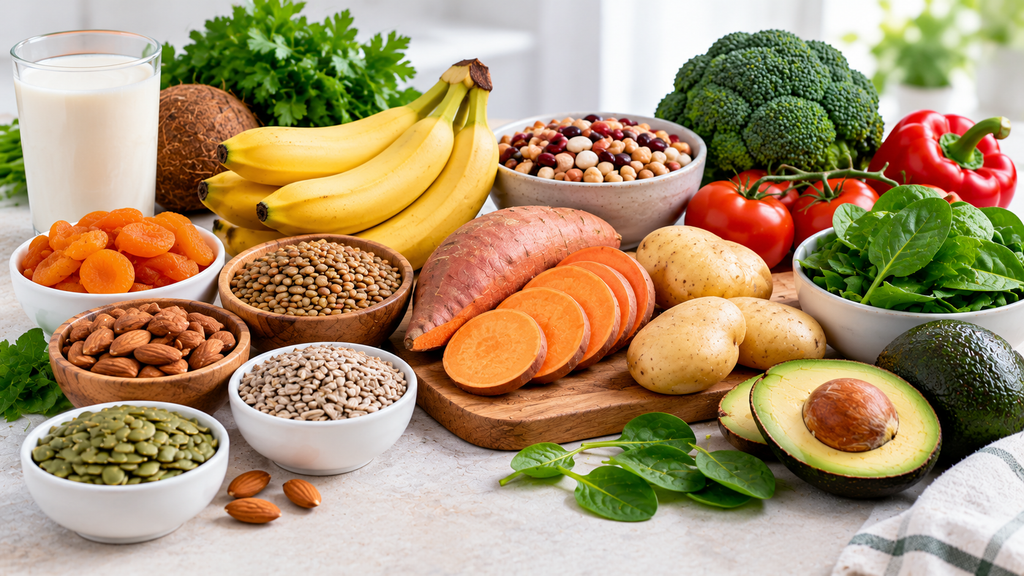
Potassium is an essential mineral that supports normal cell function, fluid balance, nerve signals, and muscle contraction. You can get potassium from foods such as potatoes, beans, lentils, fruits, vegetables, dairy products, and fish. Adding a variety of these foods high in potassium can help you meet your daily nutritional needs. 15 Foods High in Potassium Here are 15 potassium-rich foods and their approximate potassium content per serving. Values may vary by variety, brand, and preparation method. Benefits of Potassium-Rich Foods Potassium helps maintain fluid balance, supports nerve transmission, and enables muscles to contract normally. It also works alongside sodium in the body. Eating a balanced diet that includes fruits, vegetables, beans, and other potassium sources can help you obtain this essential mineral. Potassium-rich foods are not a replacement for medical treatment. If you have high blood pressure or another health condition, discuss dietary changes with your healthcare professional. How Much Potassium Do Adults Need? According to the US National Institutes of Health (NIH), the adequate daily intake for adults aged 19 and older is: These values are US recommendations and may not apply to everyone, particularly people whose bodies have difficulty removing excess potassium. How to Add More Potassium to Your Diet Include a variety of potassium-rich foods in your meals. You could add lentils or beans to soups, serve baked potatoes with meals, eat fruit as a snack, or include yogurt and milk if they suit your dietary needs. Spinach and other vegetables can also help increase your intake. Choose a variety of foods rather than relying on a single source. Check food labels when buying canned beans or other packaged products, and consider sodium content as part of your overall diet. Who Should Be Careful With High-Potassium Foods? People with kidney disease or conditions that affect potassium removal may develop dangerously high potassium levels. Certain medicines, including ACE inhibitors, angiotensin receptor blockers (ARBs), and potassium-sparing diuretics, can also increase the risk. Some salt substitutes contain potassium chloride and may not be suitable for everyone. If you have kidney problems or take medicines that affect potassium, ask your healthcare professional before significantly increasing your intake. Frequently Asked Questions Which fruits are high in potassium? Bananas, dried apricots, raisins, and avocados can contribute potassium to your diet. Are beans and lentils good sources of potassium? Yes. Cooked lentils, kidney beans, lima beans, and white beans are useful plant-based sources. Can I get enough potassium from food? A varied diet can help you meet your potassium needs. Your requirements may differ depending on your health, age, and other factors. Can people with kidney disease eat high-potassium foods? Some people with kidney disease need to limit potassium. The appropriate amount depends on kidney function, test results, and medicines, so seek individual medical advice. Conclusion Foods high in potassium include potatoes, sweet potatoes, spinach, beans, lentils, bananas, dried fruits, dairy products, and salmon. Eating a variety of these foods can help support normal body functions. However, people with kidney disease or certain medication-related risks should consult a healthcare professional before increasing potassium intake.