Tooth Decay: Causes, Symptoms, Treatment
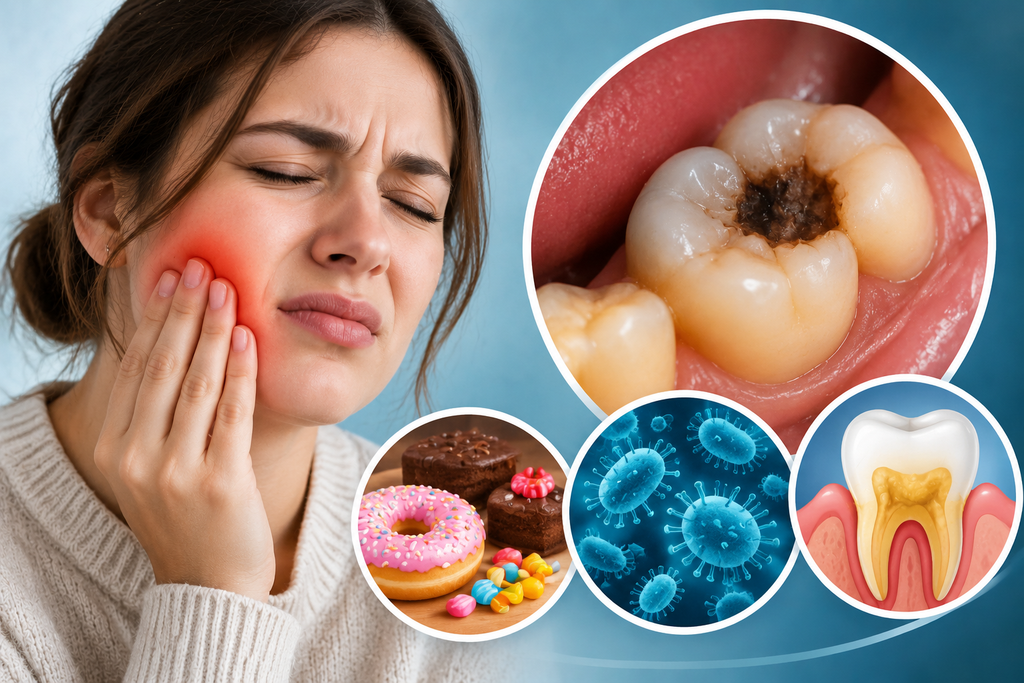
Tooth decay is a common dental problem that affects people of all ages. It develops when bacteria in the mouth produce acids that damage tooth enamel. Without proper care, decay can spread deeper into the tooth and cause pain, infection, or even tooth loss. Understanding the causes, symptoms, stages, and treatment of tooth decay can help you protect your teeth and know when to visit a dentist. What Is Tooth Decay? Tooth decay, also called dental caries or cavities, occurs when bacteria in dental plaque produce acids that damage the hard surface of teeth. Plaque is a sticky layer of bacteria that forms on teeth. When you eat or drink foods containing sugar or starch, these bacteria produce acids. Over time, repeated acid attacks remove minerals from the enamel and may create holes in the teeth. If decay reaches deeper layers, it can affect the dentin and pulp, causing sensitivity, pain, and infection. What Causes Tooth Decay? Several factors can increase the risk of tooth decay. Acid reflux can also damage tooth enamel through stomach acid. However, this type of damage is acid erosion, which is different from bacterial tooth decay. Stages of Tooth Decay Tooth decay usually develops gradually. Its main stages include: 1. Enamel Demineralization The first stage occurs when acids remove minerals from the enamel. A white spot may appear on the tooth. At this stage, there may be no pain or noticeable symptoms. Early mineral loss may be reversed with fluoride and proper dental care. 2. Enamel Decay If mineral loss continues, a cavity may form in the enamel. Once a hole develops, the damaged tooth structure cannot repair itself and usually requires dental treatment. 3. Dentin Decay Decay can spread into the dentin beneath the enamel. This layer is softer, so damage may progress more quickly. You may experience sensitivity to hot, cold, or sweet foods. 4. Pulp Damage The pulp contains nerves and blood vessels inside the tooth. When decay reaches this area, it may cause severe toothache, inflammation, or infection. 5. Dental Abscess In severe cases, infection may develop around the tooth root and form an abscess. Symptoms can include swelling, pus, pain, and sometimes fever. Signs and Symptoms of Tooth Decay Early tooth decay may not cause noticeable symptoms. As it progresses, common signs include: A dental abscess requires prompt dental attention. Facial or neck swelling, or difficulty breathing or swallowing, requires emergency medical care. How Is Tooth Decay Diagnosed? A dentist checks your teeth for visible damage, soft areas, and signs of cavities. They may ask about tooth pain and sensitivity. Dental X-rays can help identify decay that is difficult to see during a visual examination, including problems between teeth or beneath existing dental work. Tooth Decay Treatment Treatment depends on how far the decay has progressed. 1. Fluoride Treatment If decay is detected early and a cavity has not formed, fluoride treatment may help restore lost minerals and strengthen enamel. Dentists may recommend fluoride products depending on your dental condition. 2. Dental Fillings When a cavity has formed, the dentist removes the decayed portion of the tooth and fills the space with a dental filling. This helps restore the tooth’s structure. 3. Dental Crowns A crown may be recommended when a tooth is significantly damaged or weakened. It covers and protects the remaining tooth structure. 4. Root Canal Treatment If decay reaches the pulp, root canal treatment may be necessary. The dentist removes infected or damaged pulp, cleans the inside of the tooth, and seals it. 5. Tooth Extraction If a tooth is too badly damaged to be repaired, extraction may be necessary. A dentist will assess whether the tooth can be saved before recommending removal. How to Prevent Tooth Decay Good oral hygiene and healthy eating habits can reduce the risk of cavities. For better fluoride protection, spit out toothpaste after brushing rather than rinsing your mouth immediately with water. Can Tooth Decay Be Reversed? Early tooth decay may be reversed before a cavity forms. Fluoride, saliva, and good oral hygiene help restore minerals to weakened enamel. However, once a hole or cavity develops, the lost tooth structure cannot grow back. A dentist usually needs to repair the damage with a filling or another suitable treatment. What Happens If Tooth Decay Is Left Untreated? Untreated tooth decay can become deeper and affect more parts of the tooth. It may lead to: Getting dental care early can help prevent further damage. When Should You See a Dentist? Arrange a dental appointment if you notice tooth sensitivity, visible spots, a hole in a tooth, or persistent toothache. Seek urgent dental care if you have severe pain, swelling, or pus around a tooth. If swelling affects your breathing or swallowing, seek emergency medical attention. Frequently Asked Questions 1. What is the main cause of tooth decay? The main cause is acid produced by bacteria in dental plaque. These bacteria use sugars and starches from food and drinks. 2. Can tooth decay be fixed? Yes. Dentists can treat cavities with fillings, crowns, root canal treatment, or extraction, depending on the damage. Early mineral loss may be reversed before a cavity forms. 3. Does tooth decay go away on its own? A formed cavity does not heal on its own. Early enamel demineralization may improve with fluoride and proper oral care. 4. Can a badly decayed tooth be saved? Some badly decayed teeth can be saved with a crown or root canal treatment. If the damage is too severe, extraction may be necessary. 5. Can children get tooth decay? Yes. Children can develop cavities in baby teeth as well as permanent teeth. Regular brushing with fluoride toothpaste and dental checkups help protect their teeth. 6. Can I remove tooth decay at home? No. You cannot safely remove a cavity at home. A dentist must examine the tooth and provide the appropriate treatment. Conclusion Tooth decay develops when acids produced by bacteria damage tooth enamel. It can progress from early mineral loss to cavities,