Parkinson’s Disease: 7 Main Symptoms, Causes & Treatments
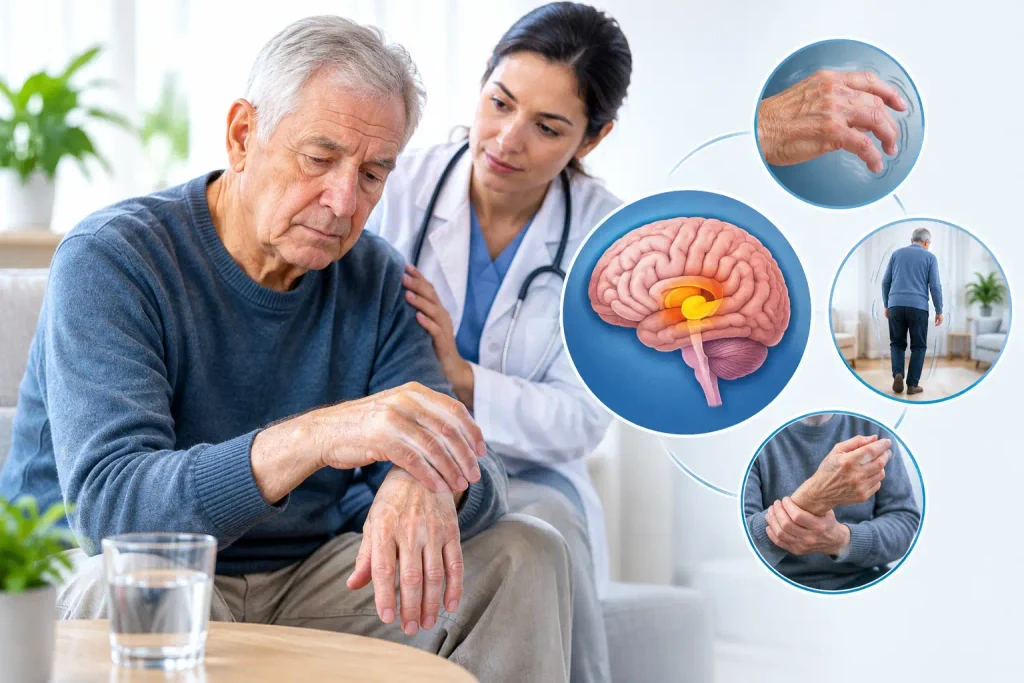
Parkinson’s disease is a progressive brain disorder that affects movement and other body functions. It develops when certain nerve cells become damaged or die, reducing dopamine, a chemical that helps control smooth movement. Common symptoms include tremors, muscle stiffness, and slow movements. Some people also experience sleep disorders, constipation, mood changes, or problems with memory. Symptoms vary depending on the person and the stage of the disease. Although there is no cure, medicines, therapy, and other treatment options can help manage symptoms and improve quality of life. What Is Parkinson’s Disease? Parkinson’s disease is a neurological condition that affects areas of the brain responsible for movement. It mainly involves dopamine-producing nerve cells, called dopaminergic neurons, in a region known as the substantia nigra. When these cells are damaged or die, dopamine levels decrease. This can cause slowness of movements, stiffness, and shaking. Symptoms often begin on one side of the body and may later affect both sides. Parkinson’s disease can also affect sleep, digestion, mood, and thinking. 7 Common Symptoms of Parkinson’s Disease Symptoms develop gradually and differ from person to person. Common signs include: Other signs can include smaller handwriting, reduced arm movement while walking, a softer voice, and changes in the sense of smell. These symptoms do not always indicate Parkinson’s disease. A healthcare professional can assess persistent symptoms and help identify their cause. What Causes Parkinson’s Disease? The exact cause of Parkinson’s disease remains unknown. Researchers believe that genetic and environmental factors may play a role. Loss of Dopamine-Producing Cells The loss of dopamine-producing cells in the substantia nigra affects the brain circuits that control movement. This contributes to tremors, stiffness, and slow movements. Genetic and Environmental Factors Certain genetic changes and family history can increase the risk of Parkinson’s disease. Research has also linked some environmental exposures, including certain pesticides, with an increased risk. However, most cases do not have one clearly identified cause. Having a family history or an environmental exposure does not mean a person will definitely develop the condition. Risk Factors for Parkinson’s Disease Age is an important risk factor. Parkinson’s disease is more common in older adults, although younger people can also develop it. Other factors that may increase the risk include: These factors cannot reliably predict who will develop the disease. Researchers continue to study why dopamine-producing neurons become damaged. How Is Parkinson’s Disease Diagnosed? There is no single test that confirms every case of Parkinson’s disease. Doctors usually consider symptoms, medical history, and a neurological examination. During an examination, a doctor may assess movement speed, tremors, muscle stiffness, balance, and walking. They may also ask how symptoms affect activities of daily living, such as dressing, eating, and bathing. Brain scans and laboratory tests may help rule out other conditions. Diagnosis generally depends on the overall clinical assessment. Treatment Options for Parkinson’s Disease There is currently no cure, but treatment for Parkinson’s disease can help manage symptoms. The best approach depends on symptoms, medication response, and individual needs. 1. Medicines Carbidopa-levodopa is a common treatment for movement problems. Levodopa is converted into dopamine in the brain, while carbidopa helps reduce its breakdown outside the brain. Other medicines may include dopamine agonists, MAO-B inhibitors, and COMT inhibitors. These work in different ways to improve movement symptoms or support the effects of levodopa. Doctors may also recommend treatment for depression, constipation, or sleep problems. Patients should not change or stop prescribed medicines without medical advice. 2. Deep Brain Stimulation (DBS) Deep brain stimulation (DBS) is a surgical option for selected patients whose movement symptoms remain difficult to control with medication. The procedure uses electrodes placed in specific areas of the brain to deliver electrical signals. DBS may improve certain movement symptoms, but it does not cure Parkinson’s disease or stop its progression. 3. Physical and Occupational Therapy of Parkinson’s disease Physical therapy can help maintain walking ability, flexibility, strength, and balance. Occupational therapy focuses on making daily activities easier. A therapist may suggest practical changes to the home, assistive equipment, or safer ways to complete everyday tasks. 4. Speech and Swallowing Therapy Parkinson’s disease can affect speech volume, facial expressions, and swallowing. Speech-language therapists can assess these difficulties and recommend suitable strategies. New swallowing problems or repeated coughing during meals should be discussed with a healthcare professional. Lifestyle Changes and Daily Care Lifestyle changes can support general health and complement medical treatment. These steps may support independence and improve quality of life, but they do not replace medical treatment. Can Parkinson’s Disease Be Prevented? No established method reliably prevents Parkinson’s disease. Its causes are not fully understood, and researchers continue to investigate genetic and environmental factors. Regular physical activity and a balanced diet support general health, but they are not proven methods of preventing Parkinson’s disease. Be cautious of products that promise a cure or guaranteed prevention. Frequently Asked Questions What are the first signs of Parkinson’s disease? Early signs may include tremors, slow movements, muscle stiffness, smaller handwriting, and reduced arm movement while walking. Changes in smell, sleep, or bowel habits may also occur. Is Parkinson’s disease curable? No. There is currently no cure, but medicines, rehabilitation, and selected surgical treatments can help manage symptoms. Does Parkinson’s disease get worse over time? Parkinson’s disease is progressive, but its rate of progression varies. Symptoms and care needs may change over time. What is the main treatment for Parkinson’s disease? Carbidopa-levodopa is a common treatment for movement symptoms. Other medicines, therapies, and deep brain stimulation may be appropriate for selected patients. Can people with Parkinson’s disease live independently? Many people can continue daily activities, particularly with suitable treatment and support. Assistance may become necessary as symptoms change. Conclusion Parkinson’s disease affects movement because dopamine-producing brain cells become damaged or die. Symptoms may include tremors, stiffness, slow movements, sleep problems, and mood changes. Although there is no cure, medicines, deep brain stimulation for selected patients, and rehabilitation can help manage symptoms. Regular medical care, practical home adjustments, and support groups can also help people