Common Cold: 7 Symptoms, Causes & Treatment
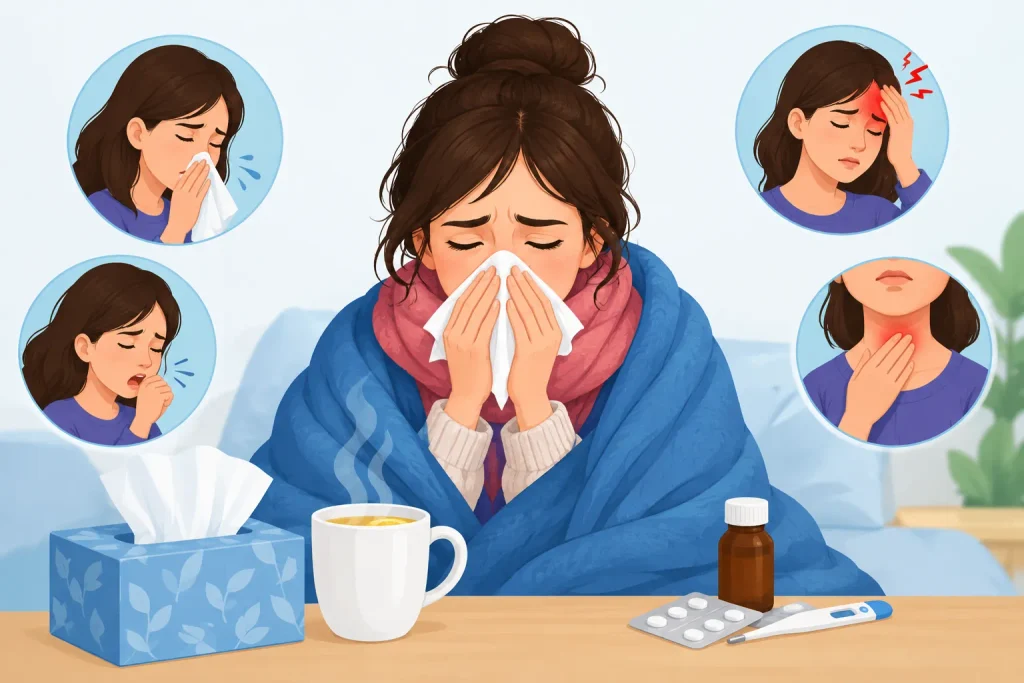
Introduction The common cold is a viral infection that mainly affects the nose and throat. Common symptoms include a runny nose, sneezing, a sore throat, and a cough. Most people recover with plenty of rest and simple home care. (sources) What Is the Common Cold? The common cold is an upper Pulmonary tract infection caused by viruses. Common cold virus are a common cause. There is no specific cure for the common cold, but home care can help relieve symptoms. (sources) What Are the Symptoms of the Common Cold? Common symptoms include: Symptoms may develop gradually and are often strongest during the first few days. Many people improve within seven to ten days, although some symptoms can last one to two weeks. (sources) Colds in Children Young children may catch colds more often than adults. A blocked nose can make feeding or sleeping harder for babies. Watch for poor feeding, dehydration, unusual sleepiness, or breathing problems. (sources) What Causes the Common Cold? Different viruses cause the common cold. These viruses can spread through Pulmonaryparticles released during coughs or sneezes. Close contact with an infected person can also spread the virus. (sources) You may also become infected by touching a contaminated surface and then touching your eyes, nose, or mouth. To reduce the risk, wash your hands with soap and water, cover coughs and sneezes, and avoid sharing personal items with someone who is sick. (sources) How Long Does a Common Cold Last? Many people start feeling better within seven to ten days. Some symptoms, such as a cough or runny nose, may last longer. (sources) Contact a healthcare professional if symptoms last more than ten days without improvement, become worse after improving, or cause concern. (sources) How Is the Common Cold Treated? There is no specific cure for the common cold. Treatment focuses on relieving symptoms while the body recovers. (sources) 1. Get Plenty of Rest Get plenty of rest while you are unwell. Allow yourself time to recover and avoid activities that make you feel worse. (sources) 2. Drink Plenty of Fluids Drink plenty of water and other suitable fluids. Warm drinks may soothe a sore throat, while drinking enough fluids helps prevent dehydration. (sources) 3. Ease a Blocked Nose Saline nasal drops or sprays may help relieve a blocked nose. A clean cool mist humidifier may also make breathing more comfortable. Follow the device instructions and clean it regularly. (sources) 4. Soothe a Cough or Sore Throat Honey may help soothe a cough in adults and children aged one year or older. Never give honey to a baby younger than one year. Adults and older children who can gargle safely may try warm salt water for a sore throat. (sources) 5. Use Medicines Carefully Some over-the-counter medications, including pain relievers and fever reducers, may provide temporary relief. They do not cure the infection. Follow the label and ask a pharmacist if you are unsure which medicine is suitable. (sources) Cough suppressants may not be suitable for everyone. Avoid combining medicines with the same active ingredients. CDC guidance does not recommend over-the-counter cough and cold medicines for children younger than six because of possible serious side effects. (sources) Antibiotics do not treat a common cold because they work against bacteria, not viruses. (sources) How Can You Prevent the Common Cold? Good hygiene can help reduce the spread of cold viruses. (sources) These steps can lower the risk of infection but cannot prevent every cold. When Should You See a Doctor? Contact a healthcare professional if: Seek urgent medical help if you are short of breath or have trouble breathing. A baby younger than three months with a temperature of 38°C (100.4°F) or higher needs prompt medical assessment. (sources) People at higher risk from flu or COVID-19 should contact a healthcare professional promptly if they develop similar symptoms. Testing and early treatment may be important. (sources) Frequently Asked Questions What are the main symptoms of the common cold? Common symptoms include a runny nose, sneezing, a sore throat, a cough, and a blocked nose. Headache, mild body aches, and fever may also occur. (sources) Is there a cure for the common cold? No specific cure is available. Rest, fluids, and suitable symptom relief can help while the body recovers. (sources) Can young children take cold medicines? Some medicines are not suitable for young children. Ask a healthcare professional about safe options for your child’s age. (sources) Does a high fever mean I have a common cold? Not always. Flu and other infections can cause similar symptoms. Seek medical advice for a high or persistent fever or worsening symptoms. (sources) Conclusion The common cold is a viral infection that mainly affects the nose and throat. Symptoms may include sneezing, a runny nose, a sore throat, a cough, and mild body aches. Most people recover with rest, fluids, and suitable home care. (sources) Wash your hands with soap and water, cover coughs and sneezes, and limit close contact with others when sick. Seek medical advice if symptoms worsen, do not improve, or include trouble breathing. (sources) Medical Disclaimer: This article is for general educational purposes only. It is not a substitute for professional medical advice, diagnosis, or treatment. Consult a qualified healthcare professional if you have concerns about your symptoms.