A Headache: 7 Essential Types, Causes & Treatments
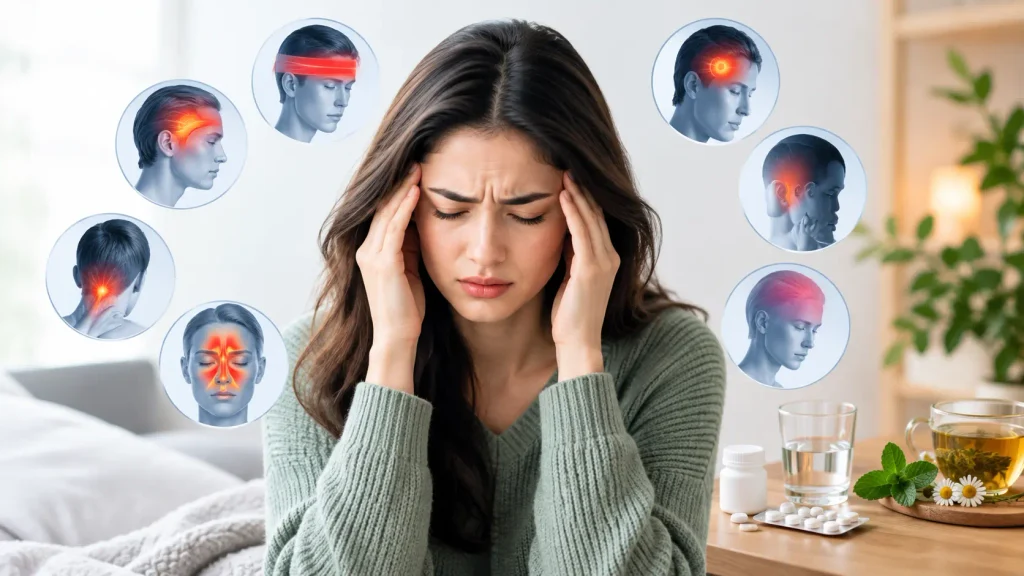
A headache is pain or discomfort in the head, scalp, or upper neck. It can feel like pressure, tightness, throbbing pain, or a dull ache. A headache may last for a short time or continue for several hours or longer, depending on its cause and type. Most headaches are not caused by a serious medical condition. However, frequent headaches, severe pain, or a sudden unusual headache may require medical evaluation. Understanding the common types, causes, symptoms, treatment options, and warning signs can help you know when to manage a headache at home and when to seek medical care. What Is a Headache? A headache occurs when pain-sensitive structures around the brain, head, face, or neck become irritated or activated. The brain itself does not contain pain-sensitive nerve endings, but surrounding tissues, nerves, blood vessels, muscles, and membranes can produce headache pain. A headache may affect one or both sides of the head. The location, intensity, duration, and associated symptoms can vary depending on the type of headache. What Are the Types of Headaches? Headaches are generally divided into primary headaches and secondary headaches. Primary Headaches Primary headache disorders occur when the headache itself is the main condition rather than a symptom of another illness. Common types include: Tension Type Headaches Tension type headaches are among the most common types of headache. They often cause a dull, pressing, or tightening sensation around the head. Muscle tension in the scalp, neck, shoulders, or jaw may contribute to this type of headache. Stress, poor posture, fatigue, and lack of sleep can also act as triggers. Migraine Headaches Migraine headaches can cause moderate to severe pain, often with throbbing or pulsating pain on one side of the head. A migraine may also cause nausea and increased sensitivity to light or sound. Some people experience an aura before or during a migraine. Aura can include temporary visual or sensory changes. A migraine attack may last several hours and, in some cases, up to 72 hours. Cluster Headaches Cluster headaches are severe headaches that occur in groups or “clusters.” The pain often develops around or behind one eye and may occur repeatedly over a period of days or weeks. Other symptoms may include a watery eye, nasal congestion, or redness around the affected eye. Other Primary Headache Disorders Other primary headache disorders include several less common conditions. Their symptoms and treatment can differ, so persistent or unusual headaches should be evaluated by a healthcare professional. Secondary Headaches Secondary headaches are caused by another condition or factor. Possible causes include infections, dehydration, medication effects, head injuries, sinus problems, or other medical conditions. A new headache that is unusually severe, sudden, or accompanied by neurological symptoms should receive prompt medical attention. What Is a Spinal Headache? A spinal headache can occur after certain procedures involving the spinal area. It is often worse when sitting or standing and may improve when lying down. If a severe or persistent headache develops after a medical procedure, contact the healthcare professional who performed it. What’s the Difference Between a Headache and a Migraine? A migraine is a specific type of headache disorder. Not every headache is a migraine. FeatureHeadacheMigrainePainMay be mild to moderateOften moderate to severeLocationOne or both sidesOften one sideSensationPressure or tightnessOften throbbing or pulsatingNauseaLess commonCommonLight sensitivityPossibleCommonSound sensitivityPossibleCommonDurationVariesMay last several hours or longer Because symptoms can overlap, a healthcare professional can help determine what type of headache you are experiencing. Who Do Headaches Affect? Headaches can affect people of different ages. Some people experience occasional headaches, while others develop frequent or recurring headaches. Factors such as stress, sleep problems, dehydration, skipped meals, illness, hormonal changes, and certain environmental triggers may increase the likelihood of headaches. If headaches become frequent or interfere with school, work, sleep, or everyday activities, medical evaluation may be helpful. What Is the Main Cause of a Headache? There is no single cause of every headache. Different headache types can have different causes and triggers. Common Headache Causes and Triggers Common triggers include: Keeping track of symptoms can help identify personal headache triggers. What Causes Frequent Headaches? Frequent headaches may be associated with ongoing stress, sleep problems, dehydration, recurring migraine, muscle tension, or frequent use of pain medicine. If headaches occur repeatedly or become more severe over time, speak with a healthcare professional rather than relying only on home treatment. What Are the Symptoms of a Headache? Headache symptoms depend on the type and cause. Common symptoms include: Symptoms of Migraine Migraine headaches may also cause: Symptoms can vary from person to person. How Are Headaches Evaluated and Diagnosed? Most headaches can be evaluated through a medical history and physical examination. Medical History and Physical Examination A healthcare professional may ask about: Headache Diary A headache diary can help identify patterns. You can record the date, time, duration, symptoms, possible triggers, sleep, meals, hydration, and any treatment used. When Are Imaging Tests Needed? Brain imaging is not necessary for every headache. A healthcare professional may recommend tests when symptoms are unusual, severe, sudden, or associated with other warning signs. How Do I Get Rid of a Headache? Many mild headaches improve with rest, hydration, and reducing exposure to possible triggers. Quick Ways to Relieve a Headache Depending on the type and cause, you may find relief by: If headaches keep returning, focus on identifying and managing the underlying triggers instead of repeatedly treating individual episodes. Headache Medicine and Treatment Treatment depends on the type, frequency, and cause of the headache. Over-the-Counter Pain Medicine Some people use over-the-counter pain medicine for occasional headaches. Common options include medicines such as acetaminophen or ibuprofen. Always follow the product directions and ask a healthcare professional or pharmacist if you are unsure whether a medicine is appropriate for you. Prescription Headache Treatment People with frequent or severe migraine headaches may need prescription treatment or a long-term prevention plan. A healthcare professional can recommend treatment plans based on symptoms, frequency, triggers, and medical history. Medication-Overuse Headaches Using pain medicine too frequently can contribute