Common Types of Cancer: Symptoms, Causes & Prevention
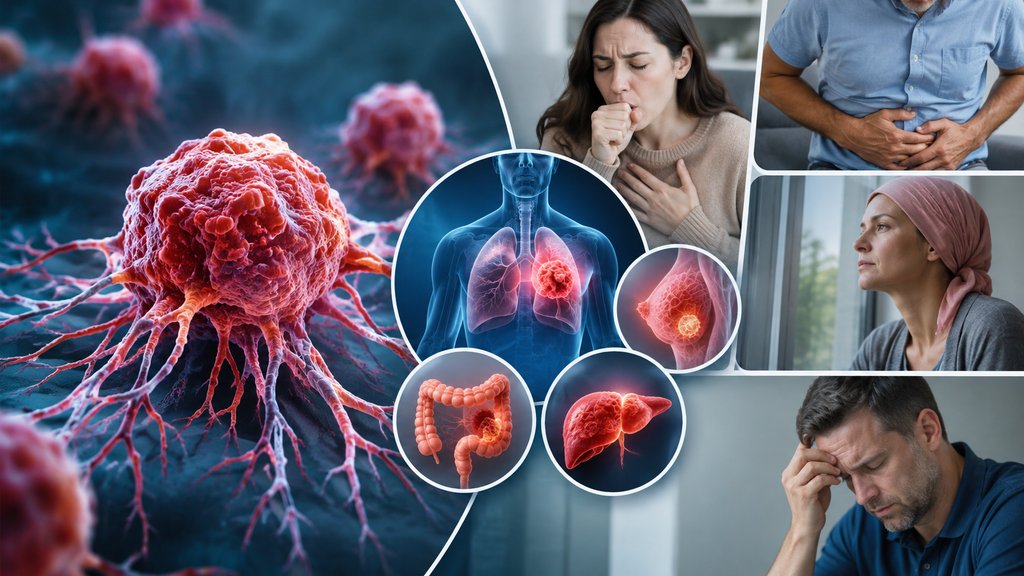
Cancer is a group of diseases in which abnormal cells grow and divide uncontrollably. These cells can invade nearby tissues and sometimes spread to other parts of the body. There are more than 200 types of cancer, and each type can affect the body differently. Understanding common types of cancer, their symptoms, causes, and risk factors can help people recognize warning signs and seek medical advice. Early detection may improve treatment options and outcomes. What Is Cancer? Cancer develops when changes in a cell’s DNA affect how it grows and divides. Normally, the body controls cell growth and removes damaged cells. However, cancer cells can continue multiplying when these controls stop working properly. Some cancers form solid tumors, such as breast or lung cancer. Others, including leukemia, affect blood-forming tissues and may not form solid tumors. Common Types of Cancer Cancer can develop in almost any part of the body. Some commonly diagnosed types include: 1. Breast Cancer Breast cancer develops when cells in breast tissue grow abnormally. It can affect women and, less commonly, men. Possible symptoms include: A new breast lump or unusual change should be checked by a healthcare professional. 2. Lung Cancer Lung cancer begins when abnormal cells grow in the lungs. Tobacco smoking is a major risk factor, although people who have never smoked can also develop it. Possible symptoms include: These symptoms can have other causes, but persistent problems need medical assessment. 3. Colorectal Cancer Colorectal cancer affects the colon or rectum. It may develop from growths called polyps, some of which can become cancerous over time. Possible symptoms include: Screening can help identify certain colorectal changes before symptoms appear. 4. Prostate Cancer Prostate cancer develops in the prostate gland, which is part of the male reproductive system. Some prostate cancers grow slowly, while others can be more aggressive. Possible symptoms include: Urinary symptoms do not automatically mean cancer, so proper medical evaluation is important. 5. Cervical Cancer Cervical cancer develops in the cervix, the lower part of the uterus. Persistent infection with certain high-risk types of human papillomavirus (HPV) is a major cause. Possible symptoms include: HPV vaccination and recommended cervical screening can help reduce the risk and support early detection. 6. Blood Cancers Blood cancers affect blood cells and the tissues that produce them. Major types include leukemia, lymphoma, and multiple myeloma. Possible symptoms vary but may include: These symptoms can also occur with other conditions and require medical assessment. Other cancer types include skin, stomach, liver, kidney, pancreatic, and bladder cancer. Common Warning Signs of Cancer Cancer symptoms depend on the affected organ and the disease stage. Some possible warning signs include: Having one of these symptoms does not necessarily mean a person has cancer. However, symptoms that persist or worsen should be discussed with a healthcare professional. Causes and Risk Factors of Cancer Cancer usually develops because of changes in genes that control cell growth. These changes may occur during a person’s life or be inherited from parents. Important risk factors include: Having a risk factor does not mean someone will definitely develop cancer. Some people develop cancer without an obvious known risk factor. How Is Cancer Diagnosed? Doctors use different tests depending on a person’s symptoms and suspected cancer type. These may include: Screening tests are used to look for certain cancers before symptoms develop. Diagnostic tests investigate symptoms or abnormal findings. A screening result alone does not confirm a cancer diagnosis. Cancer Treatment Options Treatment depends on the cancer type, its location, stage, and the person’s overall health. Common options include: Some people receive a combination of treatments. The medical team determines the most suitable plan. How Can Cancer Be Prevented? Not all cancers can be prevented, but certain lifestyle choices and preventive measures can lower the risk. Screening options may include mammograms, cervical screening, and colorectal screening. The right schedule depends on age, personal risk, and local medical guidance. Frequently Asked Questions What are the most common types of cancer? Commonly diagnosed cancers include breast, lung, colorectal, prostate, and cervical cancer. Blood cancers, such as leukemia and lymphoma, are also important cancer types. Rankings vary by country, sex, and year. What are the early warning signs of cancer? Possible warning signs include unexplained weight loss, unusual bleeding, persistent fatigue, new lumps, changes in bowel habits, and sores that do not heal. Can cancer be prevented? Not every cancer can be prevented. However, avoiding tobacco, limiting alcohol, maintaining a healthy lifestyle, receiving recommended vaccines, and following screening guidance can reduce the risk of some cancers. Is cancer always painful? No. Some cancers cause pain, while others may not cause noticeable symptoms in their early stages. Can cancer be treated? Many cancers have treatment options. The outcome depends on the cancer type, stage, available treatments, and individual health factors. Conclusion Cancer includes many diseases that affect different parts of the body. Breast, lung, colorectal, prostate, cervical, and blood cancers are among the important types to understand. Recognizing possible symptoms, knowing the risk factors, and following recommended screening guidance can support earlier medical assessment. Anyone with persistent or unusual symptoms should seek advice from a qualified healthcare professional.