Acne: Causes, Symptoms, Types, Treatment and Prevention
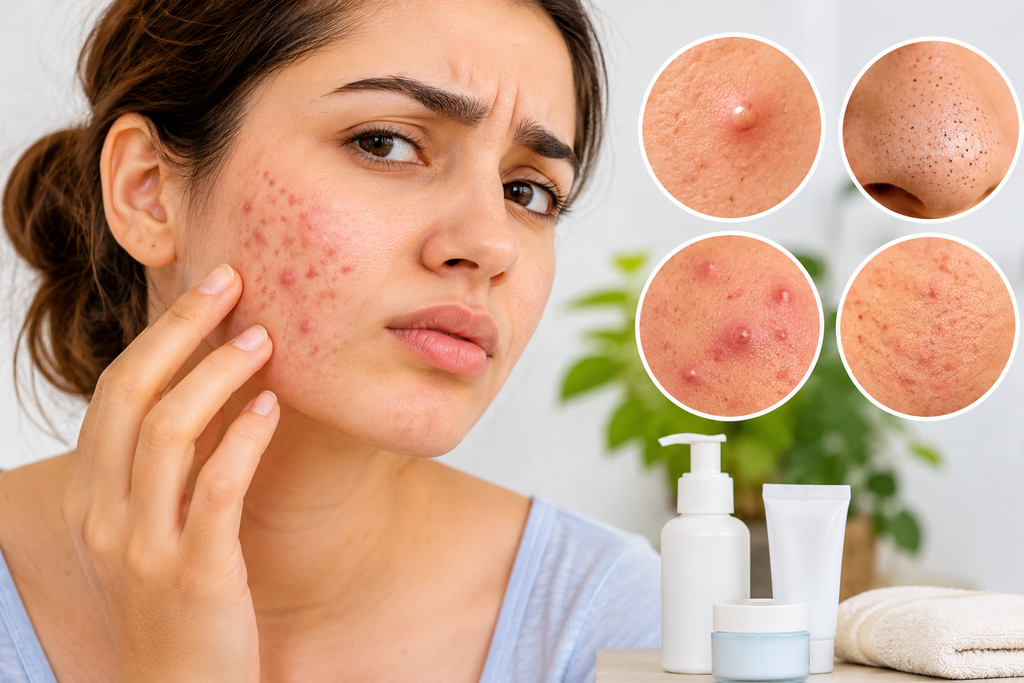
Acne is a common skin condition that causes pimples, blackheads, whiteheads, and sometimes painful lumps under the skin. It can affect teenagers and adults, usually appearing on the face, chest, shoulders, and back. Acne develops when excess oil and dead skin cells block hair follicles. Although it is common, proper treatment can help control breakouts and reduce the risk of scarring. What Is Acne? Acne is a skin condition that develops when hair follicles become blocked with sebum (natural skin oil) and dead skin cells. Bacteria can grow inside blocked follicles and contribute to inflammation. Depending on the blockage and inflammation, acne may appear as small bumps, pus-filled pimples, or deep and painful lumps. What Are the Different Types of Acne? The main types of acne include: Hormonal acne is associated with hormonal changes and may appear around the chin and jawline. Fungal acne is a common name for Malassezia folliculitis, a different condition caused by yeast affecting hair follicles. Who Can Get Acne? Acne can affect people of all ages, but it is especially common during puberty. Hormonal changes during this stage can increase oil production and make blocked pores more likely. Adults can also develop acne. Family history, hormonal changes, medications, and certain skincare products may contribute to breakouts. What Causes Acne? Several factors work together to cause acne: Stress, friction from tight clothing, oily skincare products, hair products, and certain medicines may also worsen acne in some people. Do Certain Foods Cause Acne? Food does not affect everyone’s skin in the same way. Some research suggests that high-glycemic foods, such as sugary drinks and refined carbohydrates, may worsen acne in certain people. There may also be a connection between dairy products and breakouts, but the evidence is not conclusive for everyone. A balanced diet is a sensible choice, and people with acne do not necessarily need to avoid entire food groups. What Are the Common Symptoms of Acne? Acne symptoms depend on the type and severity of the condition. Common signs include: Acne commonly affects the face, forehead, cheeks, chin, chest, shoulders, and upper back. How Is Acne Diagnosed? A healthcare provider or dermatologist can usually diagnose acne by examining the skin. They may ask when the breakouts started, review your medications and skincare products, and check for inflammation or scarring. Most people do not need special tests. However, additional tests may be recommended if another skin condition or hormonal problem is suspected. How Is Acne Treated? Treatment depends on the type and severity of acne. Mild acne may improve with over-the-counter products, while moderate or severe acne may need prescription medication. Topical Acne Treatments These medicines are applied directly to the skin: Oral Acne Medications A dermatologist may prescribe oral medicines for more persistent or severe acne. These medicines can cause side effects and are not suitable for everyone. Use them only under medical supervision. Other Acne Treatments For selected patients, dermatologists may recommend chemical peels, light-based treatments, or laser procedures. The right option depends on the person’s skin and type of acne. How Can I Manage Acne at Home? A simple skincare routine can help manage mild acne and reduce irritation. Home care may not be enough for deep, painful, or persistent acne. These cases may need medical treatment. Is Acne Treatment Safe During Pregnancy? Some acne medicines are unsafe during pregnancy. Oral isotretinoin can cause serious congenital disabilities and must not be used during pregnancy. Topical retinoids, including adapalene, are also generally avoided. If you are pregnant, planning pregnancy, or breastfeeding, speak with your healthcare provider before using acne medication. How Long Does Acne Treatment Take to Work? Acne treatment usually takes several weeks to show improvement. Some people need a few months to see better results. The timeline depends on acne severity, the treatment used, and how regularly it is followed. If your acne does not improve, consult a dermatologist rather than changing medicines on your own. Can Acne Cause Permanent Scars? Yes. Deep or inflamed acne can damage the skin and leave permanent scars. Common types include: Dark spots after acne are not always permanent scars. They are often changes in skin colour that may gradually fade. Early treatment and avoiding picking can help reduce the risk of scarring. How Can I Prevent Acne? You may not be able to prevent every breakout, but these habits can help: Acne is not simply caused by dirty skin. Washing too often or using harsh products can make irritation worse. When Should I See a Dermatologist? Seek medical advice if you have deep or painful acne, frequent breakouts, developing scars, or acne that does not improve with over-the-counter treatments. You should also seek help if acne affects your confidence or emotional well-being. Early treatment can help control inflammation and reduce the risk of permanent scars. Frequently Asked Questions About Acne 1. What Is the Main Cause of Acne? Acne develops when excess oil and dead skin cells block hair follicles. Bacteria and inflammation also contribute to breakouts. 2. What Is the Best Treatment for Acne? The best treatment depends on the type and severity. Benzoyl peroxide, salicylic acid, and topical retinoids are common options. Severe acne may need prescription medication. 3. Can Acne Go Away Permanently? Acne often improves with age and treatment, but it can return. Consistent skincare and suitable treatment can help control recurring breakouts. 4. Does Drinking Water Help Acne? Drinking enough water supports general health, but drinking extra water alone is not a proven acne treatment. 5. What Is the Difference Between Hormonal and Fungal Acne? Hormonal acne is associated with hormonal changes, while fungal acne (Malassezia folliculitis) involves yeast affecting hair follicles. They are different conditions and may need different treatments. Conclusion Acne is a common skin condition caused by blocked hair follicles, excess oil, bacteria, and inflammation. It can affect teenagers and adults, but several treatment options are available. Gentle skincare and suitable acne medicines can help manage breakouts. If acne is painful, severe, or leaving scars, consult