Gastritis Symptoms: 9 Warning Signs & What Causes Them
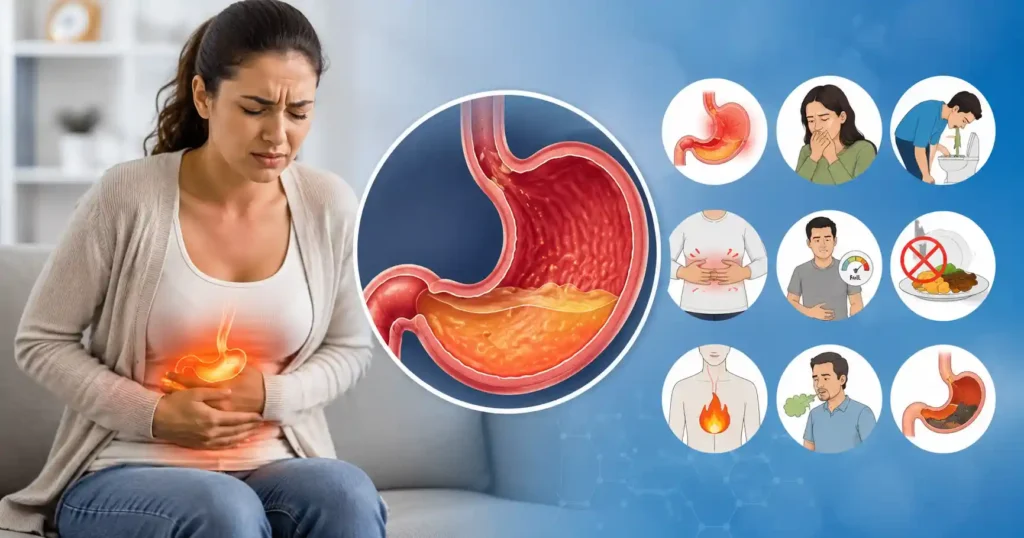
Gastritis Symptoms: 9 Warning Signs & What Causes Them That gnawing, burning ache in the upper stomach — the one that flares after certain meals, or wakes you with discomfort, or leaves you feeling bloated and vaguely nauseated — is a signal many people learn to ignore. They put it down to something they ate, take an antacid, and carry on. But when that upper-abdominal discomfort keeps returning, it may be gastritis: inflammation of the stomach lining, and one of the more common reasons for ongoing stomach trouble. Gastritis is worth understanding because it sits on a spectrum. In its mild, short-lived form, it is an irritation that settles with simple changes. In its more persistent form, or when driven by certain causes, it can linger and, if left unaddressed, occasionally lead to complications. The good news is that gastritis is usually very manageable once the cause is identified — and the causes, from a common bacterial infection to everyday painkillers, are often surprisingly addressable. This guide covers the warning signs of gastritis, what causes it, how it is managed, and when stomach symptoms warrant seeing a doctor. Quick Overview Question Short answer What is gastritis? Inflammation of the stomach lining Main symptom Upper abdominal pain or burning Types Acute (sudden) and chronic (long-lasting) Common causes H. pylori infection, NSAID painkillers, alcohol, stress Other symptoms Nausea, bloating, feeling full quickly, loss of appetite How is it managed? Treating the cause, diet, and acid-reducing medication When to worry Vomiting blood, black stools, severe or persistent pain What Is Gastritis? Gastritis is inflammation, irritation, or erosion of the lining of the stomach. The stomach lining normally protects itself from the powerful acid it produces to digest food, using a layer of protective mucus. When that protection is disrupted or the lining is irritated, inflammation results — and that is gastritis. It comes in two broad forms. Acute gastritis comes on suddenly, often triggered by something specific like a bout of heavy drinking, a course of painkillers, or a stressful illness, and typically settles once the cause is removed. Chronic gastritis develops gradually and persists over time, often driven by an ongoing cause such as a bacterial infection, and can quietly continue for years. Both involve the same underlying inflammation, but they differ in how they arrive and how long they last. Gastritis shares some symptoms with other digestive conditions, which is why it is sometimes confused with acid reflux or an ulcer. Our guide on GERD symptoms covers a related condition, and the two can even occur together, though they involve different problems in the digestive tract. 9 Warning Signs of Gastritis 1. Upper abdominal pain or burning. The most common symptom — a gnawing, burning, or aching pain in the upper part of the stomach, which may improve or worsen with eating depending on the person. 2. Nausea. A feeling of queasiness is common with gastritis, sometimes with a general sense of stomach upset. 3. Vomiting. Some people experience vomiting. If vomit contains blood or looks like coffee grounds, this is a warning sign needing urgent care. 4. Bloating. A sensation of fullness, tightness, or swelling in the upper abdomen frequently accompanies gastritis. 5. Feeling full quickly. Many people find they feel full soon after starting to eat, or uncomfortably full after a normal-sized meal. 6. Loss of appetite. The discomfort and nausea can reduce the desire to eat. 7. Indigestion. A general feeling of indigestion or discomfort after eating is common, sometimes described as a burning or heavy sensation. 8. Belching or hiccups. Excess burping or persistent hiccups can accompany the digestive upset of gastritis. 9. Dark stools or signs of bleeding. In more significant gastritis where the lining is eroded, there can be bleeding, showing as black, tarry stools or blood in vomit — a serious sign needing prompt medical attention. Importantly, some people with gastritis, particularly the chronic form, have few or no symptoms at all, and it is only discovered when investigating something else. The presence or absence of symptoms does not always reflect the degree of inflammation. What Causes Gastritis Cause How it leads to gastritis H. pylori infection A common bacterial infection of the stomach; a leading cause of chronic gastritis NSAID painkillers Regular use of aspirin, ibuprofen, and similar can irritate the lining Alcohol Excessive drinking irritates and erodes the stomach lining Severe stress or illness Major physical stress, surgery, or serious illness can trigger acute gastritis Autoimmune reaction The immune system attacks the stomach lining in some people Bile reflux Backflow of bile into the stomach Two causes stand out for being common and addressable. H. pylori, a bacterial infection of the stomach, is a leading cause of chronic gastritis worldwide and can be tested for and treated. And NSAID painkillers — aspirin, ibuprofen, and similar — are a very common cause, particularly with regular use, which is why anyone taking them frequently and developing stomach symptoms should discuss this with their doctor rather than continuing regardless. Never stop a prescribed medication on your own, but do report stomach symptoms to your prescriber. How Gastritis Is Managed Managing gastritis centres on treating the underlying cause while easing symptoms: Treating the cause is key. If H. pylori is present, it is treated with a specific course of medication prescribed by a doctor. If NSAIDs are the culprit, your doctor may adjust or change them. Reducing alcohol and addressing other triggers all help. Acid-reducing medication can ease symptoms and allow the stomach lining to heal by reducing acid, ranging from antacids for mild relief to stronger acid-reducing medicines for more persistent cases. Because these serve different purposes and persistent gastritis needs proper assessment, medication is best guided by a doctor or pharmacist. Dietary and lifestyle changes support recovery: Our guide on home remedies for constipation covers another common digestive complaint with gentle, practical approaches. How Gastritis Is Diagnosed Because gastritis shares symptoms with other digestive conditions like acid reflux and ulcers, a doctor uses
GERD Symptoms: 10 Warning Signs of Acid Reflux to Watch
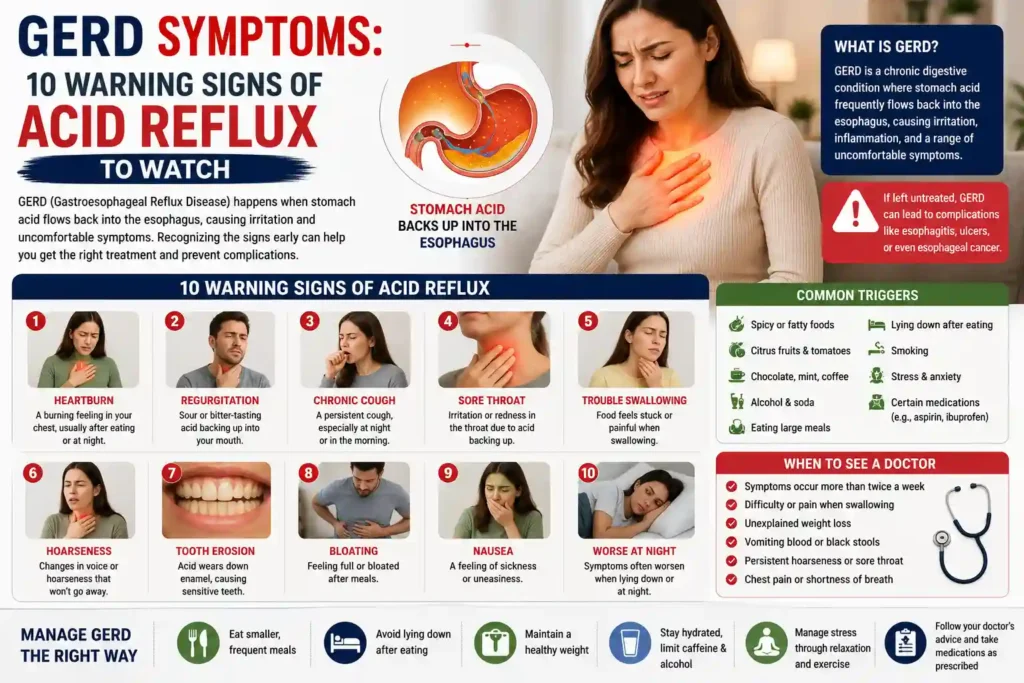
GERD Symptoms: 10 Warning Signs of Acid Reflux to Watch Almost everyone gets heartburn from time to time — that burning feeling behind the breastbone after a big, rich meal. It is uncomfortable but usually harmless and short-lived. But when that burning becomes a regular visitor, showing up several times a week and interfering with your meals, your sleep, and your comfort, it has crossed a line. That persistent, recurring acid reflux has a name: GERD, or gastro-oesophageal reflux disease. The distinction matters, because occasional heartburn and GERD are treated quite differently. Occasional reflux you can manage with simple changes and the odd antacid. GERD, being a chronic condition, needs a more considered approach — and, if left unmanaged over years, persistent acid reflux can irritate and damage the food pipe. Recognising when heartburn has become GERD, and knowing its full range of symptoms, is the first step to getting it under control. This guide covers the warning signs of GERD, what triggers it, how it is managed, and when reflux warrants seeing a doctor. Quick Overview Question Short answer What is GERD? Frequent, persistent acid reflux — a chronic condition Main symptom Heartburn (burning behind the breastbone) How often? Typically two or more times a week Common triggers Certain foods, large meals, lying down, weight, smoking Beyond heartburn Regurgitation, cough, sore throat, difficulty swallowing How is it managed? Lifestyle changes, diet, and medication When to worry Difficulty swallowing, weight loss, persistent symptoms What Is GERD? GERD stands for gastro-oesophageal reflux disease. It happens when stomach acid frequently flows back up into the oesophagus — the tube connecting your mouth to your stomach. A ring of muscle at the bottom of the oesophagus normally acts as a valve, opening to let food into the stomach and closing to keep acid down. In GERD, this valve does not close properly or relaxes too often, allowing acid to escape upwards. The occasional reflux almost everyone experiences becomes GERD when it happens frequently — generally twice a week or more — and persists over time. That distinction between an occasional nuisance and a chronic condition is important, because GERD is managed rather than cured, an idea explored in our guide on cure vs treat. The good news is that with the right combination of lifestyle changes and, where needed, medication, GERD can usually be well controlled. 10 Warning Signs of GERD 1. Heartburn. The hallmark symptom — a burning sensation in the chest, behind the breastbone, that often occurs after eating and may worsen when lying down or bending over. In GERD, this happens frequently rather than occasionally. 2. Regurgitation. A sour or bitter-tasting fluid backing up into the throat or mouth, sometimes bringing small amounts of food with it. This is a classic sign of acid escaping upwards. 3. A sensation of a lump in the throat. Many people with GERD describe a feeling of something stuck in the throat, or a persistent need to clear it. 4. Chronic cough. Acid irritating the airways can cause a persistent, dry cough, which is often worse at night and easily mistaken for another cause. 5. Sore throat or hoarseness. Acid reaching the throat and voice box can cause soreness, hoarseness, or a raspy voice, particularly in the morning. 6. Difficulty or pain when swallowing. A sensation of food sticking, or discomfort when swallowing, can develop and is a symptom that should always be assessed by a doctor. 7. Chest pain. Reflux can cause chest discomfort. Importantly, chest pain should never be assumed to be reflux without medical assessment, as it can also signal heart problems — seek urgent care if in any doubt. 8. Worsening symptoms at night. Lying down makes it easier for acid to flow back up, so many people find reflux worse at night, disrupting sleep. 9. Nausea. Some people experience nausea as part of their reflux, particularly after eating. 10. Dental and breath problems. Over time, stomach acid reaching the mouth can affect tooth enamel and contribute to bad breath. Some people have “silent reflux,” where the throat, voice, and airway symptoms dominate without much classic heartburn — which is why a persistent cough, hoarseness, or throat-clearing without obvious heartburn can still be reflux. What Triggers and Causes GERD Factor How it contributes Certain foods Fatty, fried, spicy foods, chocolate, citrus, tomato Drinks Coffee, alcohol, fizzy drinks Large meals Fill the stomach and increase reflux Lying down after eating Makes it easier for acid to flow back up Excess weight Increases pressure on the stomach Smoking Weakens the valve and increases acid Pregnancy Increased pressure and hormonal changes Hiatus hernia Part of the stomach moves up, affecting the valve Understanding your personal triggers is a large part of managing GERD, since they vary between people. Keeping a simple diary of what you eat and when symptoms strike often reveals clear patterns. How GERD Is Managed GERD management usually combines lifestyle changes with medication where needed, and lifestyle changes alone control many milder cases. Lifestyle and dietary changes: Medications (available over the counter and on prescription) can reduce or neutralise stomach acid, easing symptoms and allowing the oesophagus to heal. These range from antacids for occasional relief to acid-reducing medicines for more persistent symptoms. Because some are intended only for short-term use and others for longer management, and because persistent reflux should be properly assessed, medication for ongoing GERD is best guided by a doctor or pharmacist rather than taken indefinitely on your own. Our guide on gastritis symptoms covers a related digestive condition that can share some symptoms, and our guide on home remedies for constipation addresses another common digestive complaint. Foods That Help and Foods That Trigger GERD While triggers vary between people, some patterns are common enough to be worth knowing when planning meals around reflux. Often better tolerated Common triggers to limit Lean proteins — chicken, fish, turkey Fatty and fried foods Vegetables (non-acidic) Spicy foods Whole grains — oats, brown rice Citrus fruits and juices
Calcium Benefits: 8 Proven Ways It Supports Your Health
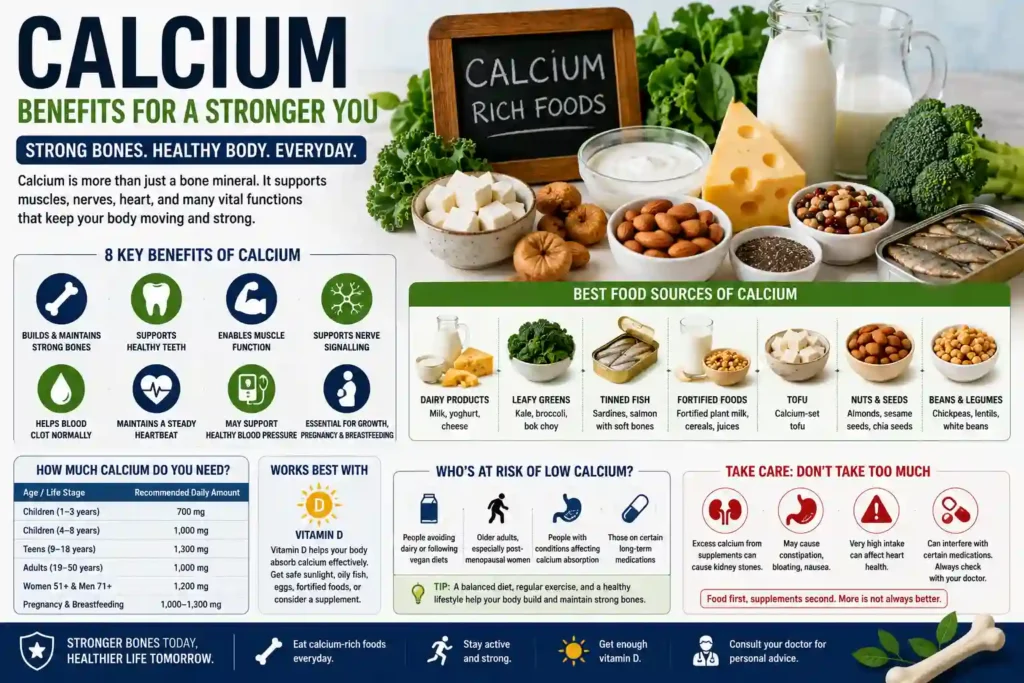
Calcium Benefits: 8 Proven Ways It Supports Your Health Most people know calcium as “the bone mineral,” and for good reason — the vast majority of the body’s calcium is stored in the bones and teeth, giving them their strength and structure. But calcium’s role goes well beyond the skeleton. This single mineral is quietly involved in some of the most essential processes keeping you alive, from the beating of your heart to the contraction of every muscle and the firing of every nerve. That wider importance is exactly why the body guards its calcium levels so carefully. If you do not take in enough, the body will draw calcium out of the bones to keep the blood level steady for these vital functions — which protects the heart and nerves in the short term but weakens the bones over time. Getting enough calcium from your diet, then, is not just about strong bones; it is about keeping the whole system supplied without your skeleton paying the price. This guide covers what calcium actually does, its proven benefits, the best food sources, how much you need, and how to meet your needs safely. Quick Overview Question Short answer What is calcium? An essential mineral, mostly stored in bones and teeth Key roles Bones, teeth, muscles, nerves, heart, blood clotting Best food sources Dairy, leafy greens, fortified foods, tinned fish with bones Works with Vitamin D, which is needed to absorb calcium Who’s at risk of low calcium? Those avoiding dairy, older adults, some medical conditions Can you take too much? Yes — excess from supplements can cause problems Why Calcium Matters So Much Calcium is the most abundant mineral in the body, and around 99% of it is stored in the bones and teeth, where it provides structure and strength. The remaining small fraction, circulating in the blood and tissues, is disproportionately important — it is essential for muscle contraction, nerve signalling, blood clotting, and a steady heartbeat. The body keeps blood calcium within a tight range at all costs, because these functions cannot tolerate much variation. If dietary calcium falls short, hormones signal the bones to release calcium into the blood to maintain that level. This is a clever short-term protective system, but relied on long-term it depletes the bones, which is how chronic low calcium contributes to weak, fragile bones later in life. This is also why calcium and vitamin D are so closely linked: vitamin D is needed for the body to absorb calcium from food, so a shortage of either undermines bone health. Our guide on vitamin D deficiency symptoms explains that partnership in more detail. 8 Proven Benefits of Calcium 1. Builds and maintains strong bones. Calcium’s best-known role. It gives bones their density and strength, and adequate intake throughout life — especially during childhood, adolescence, and older age — supports peak bone mass and helps protect against bone loss. 2. Supports healthy teeth. Just as it strengthens bones, calcium is a key component of teeth, contributing to their structure and helping maintain dental health. 3. Enables muscle function. Every muscle contraction, from lifting a cup to the beating of your heart, depends on calcium. It is essential for the process by which muscles contract and relax. 4. Supports nerve signalling. Calcium plays a crucial role in transmitting signals between nerves and the rest of the body, making it essential for the nervous system to function properly. 5. Helps blood clot normally. Calcium is one of the factors the body needs to form blood clots, an essential process for healing wounds and preventing excessive bleeding. 6. Maintains a steady heartbeat. The heart is a muscle, and its rhythmic contractions depend on calcium. Stable calcium levels help support normal heart function. 7. May support healthy blood pressure. Adequate calcium, as part of an overall balanced diet, is associated with healthy blood pressure, and it features in dietary patterns recommended for blood pressure such as the DASH approach. Our guide on lowering blood pressure naturally covers this pattern. 8. Supports development in children and pregnancy. Calcium is vital during periods of growth — in children and teenagers building their skeletons, and during pregnancy and breastfeeding, when demand rises to support the baby. Signs You Might Be Low in Calcium Because the body draws on bone stores to keep blood calcium steady, deficiency can be quiet at first. Over time, low calcium can contribute to: These signs overlap with other conditions, and long-term bone loss in particular is silent until a fracture occurs, which is why meeting your calcium needs steadily over life matters more than waiting for symptoms. Best Food Sources of Calcium Food is the ideal way to meet your calcium needs. Good sources include: For those who avoid dairy, combining fortified foods with leafy greens, tinned fish, calcium-set tofu, and nuts makes it entirely possible to meet calcium needs from plant and non-dairy sources. Pairing adequate calcium with enough vitamin D — from sunlight, food, or a supplement — ensures the calcium is actually absorbed. How Much Calcium Do You Need? Calcium needs vary by age and life stage, being higher during the growth of childhood and adolescence, and again in older adults, as well as during pregnancy and breastfeeding. Most people can meet their needs through a balanced diet that includes good calcium sources, and food is the preferred route. The important balance to strike is getting enough without overdoing it. While deficiency harms the bones over time, very high intakes — usually from supplements rather than food — are not beneficial and can cause problems. The goal is adequacy, matched to your life stage, rather than as much as possible. How to Take Calcium Safely For most people, a balanced diet provides enough calcium without supplements. When supplements are considered — for those who struggle to get enough from food, or on medical advice — a few points matter: The safest approach is to prioritise calcium-rich foods and to use supplements thoughtfully
Foods for Fatty Liver: 12 Best Choices to Support Your Liver
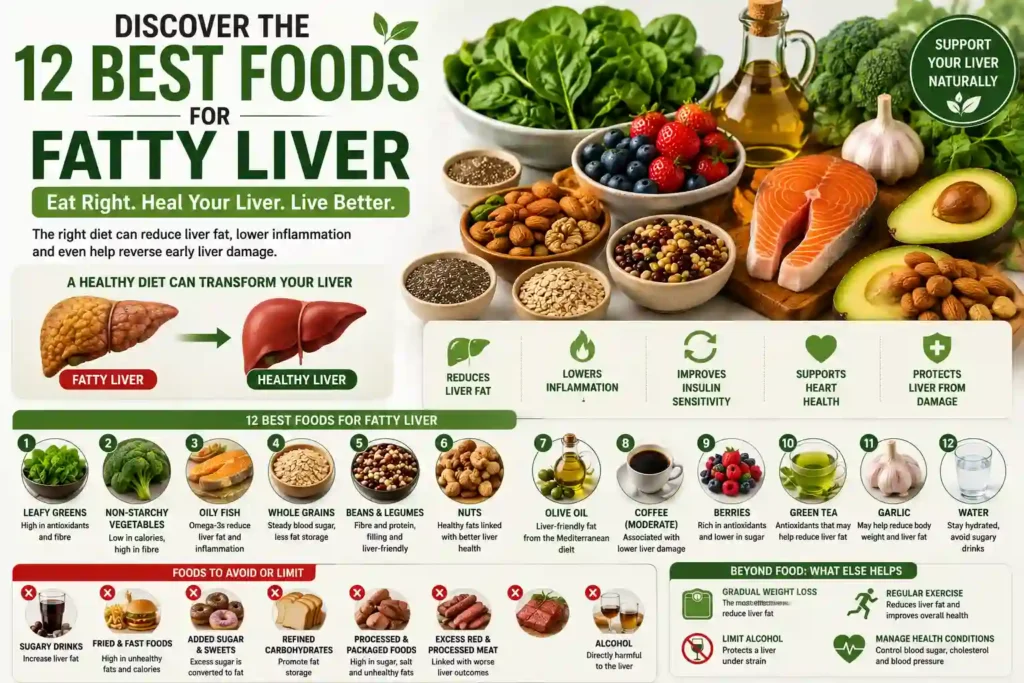
Foods for Fatty Liver: 12 Best Choices to Support Your Liver The liver is one of the few organs with a remarkable ability to repair itself — and in the case of fatty liver disease, what you eat is one of the most powerful tools you have to help it do exactly that. Unlike many conditions where diet plays a supporting role, in early fatty liver, food is close to the main event. The right eating pattern can reduce the fat stored in the liver, calm inflammation, and in its early stages, help reverse the condition altogether. That is genuinely encouraging news, because fatty liver is common and often silent, and many people feel powerless when they first hear the diagnosis. The truth is the opposite: the same everyday food choices that drive fat into the liver can, reversed, help clear it out. There is no single miracle food, but there is a clear, evidence-informed pattern of eating that supports liver health. This guide covers the best foods for a fatty liver, the ones worth limiting, and how to build meals that give your liver the best chance to recover. Quick Overview Food group Why it helps the liver Non-starchy vegetables Low in calories, high in fibre and antioxidants Whole grains Steadier blood sugar, less fat storage Oily fish Omega-3s that support liver fat balance Beans and legumes Fibre and protein, filling and liver-friendly Nuts Healthy fats linked with better liver health Olive oil A liver-friendly fat central to the Mediterranean diet Coffee (in moderation) Associated with lower liver damage in studies How Diet Affects Your Liver Fatty liver disease means too much fat has built up inside the liver cells. In the most common form, this is closely tied to weight, insulin resistance, and a diet high in sugar and refined carbohydrates — the same factors behind type 2 diabetes and heart disease. When you regularly eat more sugar and refined carbs than your body needs, the excess is converted to fat, much of which can end up stored in the liver. This is why diet is so central. Reducing the foods that promote liver fat, and increasing those that support the liver, directly targets the root of the problem. In its early stages, this can reduce liver fat and allow the liver to recover — a clear example of a condition that is often reversible through the right changes, as explored in our guide on fatty liver symptoms and how it develops. Because fatty liver shares its roots with diabetes and high blood pressure, the liver-friendly diet overlaps heavily with the advice in our guides on foods for diabetes and lowering blood pressure naturally. 12 Best Foods for Fatty Liver 1. Leafy greens. Spinach, kale, and other leafy greens are low in calories and rich in antioxidants and fibre. Some research suggests compounds in leafy greens may help reduce fat build-up in the liver, making them a valuable everyday choice. 2. Non-starchy vegetables. Broccoli, cauliflower, peppers, courgette, and similar vegetables add fibre, nutrients, and volume with very few calories, helping with the weight management that is central to reversing fatty liver. 3. Oily fish. Salmon, mackerel, and sardines provide omega-3 fatty acids, which help the body handle fats and are associated with reduced liver fat and inflammation. Including oily fish a couple of times a week is a smart move for liver health. 4. Whole grains. Oats, barley, brown rice, and quinoa raise blood sugar more slowly than refined grains, reducing the insulin spikes that drive fat storage in the liver. Their fibre also supports overall metabolic health. 5. Beans and legumes. Lentils, chickpeas, and beans combine fibre and plant protein, keeping you full and producing a gentle, steady effect on blood sugar. They are an excellent liver-friendly staple. 6. Nuts. Almonds, walnuts, and other nuts provide healthy fats, and studies link nut consumption with better liver health. Keep portions modest, as they are calorie-dense, but they are a genuinely beneficial food. 7. Olive oil. A cornerstone of the Mediterranean diet, olive oil is a healthy fat associated with lower liver fat compared with saturated fats. Using it in place of butter or refined oils supports the liver. 8. Coffee (in moderation). This surprises people, but research has consistently linked moderate coffee consumption with a lower risk of liver damage and scarring in people with fatty liver. Black or lightly sweetened coffee, without excess sugar and cream, appears most beneficial. 9. Berries. Blueberries, strawberries, and other berries are rich in antioxidants and lower in sugar than many fruits, making them a liver-friendly way to satisfy a sweet craving. 10. Green tea. Green tea contains antioxidants that some studies associate with reduced liver fat, though it is a supportive addition rather than a treatment on its own. 11. Garlic. Some research suggests garlic may help reduce body weight and fat in people with fatty liver. As a flavourful, low-calorie way to season food without salt, it is a useful kitchen ally. 12. Water. Not a food, but essential. Staying well hydrated and replacing sugary drinks with water is one of the single most impactful changes for a fatty liver, since sugary drinks are among the biggest drivers of liver fat. Foods to Avoid or Limit Limit or avoid Why Sugary drinks and fruit juice Among the biggest drivers of liver fat Added sugar and sweets Excess sugar is converted to liver fat Refined carbs (white bread, white rice) Fast-absorbed, promote fat storage Fried and fast foods High in unhealthy fats and calories Processed and packaged foods Often high in sugar, salt, and unhealthy fats Excess red and processed meat Linked with worse liver outcomes Alcohol Directly harmful to the liver Alcohol deserves special mention. In alcohol-related fatty liver, reducing or stopping drinking is essential. Even in non-alcohol-related fatty liver, alcohol adds strain to a liver that is already under pressure, so limiting it is wise. Sugary drinks are the other standout to cut — they deliver liver fat
Magnesium Benefits: 10 Proven Ways It Supports Your Health
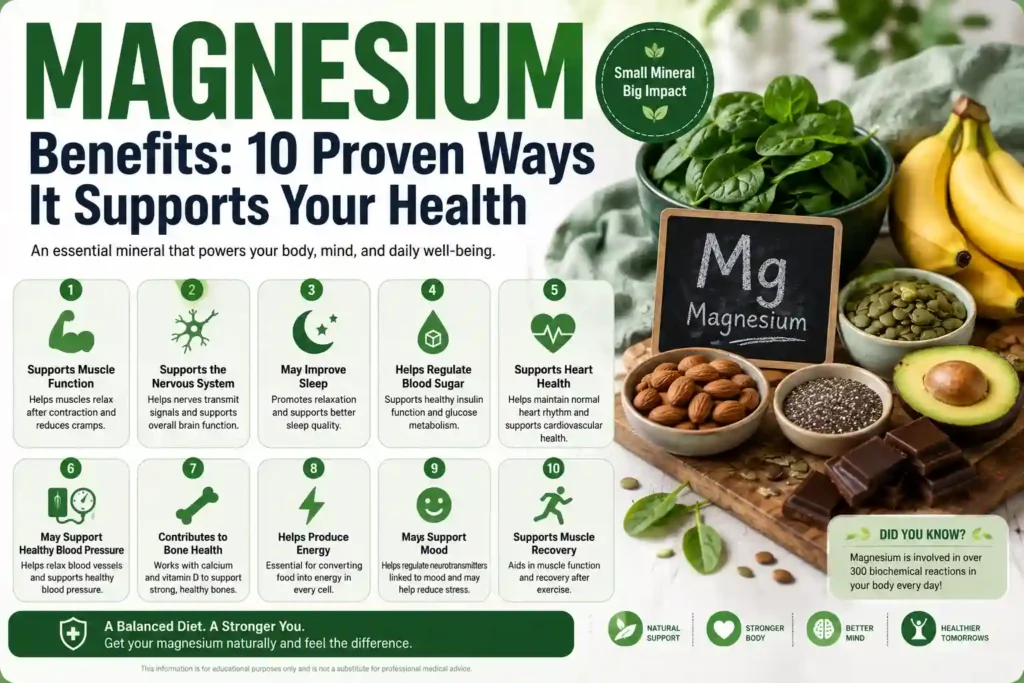
Magnesium Benefits: 10 Proven Ways It Supports Your Health Magnesium is one of those minerals that works so quietly and so widely that most people never think about it — yet it is involved in hundreds of processes throughout the body, more than almost any other mineral. It helps your muscles relax, your nerves fire, your heart keep rhythm, your bones stay strong, and your body turn food into energy. When it runs low, the effects are broad and easy to misattribute: poor sleep, muscle cramps, fatigue, and more. Part of what makes magnesium worth understanding is that low intake is more common than people realise. Modern diets, heavy on processed foods and lighter on the whole grains, nuts, seeds, and leafy greens that provide magnesium, can leave many people at the lower end of their needs. And because its symptoms are so general, a shortfall rarely announces itself clearly. This guide covers what magnesium does, its proven benefits, the best food sources, and how to meet your needs safely — because, as with most minerals, balance rather than excess is the aim. Quick Overview Question Short answer What is magnesium? An essential mineral involved in hundreds of body processes Key roles Muscles, nerves, heart, bones, energy, sleep Best food sources Nuts, seeds, whole grains, leafy greens, beans, dark chocolate Common signs of low levels Muscle cramps, fatigue, poor sleep Who’s at risk? Those on processed diets, some gut conditions, older adults Can you take too much? Excess from supplements can cause side effects Why Magnesium Matters So Much Magnesium is a true multitasker. It acts as a helper for hundreds of enzyme reactions in the body — the chemical processes that produce energy, build proteins, maintain DNA, and much more. It works alongside calcium in an important partnership: where calcium helps muscles contract, magnesium helps them relax, and this balance is essential for everything from your skeletal muscles to your heart. Because it is involved in so many systems, magnesium touches muscle and nerve function, heart rhythm, blood sugar regulation, blood pressure, bone health, and even sleep and mood. This wide reach is also why a shortfall produces such varied, non-specific symptoms, and why magnesium has been studied for such a range of uses. Its close relationship with other nutrients — including calcium and vitamin D — means these minerals are best thought of as a team. Our guides on calcium benefits and vitamin D deficiency symptoms cover the partners that work alongside magnesium. 10 Proven Benefits of Magnesium 1. Supports muscle function and relaxation. Magnesium helps muscles relax after contracting, and adequate levels support normal muscle function. This is why low magnesium is associated with muscle cramps and twitches, and why it is often discussed in the context of cramp relief. 2. Supports the nervous system. Magnesium plays a role in nerve signalling and helps regulate the nervous system, contributing to its calming, balancing effects on the body. 3. May improve sleep. Magnesium is involved in the systems that promote relaxation and regulate sleep, and some people find that adequate magnesium supports better sleep quality, particularly if they were previously low. 4. Helps regulate blood sugar. Magnesium plays a role in how the body handles insulin and glucose, and low levels are associated with poorer blood sugar control, which is relevant to the prevention and management of type 2 diabetes. Our guide on diabetes symptoms covers the wider picture. 5. Supports heart health. As a mineral essential for the heart muscle and rhythm, magnesium contributes to normal heart function, and adequate intake is associated with better cardiovascular health. 6. May support healthy blood pressure. Magnesium contributes to the relaxation of blood vessels, and adequate intake, as part of an overall balanced diet, is associated with healthy blood pressure. Our guide on lowering blood pressure naturally explores this further. 7. Contributes to bone health. A significant amount of the body’s magnesium is stored in the bones, and it works alongside calcium and vitamin D to support bone strength and density. 8. Helps produce energy. Magnesium is essential for the process that converts food into usable energy in the body’s cells, which is one reason fatigue can accompany low levels. 9. May help with mood. Magnesium’s role in the nervous system and its calming effects have led to interest in its relationship with mood and stress, with some evidence linking adequate levels to better mood. 10. Supports muscle and exercise recovery. Because of its roles in muscle function and energy, magnesium is often discussed in the context of physical performance and recovery, and adequate levels support normal muscle function during and after activity. Signs You Might Be Low in Magnesium Magnesium deficiency can be easy to miss because its signs are so general. Recognised signs of low magnesium include: These overlap heavily with other conditions, so they are prompts to consider magnesium rather than proof of deficiency. Because the body keeps blood magnesium fairly stable, a standard blood test does not always reflect total body stores well, which is one reason a doctor considers symptoms and diet alongside any testing. Best Food Sources of Magnesium Food is the ideal way to meet your magnesium needs, and many everyday foods are good sources: A helpful theme runs through this list: magnesium is concentrated in whole, minimally processed plant foods. Processing tends to strip magnesium away, which is why diets heavy in refined and processed foods can fall short. Simply shifting towards more whole grains, nuts, seeds, beans, and greens naturally raises magnesium intake. How Much Magnesium Do You Need? Magnesium needs vary by age and sex, being somewhat higher for men than women, and increasing during pregnancy. Most people can meet their needs through a balanced diet rich in the whole foods listed above, and food is the preferred and safest source. The aim is to meet your needs without excess. While low intake is common and worth addressing through diet, very high intakes from supplements are not more beneficial
Home Remedies for Cold: 12 Proven Ways to Ease Symptoms

12 Home Remedies for a Cold That May Help You Feel Better A common cold can cause a blocked or runny nose, sneezing, sore throat, cough, tiredness, and general discomfort. There is no instant cure for a cold, but simple home remedies for cold symptoms can help you feel more comfortable while your body recovers. Most colds are caused by viruses and get better on their own. Antibiotics do not treat the viruses that cause common colds, so cold treatment at home usually focuses on rest, fluids, and relieving individual symptoms. Quick Answer: What Helps With a Cold? The most useful home measures include: These remedies can ease symptoms but do not cure the underlying viral infection. What Is a Common Cold? The common cold is a viral infection that mainly affects the nose and throat. Symptoms can include a runny or blocked nose, sneezing, sore throat, cough, tiredness, and feeling generally unwell. Most people recover without specific medical treatment. According to the NHS, people generally start to feel better within 1 to 2 weeks, although some symptoms can last longer. NHS — Common cold Because a cold is caused by a virus, antibiotics do not make it go away faster. They should only be used when prescribed for a bacterial infection. 12 Home Remedies for a Cold 1. Get Plenty of Rest Rest and good sleep give your body time to recover. Avoid strenuous activity if you feel tired or unwell, and give yourself time to recover. 2. Drink Plenty of Fluids Drink enough water and other suitable fluids to stay hydrated. Water, warm drinks, and soup can all help you maintain your fluid intake while you are ill. 3. Try Warm Drinks Warm water, tea, or other warm drinks can soothe an irritated throat. Warm liquids may also make congestion feel more comfortable. 4. Use Honey for a Cough Honey can help soothe a cough and irritated throat. You can take it by itself or add it to a warm drink. Never give honey to babies under 12 months old. 5. Use Saline Nasal Spray or Drops Saline nasal spray or drops can help moisturise the nasal passages and relieve a blocked or runny nose. They can be particularly useful when congestion makes sleeping difficult. 6. Gargle With Warm Salt Water A warm saltwater gargle can soothe a sore throat. This is suitable for adults and older children who can gargle safely without swallowing the solution. 7. Use a Clean Humidifier A clean humidifier or cool-mist vaporizer can add moisture to the air and may make a dry throat or blocked nose feel more comfortable. Clean the humidifier regularly according to the manufacturer’s instructions. 8. Take a Warm Shower Warm, moist air from a shower may temporarily ease nasal congestion. Avoid leaning over a bowl of boiling water because hot water and steam can cause serious burns, particularly in children. 9. Eat Nourishing Foods and Soup You may have less appetite during a cold, but nutritious food can help maintain your energy. Warm soup can also provide fluids and comfort. Chicken soup may feel soothing, but it should be considered supportive food rather than a cure. 10. Keep Your Head Slightly Elevated If congestion makes it uncomfortable to lie flat, slightly raising your head while resting may help you breathe more comfortably. For babies, follow safe-sleep guidance and do not use loose pillows or unsafe sleep positioning. 11. Avoid Smoke Smoking and second-hand smoke can irritate the nose, throat, and airways and may make respiratory symptoms worse. Avoid smoky environments while recovering from a cold. 12. Ask a Pharmacist About Symptom Relief If home remedies are not enough, a pharmacist can advise you about suitable over-the-counter treatments for symptoms such as aches, fever, or congestion. Always check the label and ask a pharmacist if you are unsure whether a medicine is suitable, particularly for children, pregnancy, or existing health conditions. How to Treat a Cold at Home The best cold treatment at home is usually simple supportive care. Get enough rest, drink plenty of fluids, and use remedies that match your symptoms. For congestion, saline nasal spray, a humidifier, or a warm shower may help. For a sore throat, warm drinks, honey for people over 1 year old, and saltwater gargles can be soothing. For a cough, honey and warm drinks may provide relief. You can also read our guide to home remedies for cough for more information. There is no need to take antibiotics for an ordinary cold because they do not work against the viruses that cause it. Cold Cure Remedies: Can You Cure a Cold Quickly? If you are searching for cold cure remedies, it is important to know that there is no reliable home remedy that cures a common cold overnight. Rest, fluids, honey, saline nasal care, warm drinks, and humidified air can help manage symptoms, but they do not eliminate the virus immediately. Be cautious about products that promise an instant cold cure. Most colds simply need time to resolve. How Long Does a Cold Last? Most people begin to feel better within 1 to 2 weeks, although a cough or other symptoms may sometimes last longer. If your symptoms are getting worse instead of better, or you remain unwell for longer than expected, consider speaking with a healthcare professional. How to Prevent Colds You cannot prevent every cold, but good hygiene can reduce the spread of respiratory viruses. A healthy diet provides nutrients your body needs for normal immune function. You can also read our guides on vitamin C benefits and zinc benefits. When Should You See a Doctor? Most colds can be managed at home, but medical advice may be needed if: Seek urgent medical help if you have: These symptoms should not be treated with home remedies alone. Questions What are the best home remedies for a cold? Rest, fluids, warm drinks, honey for people over 1 year old, saline nasal spray or drops, saltwater gargles, and humidified air
Zinc Benefits: 10 Proven Ways It Supports Your Health
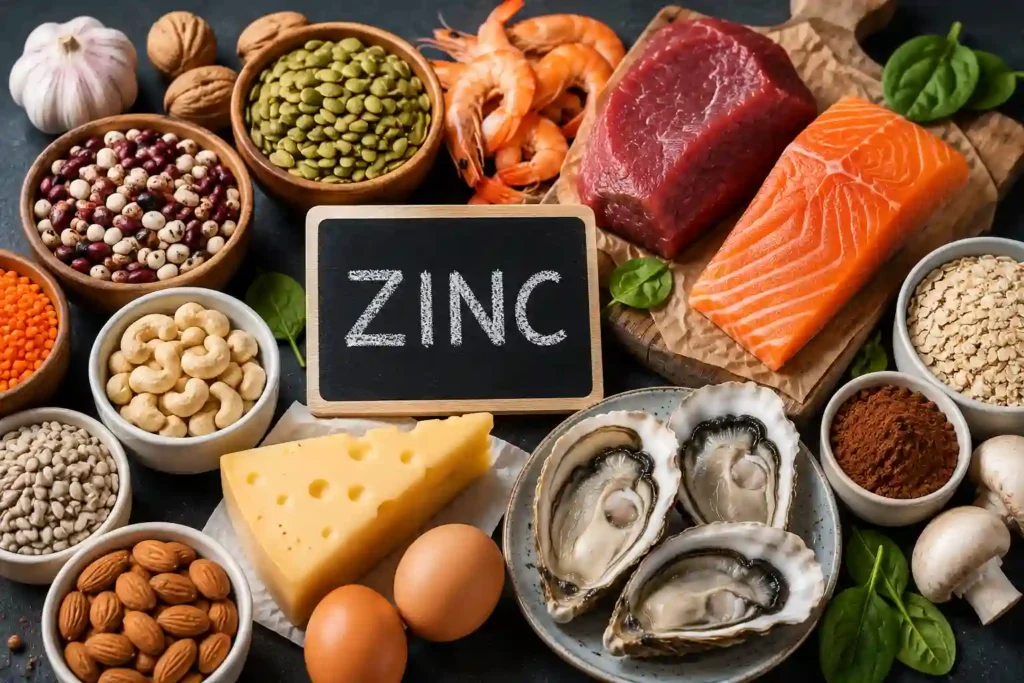
Zinc Benefits: 10 Proven Ways It Supports Your Health Zinc does not get as much attention as vitamins like C or D, but it is just as essential. This mineral is involved in hundreds of processes in your body. It supports your immune system, helps wounds heal, keeps your skin healthy, and even affects your sense of taste and smell. Yet many people know little about what zinc actually does. Your body cannot make or store much zinc. So you need a regular supply from food. Because zinc is involved in so many functions, getting enough matters for your health in many ways. A shortage can affect your immune system, your skin, and more. The good news is that zinc is found in many everyday foods, so most people can get enough from a balanced diet. This guide explains what zinc is good for, its key benefits, the best food sources, how much you need, and how to get enough safely. Quick Overview Question Short answer What is zinc? An essential mineral for many body functions What is it good for? Immunity, healing, skin, taste, and growth Best food sources Meat, shellfish, beans, nuts, seeds, dairy Can the body store it? Not well, so regular intake is needed Who is at risk of low zinc? Vegans, some older adults, certain conditions Can you take too much? Yes, high-dose supplements can cause problems Why Zinc Matters Zinc is an essential mineral, which means your body needs it but cannot make it. You have to get it from your diet. Despite being needed only in small amounts, zinc plays a role in a huge range of body processes. Zinc helps hundreds of enzymes work. These are the tiny helpers that drive chemical reactions in the body. Zinc is involved in your immune system, in healing and repair, in growth and development, and in making proteins and DNA. It also supports your skin, your sense of taste and smell, and more. Because zinc is so widely involved, a shortage can affect many parts of the body. And because your body does not store much zinc, a regular supply from food matters. Our guides on other important minerals, calcium benefits and magnesium benefits, cover nutrients that work alongside zinc for good health. 10 Key Benefits of Zinc 1. Supports the immune system. This is one of zinc’s best-known roles. Zinc is essential for your immune system to work properly. It helps your body defend against infection, which is why zinc is often linked with immune health. 2. Helps wounds heal. Zinc plays a key role in healing and repairing tissue. It is needed for the skin to repair itself, which is why zinc is important for wound healing. 3. Supports healthy skin. Zinc helps keep the skin healthy. It is involved in skin repair and is sometimes used in skin care for this reason. Low zinc can affect the skin. 4. Supports growth and development. Zinc is essential for normal growth and development. This makes it especially important during childhood, adolescence, and pregnancy. 5. Supports taste and smell. Zinc plays a role in your sense of taste and smell. A shortage of zinc can affect these senses, which can reduce appetite too. 6. Acts in many enzymes. Zinc helps hundreds of enzymes work. These drive countless reactions in the body, from making proteins to processing nutrients. 7. Supports DNA and protein production. Zinc is needed to make DNA and proteins, the building blocks your body uses to grow, repair, and function. 8. Supports eye health. Zinc is found in high amounts in the eye and plays a role in eye health, as part of overall good nutrition. 9. Supports reproductive health. Zinc plays a role in reproductive health and normal development, as part of its wider importance in the body. 10. Acts as an antioxidant. Zinc helps protect the body’s cells, contributing to overall health as part of a balanced diet. What Is Zinc Good For? A Closer Look People often ask what zinc is actually good for, so it helps to focus on its most important everyday roles. The role zinc is best known for is supporting the immune system. Zinc is essential for immune cells to work properly, which is why it is so often linked with fighting off infection. Some people use zinc when they feel a cold coming on, though it is best thought of as supporting normal immune function rather than a cure. Zinc is also strongly linked with healing and skin. It is needed to repair tissue and skin, which is why it matters for wound healing and healthy skin. And because zinc affects taste and smell, a shortage can dull these senses. These everyday roles, immunity, healing, skin, and taste, are what zinc is most valued for, and they show why getting enough is worthwhile. Signs You Might Be Low in Zinc Zinc deficiency is not common in people who eat a balanced diet, but it can happen. Because zinc is involved in so many functions, low levels can cause a range of signs, including: These signs can have many other causes, so they are prompts to consider zinc rather than proof of a deficiency. Some groups are more at risk of low zinc, including people who eat little or no animal produce, some older adults, and people with certain conditions that affect how zinc is absorbed. If you think you may be low, a doctor can advise. Best Food Sources of Zinc Zinc is found in many foods, so a balanced diet usually provides enough. Good sources include: One point worth knowing: zinc from animal foods is generally absorbed better than zinc from plant foods. This is because plant foods contain compounds that can reduce zinc absorption. So people who eat little or no animal produce may need to pay more attention to their zinc intake. Including a variety of zinc-rich foods helps most people get enough. How Much Zinc Do You Need? Most people
Hair Loss Causes: 12 Best Reasons You’re Losing Hair & What Helps
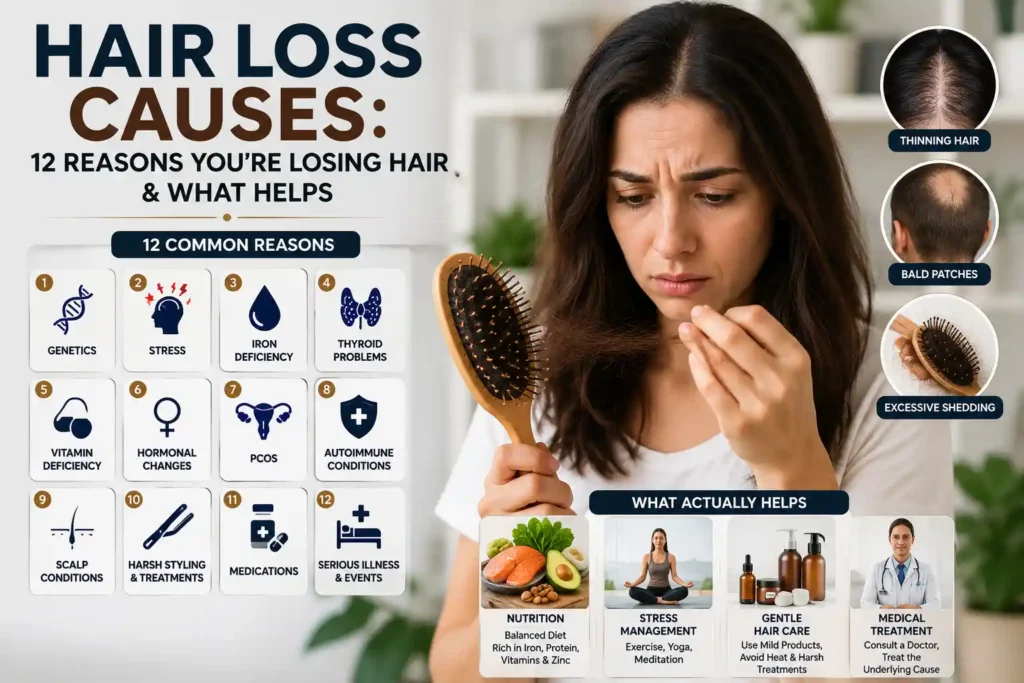
Hair Loss Causes: 12 Reasons You’re Losing Hair & What Helps Finding more hair than usual in the shower drain, on your pillow, or in your brush can be worrying. Some hair loss is completely normal, as everyone sheds hair every day. But when you notice more shedding than usual, thinning, or bald patches, it is natural to want to know why. Hair loss has many possible causes. Some are temporary and reversible, such as stress or a nutritional shortfall. Others are longer-lasting, such as inherited hair loss. Understanding the likely cause is the first step, because it guides what, if anything, can help, and whether you should see a doctor. This guide explains the common causes of hair loss, what can help, and when hair loss should be checked by a doctor. It focuses on the health-related reasons behind hair loss, rather than styling, so you can understand what might be going on. Quick Overview Question Short answer Is some hair loss normal? Yes, everyone sheds hair daily Common causes Genetics, stress, illness, diet, hormones Is it reversible? Often, depending on the cause Affects only men? No, hair loss affects women too Can diet affect it? Yes, some deficiencies can cause hair loss When to see a doctor Sudden, patchy, or distressing hair loss Understanding Hair Loss It helps to know that shedding some hair every day is completely normal. Hair grows in a cycle, with each hair growing, resting, and then falling out to be replaced. Losing a certain amount of hair each day is simply part of this natural process. Hair loss becomes worth looking into when it is more than usual. This might mean noticeably more shedding, gradual thinning, a receding hairline, or patches of hair loss. The pattern and speed of hair loss can offer clues to the cause. Hair loss is common and affects both men and women. It can happen at any age, though some causes are more common at certain ages. Some hair loss is temporary and grows back once the cause is addressed. Other types are longer-lasting. Because the causes and outlook vary so much, understanding the likely reason for your hair loss is important. Some causes of hair loss, such as low iron, are also linked to other symptoms, and our guide on fatigue causes covers a common one. 12 Common Causes of Hair Loss 1. Genetics (inherited hair loss). The most common cause of hair loss is inherited, often called male or female pattern hair loss. It tends to run in families and causes gradual thinning over time, often in a recognisable pattern. 2. Stress. A significant physical or emotional stress can trigger temporary hair loss a few months later. This type of shedding is usually temporary, and hair often regrows once the stress passes. 3. Illness or fever. A serious illness, high fever, or major health event can cause temporary hair shedding some weeks or months afterwards. As with stress, this often recovers with time. 4. Nutritional deficiencies. A lack of certain nutrients, such as iron, can contribute to hair loss. This is one reason hair loss can sometimes signal an underlying issue. Our guide on iron deficiency explains this common shortfall. 5. Thyroid problems. Both an underactive and an overactive thyroid can affect hair and cause hair loss. Thyroid conditions often come with other symptoms too, and a doctor can check for them. 6. Hormonal changes. Hormonal shifts, such as those after pregnancy or around menopause, can cause hair loss or shedding. Hormone-related hair loss is often temporary. 7. Childbirth. Many women notice increased hair shedding a few months after giving birth. This is due to hormonal changes and is usually temporary, with hair returning to normal over time. 8. Certain medical conditions. Some conditions, including those affecting the immune system, can cause hair loss, sometimes in patches. A doctor can diagnose these. 9. Medications. Some medicines list hair loss as a possible side effect. If your hair loss started after a new medication, mention it to your doctor, but do not stop a prescribed medicine on your own. 10. Medical treatments. Certain medical treatments are known to cause hair loss. In these cases, the hair loss is usually expected and often temporary, with regrowth after treatment. 11. Hairstyles that pull on the hair. Wearing hair in tight styles that pull on the roots over a long time can cause a type of hair loss. Being gentler with the hair can help prevent this. 12. Scalp conditions. Some scalp conditions and infections can lead to hair loss in the affected area. Treating the underlying scalp problem often helps the hair recover. Hair Loss in Women Hair loss is often thought of as a male issue, but it is common in women too. Understanding this can be reassuring, as many women feel alone with it. Women can experience inherited hair loss, often as a general thinning across the top of the scalp, rather than a receding hairline. Hormonal changes are a particularly common cause in women. Many notice increased shedding after childbirth or around menopause, and this is often temporary. Other causes in women include nutritional shortfalls such as low iron, thyroid problems, stress, and certain medical conditions. Because low iron is relatively common in women, it is a cause worth being aware of. If you are a woman experiencing hair loss that is sudden, patchy, or distressing, it is worth seeing a doctor. They can check for causes such as low iron or thyroid problems, often with a simple blood test, and advise on what may help. Hair Loss in Men In men, the most common cause of hair loss is inherited male pattern hair loss. This typically causes a receding hairline and thinning at the crown, and it often develops gradually with age. It is very common and, while harmless, can be distressing for some men. Men can also experience hair loss from other causes, such as stress, illness, nutritional issues, thyroid problems, and certain
Iron Deficiency: Best 10 Symptoms, Causes & How to Fix It Safely
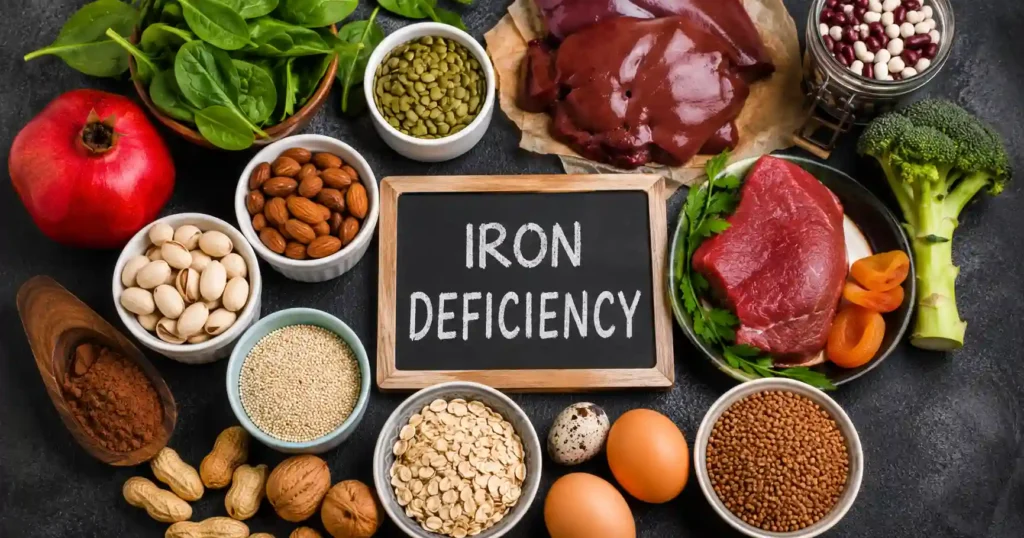
Iron Deficiency: 10 Symptoms, Causes & How to Fix It Safely Iron deficiency is the most common nutritional deficiency in the world, and yet it is one of the easiest to overlook. Its symptoms creep in gradually — a growing tiredness, skin that looks a little paler, breathlessness climbing stairs you used to manage easily — and because they arrive slowly, people adapt to them, assuming they are simply run down or getting older. Many carry on for months, quietly low on the one mineral their body needs to move oxygen around. That last point is the heart of it. Iron’s main job is to help red blood cells carry oxygen from your lungs to every tissue in your body. When iron runs low, oxygen delivery falters, and the whole body feels it — most obviously as fatigue, but in a surprising number of other ways too. The good news is that iron deficiency is both easy to confirm with a blood test and very treatable once identified. This guide covers the symptoms of iron deficiency, why it happens, the best iron-rich foods, and how to raise your levels safely — because, as with many things, more is not always better. Quick Overview Question Short answer What is it? Not enough iron for the body’s needs Why it matters Iron carries oxygen in the blood Most common symptom Fatigue and weakness Who’s at risk? Women with heavy periods, pregnancy, vegetarians, gut issues Serious form Iron deficiency anaemia How is it diagnosed? A blood test measuring iron and haemoglobin How is it treated? Iron-rich diet, supplements, treating the cause Why Iron Matters So Much Iron is essential for making haemoglobin, the protein in red blood cells that binds oxygen and carries it around the body. Without enough iron, the body cannot make enough healthy haemoglobin, and oxygen delivery to your tissues drops. When this progresses far enough, it causes iron deficiency anaemia — a condition where you have too few healthy red blood cells. Because every part of your body depends on oxygen, the effects of low iron are wide-ranging. Muscles tire quickly, the brain struggles to concentrate, the heart works harder to compensate, and even hair, skin, and nails can suffer. Iron also plays roles beyond oxygen transport, supporting the immune system and energy production at the cellular level. This is why iron deficiency so often shows up first as unexplained fatigue — a symptom it shares with several other conditions, which is exactly why a blood test rather than guesswork is the reliable way to identify it. Our guide on fatigue causes covers how low iron fits among the many possible reasons for tiredness. 10 Symptoms of Iron Deficiency No single symptom confirms iron deficiency, but when several appear together, especially with risk factors, it is worth checking. 1. Persistent fatigue and weakness. The most common sign by far. With less oxygen reaching your tissues, you feel tired, weak, and low on energy, often out of proportion to your activity. 2. Pale skin. Reduced haemoglobin can make the skin, and especially the inside of the lower eyelids and the gums, look paler than usual. 3. Shortness of breath. When oxygen delivery drops, you may find yourself breathless during activities that never used to bother you, like climbing stairs. 4. Heart palpitations. A noticeably fast or pounding heartbeat can occur as the heart works harder to circulate the limited oxygen. 5. Headaches and dizziness. Reduced oxygen to the brain can cause headaches, lightheadedness, or dizziness. 6. Cold hands and feet. Poor oxygen circulation can leave the extremities feeling cold. 7. Brittle nails and hair loss. Iron deficiency can make nails brittle or spoon-shaped, and can contribute to increased hair shedding. 8. A sore or smooth tongue. Some people develop a sore, swollen, or unusually smooth tongue, along with cracks at the corners of the mouth. 9. Unusual cravings (pica). A distinctive sign is craving non-food items such as ice, dirt, or chalk — a phenomenon called pica that is specifically linked to iron deficiency. 10. Restless legs. An uncomfortable urge to move the legs, particularly at night, has been associated with low iron in some people. These symptoms overlap with many other conditions, from other deficiencies to thyroid problems, which is why the reliable path is a blood test rather than assuming iron is the cause. What Causes Iron Deficiency Cause Why it lowers iron Blood loss Heavy periods are a leading cause in women; also gut bleeding Pregnancy Increased demand to support the growing baby Not enough dietary iron Especially in vegetarian and vegan diets without planning Poor absorption Coeliac disease, gut conditions, and some surgeries Rapid growth Children and teenagers have higher needs Frequent blood donation Can deplete iron stores over time Blood loss is the most important cause to understand, because it is common and sometimes hidden. Heavy menstrual periods are a very frequent reason for iron deficiency in women. In others, particularly men and postmenopausal women, unexplained iron deficiency can sometimes signal slow bleeding in the digestive tract, which is why a doctor may want to investigate the underlying cause rather than simply topping up the iron. This is a key reason not to self-treat iron deficiency indefinitely without knowing why it happened. Best Iron-Rich Foods There are two types of dietary iron, and knowing the difference helps you plan. Haem iron, from animal sources, is absorbed more efficiently: Non-haem iron, from plant sources, is absorbed less efficiently but still valuable: A useful trick for plant-based iron: eating it alongside vitamin C — a squeeze of lemon, some peppers, or citrus — significantly improves absorption. Conversely, tea and coffee taken with meals reduce iron absorption, so it can help to have them between meals rather than alongside iron-rich food. For vegetarians and vegans, combining these strategies makes plant iron work much harder. Our guide on foods for diabetes touches on building balanced, nutrient-rich meals more generally. How to Raise Iron Levels Safely Dietary changes are
Fatigue Causes: Best 12 Reasons You Feel Tired All the Time

Fatigue Causes: 12 Reasons You Feel Tired All the Time Everyone feels tired sometimes. A late night, a stressful week, a hard workout — these leave you drained, and a good rest sets things right. But there is a different kind of tiredness that does not lift, the sort where you wake up already exhausted, drag yourself through the day, and never quite feel restored no matter how much you sleep. When fatigue becomes your baseline rather than an occasional dip, something is usually driving it. The tricky part is that fatigue is one of the least specific symptoms in medicine. Dozens of things can cause it, from the entirely ordinary to the medically significant, and they often overlap — poor sleep feeding low mood, low mood worsening diet, a hidden deficiency quietly draining your energy underneath it all. Untangling the cause is what turns “I’m always tired” into something you can actually do something about. This guide walks through the most common reasons people feel tired all the time, how to start narrowing down yours, and the signs that mean it is worth seeing a doctor rather than simply pushing through. Quick Overview Category Common causes Lifestyle Poor sleep, stress, inactivity, poor diet, too much caffeine or alcohol Nutritional Iron, vitamin B12, or vitamin D deficiency Medical Thyroid problems, diabetes, anaemia, infections Mental health Depression, anxiety, chronic stress Sleep disorders Insomnia, sleep apnoea Other Certain medications, dehydration, being overweight Why Fatigue Is So Hard to Pin Down Fatigue is the body’s way of signalling that something is off, but because so many systems can produce that signal, it rarely points cleanly to one cause. Energy depends on good sleep, adequate nutrition, balanced hormones, healthy blood, a working thyroid, steady blood sugar, and reasonable mental wellbeing — and a problem in any of these can leave you drained. To make it harder, these causes interact. Someone who sleeps badly eats more poorly and moves less, which lowers mood, which worsens sleep — a self-reinforcing loop with no single obvious culprit. This is why the useful approach is not to hunt for one magic answer but to work through the common causes systematically, addressing what you can and testing for what you cannot see. Several of the causes below, such as vitamin deficiencies, are covered in depth in our guides on vitamin D deficiency symptoms and vitamin B12 deficiency symptoms. 12 Common Causes of Constant Fatigue 1. Poor or insufficient sleep. The most obvious cause, and the most common. Not just too few hours, but poor-quality sleep — frequent waking, irregular timing, screens late at night — leaves you unrefreshed. Many people are quietly running on less good sleep than they realise. 2. Chronic stress. Ongoing stress keeps the body in a heightened state that is genuinely exhausting, and it disrupts sleep, creating a draining cycle. Mental and emotional strain can be as tiring as physical exertion. 3. Poor diet. Skipping meals, relying on refined carbohydrates and sugar, or simply not eating enough leaves the body short of steady fuel. Blood sugar spikes and crashes produce that mid-afternoon slump many people know well. 4. Iron deficiency. One of the most common nutritional causes, especially in women. Low iron means fewer healthy red blood cells to carry oxygen, producing fatigue, weakness, and breathlessness. Our guide on iron deficiency covers this in detail. 5. Vitamin B12 or vitamin D deficiency. Both are frequently overlooked causes of persistent tiredness. B12 is vital for red blood cells and nerves, and vitamin D influences energy and immune function — deficiencies in either are common and easily missed without a blood test. 6. Thyroid problems. An underactive thyroid slows the body’s metabolism, causing fatigue, weight gain, and feeling cold. It is a common and very treatable cause that a simple blood test can identify. 7. Diabetes or high blood sugar. Persistent fatigue is a classic early sign of diabetes, as cells struggle to get the glucose they need for energy. Our guide on diabetes symptoms explains the wider warning signs. 8. Depression and anxiety. Mental health conditions very commonly cause fatigue, both directly and through disrupted sleep and appetite. Tiredness that comes with low mood, loss of interest, or persistent worry is worth taking seriously. 9. Sleep apnoea. This under-recognised condition interrupts breathing during sleep, fragmenting rest without the person realising. The tell-tale signs are loud snoring and daytime sleepiness despite a full night in bed. 10. Too much caffeine or alcohol. Both disrupt sleep quality. Caffeine late in the day delays sleep, while alcohol, though it may help you fall asleep, worsens sleep quality — leaving you more tired the next day. 11. Inactivity. It sounds counterintuitive, but too little physical activity actually worsens fatigue, while regular moderate exercise boosts energy over time. A sedentary routine tends to feed tiredness rather than relieve it. 12. Dehydration and other factors. Not drinking enough, certain medications with fatigue as a side effect, being significantly overweight, and ongoing infections can all contribute. Fatigue is often the sum of several small factors rather than one big one. How to Start Narrowing Down Your Fatigue Because the causes overlap, a systematic approach works better than guessing: Keeping a simple diary for a week or two — sleep, meals, activity, mood, and energy levels — often reveals patterns that memory alone misses, and it gives your doctor useful information. When Fatigue Needs a Blood Test Some causes of fatigue are invisible without testing. If lifestyle factors do not explain your tiredness, or it persists despite improving sleep and diet, a doctor may check for common medical causes with blood tests — looking at iron levels, vitamin B12 and vitamin D, thyroid function, blood sugar, and a full blood count to detect anaemia. These are straightforward tests that can reveal a treatable cause behind months of unexplained exhaustion. This is why persistent fatigue is worth investigating rather than simply enduring — the answer is sometimes a simple, correctable deficiency. Lifestyle Steps That