Natural Remedies for Skin: 12 Gentle Ways to Soothe Skin

Natural Remedies for Skin: 12 Gentle Ways to Soothe Skin Your skin works hard every day. It protects you, keeps moisture in, and shields you from the world around you. So when it feels dry, itchy, irritated, or dull, it is natural to look for gentle ways to help. Many people prefer to start with simple, natural remedies before reaching for anything stronger. Natural remedies for skin are popular for good reason. They are often gentle, affordable, and easy to use at home. Many are based on long traditions of skin care, and some are supported by evidence too. Used sensibly, they can soothe irritation, support your skin’s natural barrier, and become part of a calm, caring routine. It helps to be realistic, though. Natural does not always mean risk-free, and no home remedy replaces medical care for a skin condition. This guide shares gentle, sensible natural remedies for skin, explains how to use them safely, and covers when it is best to see a doctor. Quick Overview Question Short answer What are natural skin remedies? Gentle, home-based ways to soothe and care for skin What can they help with? Dryness, mild irritation, general skin care Are they safe? Often, but natural does not mean risk-free Common remedies Moisturising, oats, aloe vera, gentle cleansing Key rule Patch test first, and be gentle When to see a doctor Persistent, severe, or spreading skin problems A Gentle Approach to Skin Care Before reaching for any single remedy, it helps to understand what healthy skin needs. Your skin has a natural barrier that keeps moisture in and irritants out. Much of good skin care is simply about protecting and supporting that barrier, rather than doing too much to it. This is why a gentle approach usually works best. Harsh products, hot water, and over-washing can strip the skin and make problems worse. Simple, kind habits often do more good than complicated routines. The natural remedies below work in this spirit. They aim to soothe, moisturise, and protect, rather than irritate. Keep in mind that everyone’s skin is different. What suits one person may not suit another. So it is wise to introduce new remedies slowly, one at a time, and to stop anything that causes irritation. If you have a specific skin condition, gentle care can support your skin, but it works best alongside proper medical advice. Our guide on hives on skin covers one common skin problem in detail. 12 Natural Remedies for Skin These gentle remedies can soothe and support the skin. Always patch test first, and stop if anything causes irritation. 1. Moisturise regularly. Keeping the skin moisturised is one of the most important steps. A good moisturiser helps lock in water and support the skin barrier. Apply it after washing, while the skin is still slightly damp, to trap moisture. 2. Use gentle cleansing. Wash with a mild, fragrance-free cleanser and lukewarm water. Avoid hot water and harsh soaps, which strip the skin. Gentle cleansing keeps skin clean without damaging its barrier. 3. Try an oat bath. Oats have long been used to soothe itchy, irritated skin. A colloidal oatmeal bath, made from finely ground oats, can calm dryness and itching. It is a classic, gentle remedy. 4. Aloe vera. Aloe vera gel is widely used to soothe and cool the skin. It can help with minor irritation and after sun exposure. Choose a pure gel and patch test first. 5. Stay hydrated. Drinking enough water supports your overall health, which includes your skin. Good hydration is a simple, natural habit that helps your body and skin function well. 6. Protect from the sun. Sun protection is one of the best things you can do for your skin. Protecting your skin from strong sun helps prevent damage and premature ageing. Use shade, clothing, and sun protection as advised. 7. Use a humidifier. Dry air, especially in winter or heated rooms, can dry out the skin. A humidifier adds moisture to the air and can help keep skin from drying out. 8. Choose gentle, fragrance-free products. Fragrances and harsh ingredients can irritate the skin. Simple, fragrance-free products are often kinder, especially for sensitive skin. 9. Eat a skin-friendly diet. A balanced diet with plenty of fruits, vegetables, and healthy fats supports your skin from within. Foods rich in vitamins and healthy fats are part of good overall skin care. 10. Avoid scratching. Scratching irritated skin can make things worse and damage the skin. Keeping the skin cool and moisturised, and using gentle soothing measures, helps reduce the urge. 11. Cool compresses. For hot, itchy, or irritated skin, a cool compress can bring relief. It is a simple, gentle way to calm the skin. 12. Manage stress. Stress can affect the skin and worsen some skin problems. Looking after your wellbeing, with rest and relaxation, supports your skin as part of your overall health. Natural Remedies for Dry Skin Dry skin is one of the most common skin complaints, and natural remedies can help a great deal. The key is to add moisture and protect the skin barrier. Moisturising is the most important step for dry skin. Apply a rich moisturiser regularly, especially after washing, while the skin is still damp. This traps water in the skin. Thicker creams and ointments are often better for very dry skin than thin lotions. Gentle cleansing matters too. Hot water and harsh soaps strip natural oils and make dryness worse. Use lukewarm water and a mild, fragrance-free cleanser, and avoid over-washing. Adding moisture to the air with a humidifier helps in dry or heated environments. Some natural ingredients can soothe dry skin, such as an oat bath for itching. Staying hydrated and protecting the skin from harsh weather also help. For most people, a simple routine of gentle cleansing and regular moisturising keeps dry skin comfortable. If dryness is severe, cracked, or does not improve, it is worth seeing a doctor. Natural Remedies for Irritated or Itchy Skin Irritated, itchy skin is uncomfortable,
Hives on Skin: 9 Causes & Quick Relief

Hives on Skin: 9 Causes & Quick Relief Hives are one of the most common skin problems, and one of the most alarming when they first appear. Raised, itchy welts can show up on the skin suddenly, often for no obvious reason, and then fade just as quickly. They can be uncomfortable, itchy, and worrying, especially if you do not know what is causing them. The medical name for hives is urticaria. They can appear anywhere on the body, come in different sizes, and change shape or move around. Most of the time, hives are harmless and settle on their own. But they can be very itchy, and in some cases they point to an allergy or another trigger worth understanding. The good news is that most hives are easy to manage and often clear up quickly. This guide explains what hives are, their common causes and symptoms, how to treat them, simple ways to get relief, and when to see a doctor. Quick Overview Question Short answer What are hives? Raised, itchy welts on the skin (urticaria) What do they look like? Red or skin-coloured raised patches, often itchy Common causes Allergies, infections, stress, heat, medications Are they serious? Usually not, but severe reactions need urgent care How long do they last? Often hours to days; sometimes longer How to treat them Antihistamines, avoiding triggers, soothing the skin When to worry Swelling of the face or throat, or trouble breathing What Are Hives? Hives are raised, itchy welts that appear on the skin. They happen when the body releases a chemical called histamine. This causes small blood vessels to leak fluid under the skin. The fluid builds up and forms the raised welts. Hives can be red, pink, or skin-coloured. They can be small or large, and they often join together to form bigger patches. A key feature is that they can change shape, move around, and come and go over hours. If you press the centre of a hive, it often turns pale. Hives are usually very itchy. They can appear on any part of the body. Most hives are what doctors call acute, meaning they last a short time. Some people get long-lasting or repeated hives, known as chronic hives. Our guide on how long hives last explains the difference in more detail. Common Symptoms of Hives The main symptoms of hives are usually easy to recognise: Hives can range from a few small spots to large areas of the skin. Sometimes they come with a deeper swelling under the skin, often around the eyes or lips. This is called angioedema. Our guide on hives on the face covers this. Most hives are uncomfortable but harmless. However, if hives come with swelling of the face, lips, tongue, or throat, or with difficulty breathing, this can be a sign of a serious allergic reaction that needs emergency care. 9 Common Causes of Hives Hives have many possible triggers. Sometimes the cause is clear, and sometimes it is never found. Here are the common ones. 1. Allergies. Allergic reactions are a common cause. Foods, medicines, insect stings, and other allergens can trigger hives in people who are sensitive to them. 2. Foods. Certain foods can cause hives in some people. Common examples include nuts, shellfish, eggs, and milk, though any food can be a trigger. 3. Medications. Some medicines can cause hives as a reaction. If hives appear after starting a new medicine, mention it to your doctor. Do not stop a prescribed medicine on your own. 4. Infections. Many cases of hives, especially in children, are triggered by an infection, such as a common cold or other viral illness. Our guide on baby hives covers hives in children. 5. Insect stings and bites. Stings and bites can cause hives in some people, either around the site or more widely. 6. Stress. Emotional stress can trigger hives or make them worse. The link between stress and hives is well recognised. Our guide on stress hives explains this. 7. Heat, cold, and physical triggers. In some people, hives are triggered by physical factors such as heat, cold, sunlight, pressure on the skin, or exercise. 8. Contact with certain substances. Touching certain plants, chemicals, latex, or other substances can cause hives in sensitive people. 9. Unknown causes. In many cases, especially with long-lasting hives, no clear cause is found. This can be frustrating, but the hives can still be managed. Our guide on what causes hives explores the triggers in more depth. Acute vs Chronic Hives Hives are often grouped by how long they last, and this difference matters. Acute hives are short-lived. They come on suddenly and usually clear within hours to a few days, and often within six weeks. Most hives are acute. They are frequently linked to a clear trigger, such as an allergy, infection, or food. Chronic hives last longer. They continue or come back over six weeks or more. In many cases of chronic hives, no clear cause is found, which can be frustrating. Chronic hives are less common and often need medical assessment and longer-term management. Our guide on chronic hives covers this in detail. Knowing whether your hives are acute or chronic helps guide what to do. Acute hives often settle on their own or with simple treatment. Chronic hives usually benefit from seeing a doctor to manage them and look for any triggers. How to Treat Hives Most hives can be managed at home, and they often settle on their own. Here are the main approaches. Antihistamines. These are the main treatment for hives. Antihistamines work against histamine, the chemical that causes hives. They reduce itching and welts. Many are available from a pharmacy, and a pharmacist can advise on a suitable one. Avoid known triggers. If you know what triggers your hives, avoiding it is the most effective step. This might be a food, a medicine, or a physical trigger like heat. Soothe the skin. Cool compresses, a cool bath, and
10 Warning Signs of Vitamin B12 Deficiency
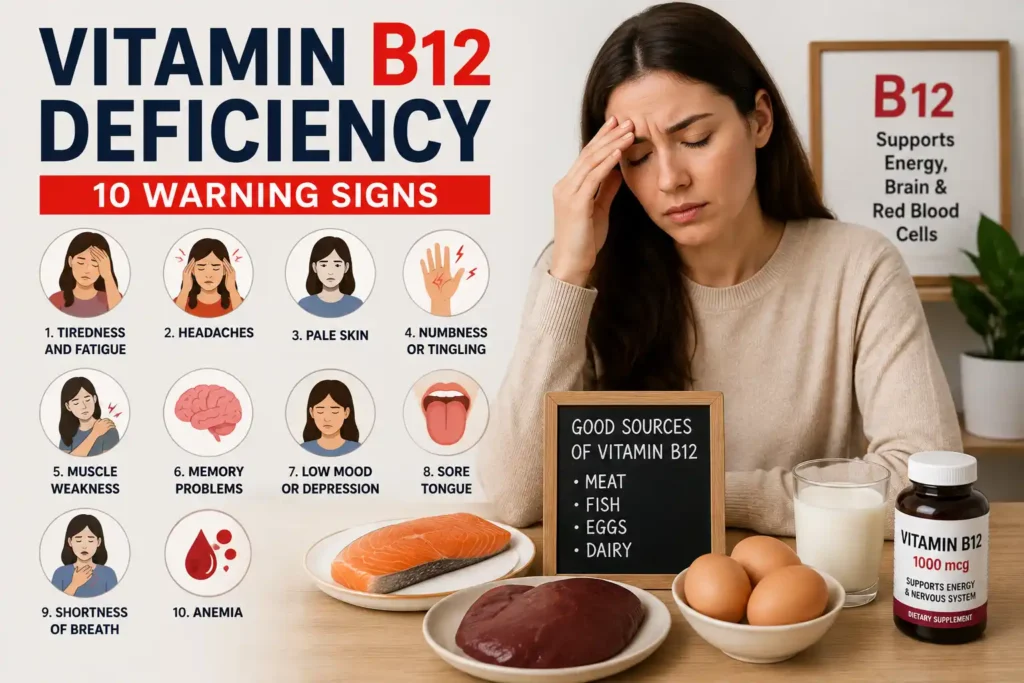
10 Warning Signs of Vitamin B12 Deficiency Vitamin B12 is a nutrient your body needs but cannot make on its own. You have to get it from food or supplements. It plays a key role in making red blood cells, keeping your nerves healthy, and supporting your brain and energy. Vitamin B12 deficiency is common, and it can develop slowly over time. The signs are often mild at first and easy to mistake for everyday tiredness or stress. But left untreated, low B12 can affect your blood, your nerves, and your overall health. The good news is that vitamin B12 deficiency is usually simple to diagnose and treat. A blood test can check your levels, and treatment is often straightforward. This guide explains the common signs of B12 deficiency, what causes it, who is at risk, how to treat it, and when to see a doctor. Quick Overview Question Short answer What is it? Low levels of vitamin B12 in the body Why it matters B12 supports blood, nerves, brain, and energy Common signs Tiredness, weakness, tingling, pale skin Main causes Poor diet, absorption problems, some conditions At higher risk Vegans, older adults, some medical conditions How to check A simple blood test When to see a doctor Ongoing symptoms, or if you are at higher risk Why Vitamin B12 Matters Vitamin B12 does several important jobs in the body. It helps make healthy red blood cells, which carry oxygen around your body. It keeps your nervous system working properly. And it supports your brain, mood, and energy levels. Because B12 is involved in so many functions, a deficiency can cause a wide range of symptoms. These can affect your blood, your nerves, and your mind. Your body cannot make vitamin B12. You get it mainly from animal foods such as meat, fish, eggs, and dairy. Your body then absorbs it through a specific process in your gut. A problem at any stage, whether from diet or absorption, can lead to a deficiency. Because tiredness is such a common early sign, our guide on fatigue causes covers the many reasons for low energy. 10 Common Signs of Vitamin B12 Deficiency Low B12 often causes mild symptoms at first. They can build up slowly, which makes them easy to miss. Here are the common signs to look out for. 1. Tiredness and fatigue. Feeling tired and low on energy is one of the most common signs. Low B12 affects red blood cells, which carry oxygen, so you can feel drained. 2. Weakness. A general feeling of weakness often comes with the tiredness of B12 deficiency. 3. Pale or yellowish skin. Low B12 can affect red blood cell production, which can make the skin look pale or slightly yellow. 4. Tingling or numbness. B12 is vital for nerve health. Low levels can cause a “pins and needles” feeling, or numbness, often in the hands and feet. 5. Breathlessness. Because B12 affects the blood’s ability to carry oxygen, some people feel short of breath, especially with activity. 6. Dizziness. Feeling dizzy or lightheaded can occur, linked to the effects on the blood. Our guide on dizziness causes covers this symptom in more detail. 7. A sore or red tongue. Some people with low B12 develop a sore, red, or smooth tongue, and sometimes mouth ulcers. 8. Problems with memory or thinking. B12 supports the brain. Low levels can cause problems with memory, concentration, or a feeling of “brain fog.” 9. Mood changes. Low B12 can affect mood, and some people notice low mood or irritability. 10. Balance or walking problems. In more significant deficiency, the effects on the nerves can cause problems with balance or walking. This is a sign that needs prompt medical attention. These signs can have many causes. So they are prompts to check your B12, not proof of deficiency. Some nerve-related symptoms can become long-lasting if a deficiency is not treated, which is why it is important not to ignore them. What Causes Vitamin B12 Deficiency? Vitamin B12 deficiency happens when your body does not get enough B12, or cannot absorb it properly. There are two main groups of causes. Diet. Vitamin B12 is found mainly in animal foods. People who eat little or no animal produce, such as vegans and some vegetarians, can become low in B12 unless they get it from fortified foods or supplements. Absorption problems. Even with enough B12 in the diet, some people cannot absorb it properly. This can be due to certain conditions affecting the gut, or a condition where the body cannot absorb B12 from food. Some stomach and bowel conditions, and some surgeries, can also affect absorption. Age. As people get older, the body can become less able to absorb B12 from food. Older adults are therefore at higher risk. Some medications. Certain long-term medications can affect B12 levels over time. Understanding the cause matters, because it affects the treatment. For example, a dietary deficiency may be treated differently from an absorption problem. A doctor can work out which applies to you. Who Is Most at Risk? Some groups are more likely to have low vitamin B12. You may be at higher risk if you: If you fall into one of these groups, it is worth being aware of the signs and speaking to a doctor if you have symptoms. People who avoid animal foods are often advised to take a B12 supplement or eat fortified foods, since diet alone may not provide enough. How Vitamin B12 Deficiency Is Diagnosed The way to check for B12 deficiency is a blood test. This measures the level of vitamin B12 in your blood, and can also check your red blood cells for signs of anaemia. A doctor may suggest a test if you have symptoms of deficiency, or if you have risk factors. If the test shows low B12, the doctor may do further tests to find the cause. This helps decide the best treatment. If you think you may be low,
Vitamin D Deficiency: 10 Warning Signs You Shouldn’t Ignore

Vitamin D Deficiency: 10 Warning Signs You Shouldn’t Ignore Vitamin D is often called the “sunshine vitamin.” Your body makes it when your skin is exposed to sunlight. It plays a key role in keeping your bones, muscles, and immune system healthy. Yet vitamin D deficiency is very common, and many people do not realise they have it. Low vitamin D can be easy to miss. The signs are often mild or vague, and they can look like everyday tiredness or general aches. Over time, though, a lack of vitamin D can affect your bones, energy, and overall health. The good news is that vitamin D deficiency is usually easy to identify and treat. A simple blood test can check your levels, and most people can raise them with sunlight, diet, and supplements. This guide explains the common signs of vitamin D deficiency, why it happens, how to fix it, and when to see a doctor. Quick Overview Question Short answer What is it? Low levels of vitamin D in the body Why it matters Vitamin D supports bones, muscles, and immunity Common signs Tiredness, bone or muscle aches, low mood Main causes Too little sunlight, poor diet, certain conditions How to check A simple blood test How to fix it Sunlight, diet, and supplements When to see a doctor Ongoing symptoms, or if you are at higher risk Why Vitamin D Matters Vitamin D is essential for good health. Its most important job is helping your body absorb calcium. This keeps your bones and teeth strong. Without enough vitamin D, bones can become weak, soft, or painful. Vitamin D also supports your muscles and your immune system. It plays a role in how your body fights infection. Some research also links vitamin D to mood and general wellbeing. Your body makes vitamin D when sunlight touches your skin. You can also get smaller amounts from certain foods. Because sunlight is the main source, deficiency is especially common in places with long winters, and in people who spend most of their time indoors. Our guide on calcium benefits explains how vitamin D and calcium work together for bone health. 10 Common Signs of Vitamin D Deficiency Low vitamin D often causes mild or vague symptoms. Many people do not notice them at first. Here are the common signs to look out for. 1. Tiredness and fatigue. Feeling tired and low on energy is a common sign. Low vitamin D can leave you feeling drained, even after enough rest. Our guide on fatigue causes covers the many reasons for ongoing tiredness. 2. Bone pain. Vitamin D is vital for bone health. Low levels can cause aching or painful bones, often in the lower back, hips, or legs. 3. Muscle aches or weakness. Vitamin D supports your muscles. A lack of it can cause muscle aches, weakness, or cramps. 4. Low mood. Some people with low vitamin D notice a low mood. Research suggests a link between vitamin D and mood, though it is not the only factor. 5. Getting sick often. Vitamin D supports the immune system. Frequent colds or infections may sometimes relate to low levels. 6. Slow wound healing. Vitamin D plays a role in healing. Wounds that heal slowly may sometimes be linked to a deficiency. 7. Hair loss. Significant hair loss can have many causes. In some cases, severe vitamin D deficiency may be one of them. 8. Bone weakness. Over time, low vitamin D can weaken the bones. In adults, this can lead to soft bones, a condition called osteomalacia. It can also contribute to bone loss. 9. Aches that are hard to explain. General aches and pains that have no clear cause can sometimes relate to low vitamin D, particularly in the bones and muscles. 10. Feeling generally unwell. Some people simply feel run down or below par. Because the symptoms are so vague, deficiency is easy to overlook. These signs can also be caused by many other things. So they are prompts to check your vitamin D, not proof of deficiency. A blood test is the only way to know for sure. What Causes Vitamin D Deficiency? Vitamin D deficiency happens when your body does not get or make enough vitamin D. Several factors can cause this. Too little sunlight. This is the main cause. Sunlight is the body’s main source of vitamin D. Spending most of your time indoors, covering your skin, or living in a place with long winters all reduce how much you make. Darker skin. People with darker skin make less vitamin D from the same amount of sunlight. This raises the risk of deficiency. Older age. As people get older, the skin makes vitamin D less easily. Older adults are therefore at higher risk. Staying covered. Wearing clothing that covers most of the skin, for any reason, reduces sunlight exposure and vitamin D production. Poor diet. Few foods contain much vitamin D. A diet low in these foods, especially without much sun, can lead to low levels. Certain conditions. Some medical conditions affect how the body absorbs or uses vitamin D. This can raise the risk of deficiency. Being indoors. People who spend most of their time inside, for work or health reasons, are at higher risk. Understanding your own risk factors helps you know whether to check your levels. If several apply to you, it may be worth speaking to a doctor. Who Is Most at Risk? Some groups are more likely to have low vitamin D. You may be at higher risk if you: If you fall into one or more of these groups, low vitamin D is more likely. Many health services suggest that people at higher risk, and sometimes the wider population in winter, consider a vitamin D supplement. A doctor or pharmacist can advise you. How to Raise Your Vitamin D Levels If your vitamin D is low, there are three main ways to raise it: sunlight, diet, and supplements. Sunlight. Safe sun
Fatigue Causes: 12 Surprising Reasons You Feel Tired

Fatigue Causes: 12 Surprising Reasons You Feel Tired Feeling tired from time to time is normal. But ongoing fatigue is different. If you wake up tired, struggle to stay focused, or feel drained even after resting, it may be worth looking at what is causing it. Fatigue is more than feeling sleepy. It can affect physical energy, concentration, motivation, mood, and your ability to manage daily activities. Common causes include poor sleep, stress, dehydration, diet, inactivity, low iron, vitamin deficiencies, anxiety, and some medical conditions. The good news is that many causes can be improved once you identify them. However, severe, unexplained, or long-lasting fatigue should not be ignored. Quick Overview Question Short answer What is fatigue? Ongoing physical or mental tiredness Common causes Poor sleep, stress, diet, inactivity, dehydration Other causes Low iron, vitamin deficiencies, anxiety, illness, medications Can lifestyle help? Often, especially when lifestyle factors are involved When should you seek help? When fatigue is severe, persistent, unexplained, or affects daily life What Is Fatigue? Fatigue is a persistent feeling of low energy or exhaustion. Unlike ordinary sleepiness, it may not disappear after a good night’s sleep. Physical fatigue can make your body feel heavy or weak. Mental fatigue can make it harder to concentrate, remember things, or stay motivated. Some people experience both at the same time. Fatigue is a symptom rather than a disease by itself. The cause may be something simple, such as poor sleep or dehydration, but ongoing fatigue can sometimes point to a health condition that needs treatment. 12 Common Causes of Fatigue 1. Poor Sleep Poor-quality sleep is one of the most common reasons for daytime fatigue. You may spend enough hours in bed but still wake up tired if your sleep is broken or not restorative. Late bedtimes, an irregular sleep schedule, stress, caffeine, alcohol, and screen use can all interfere with healthy sleep habits. Sleep disorders can also cause persistent daytime tiredness. For example, loud snoring, gasping, or choking during sleep can be signs of sleep apnoea. Our guide on insomnia causes explains why so many people struggle to sleep well and how to improve it. 2. Stress Long-term stress can drain both physical and mental energy. When the body stays in a state of tension for too long, relaxation and sleep may become more difficult. Work pressure, financial concerns, relationship problems, major life changes, and ongoing responsibilities can all contribute to fatigue. 3. Poor Diet Your body needs regular access to nutrients for normal energy production. Skipping meals or relying heavily on highly processed foods can leave you feeling tired and unfocused. A balanced diet that includes vegetables, fruits, whole grains, protein sources, and healthy fats can support steady energy throughout the day. 4. Too Little Physical Activity It may seem logical to rest when you feel tired, but too little movement can sometimes make fatigue worse. Regular physical activity can support sleep, mood, and overall energy. You do not necessarily need intense workouts. Walking, stretching, cycling, or other moderate activities can be useful starting points. 5. Dehydration Not drinking enough fluid can contribute to tiredness and difficulty concentrating. Dehydration is particularly easy to overlook when you are busy. Keeping water available throughout the day can make it easier to maintain adequate fluid intake. If you have been advised to restrict fluids because of a medical condition, follow your healthcare professional’s advice instead. 6. Low Iron or Anaemia Iron helps the blood carry oxygen around the body. When iron levels are too low, fatigue, weakness, shortness of breath, and pale skin can occur. Iron-deficiency anaemia is one possible cause of persistent tiredness, particularly in people who have heavy menstrual bleeding or other sources of blood loss. A healthcare professional can use blood tests to check for anaemia and related problems. Our guide on iron deficiency covers the signs and causes in more detail. 7. Low Vitamin Levels Low levels of certain nutrients, including vitamin B12 and vitamin D, can be associated with fatigue. However, fatigue alone does not tell you which vitamin or nutrient is responsible. Testing and medical assessment may be needed before taking high-dose supplements. Our guides on vitamin D deficiency and vitamin B12 deficiency explain their symptoms. 8. Depression or Low Mood Low mood can affect energy, motivation, concentration, appetite, and sleep. Depression may therefore feel physical as well as emotional. If fatigue occurs with persistent sadness, loss of interest, hopelessness, or major changes in sleep or appetite, speaking with a healthcare professional is important. 9. Anxiety Anxiety can keep the body and mind in a heightened state of alertness. This can become exhausting, especially when worry continues for long periods. Anxiety can also interfere with sleep, creating a cycle in which poor sleep increases tiredness and tiredness makes stress harder to manage. Our guide on anxiety symptoms explains how anxiety affects the body and mind. 10. Too Much Caffeine or Alcohol Caffeine can temporarily make you feel more alert, but consuming too much, especially later in the day, may interfere with sleep. Alcohol may make some people feel sleepy initially but can reduce sleep quality. If you regularly use caffeine or alcohol to manage fatigue, it may be worth looking at the underlying cause instead. 11. Medical Conditions Several health conditions can cause persistent fatigue. Examples include thyroid problems, diabetes, infections, and other illnesses. The symptoms that occur alongside fatigue can provide useful clues. For example, increased thirst and frequent urination may occur with diabetes, while palpitations, breathlessness, and pale skin can occur with iron-deficiency anaemia. Our guide on diabetes symptoms covers one common example. This is why unexplained fatigue that continues for weeks deserves medical attention rather than repeated self-treatment. 12. Medications Some medicines can cause tiredness or drowsiness as a side effect. If your fatigue started after beginning a new medication or changing a dose, discuss it with your doctor or pharmacist. Do not stop a prescribed medicine on your own. Your healthcare professional can decide whether the medicine, dose, timing, or
Insomnia Causes: 10 Proven Reasons You Can’t Sleep & Fixes
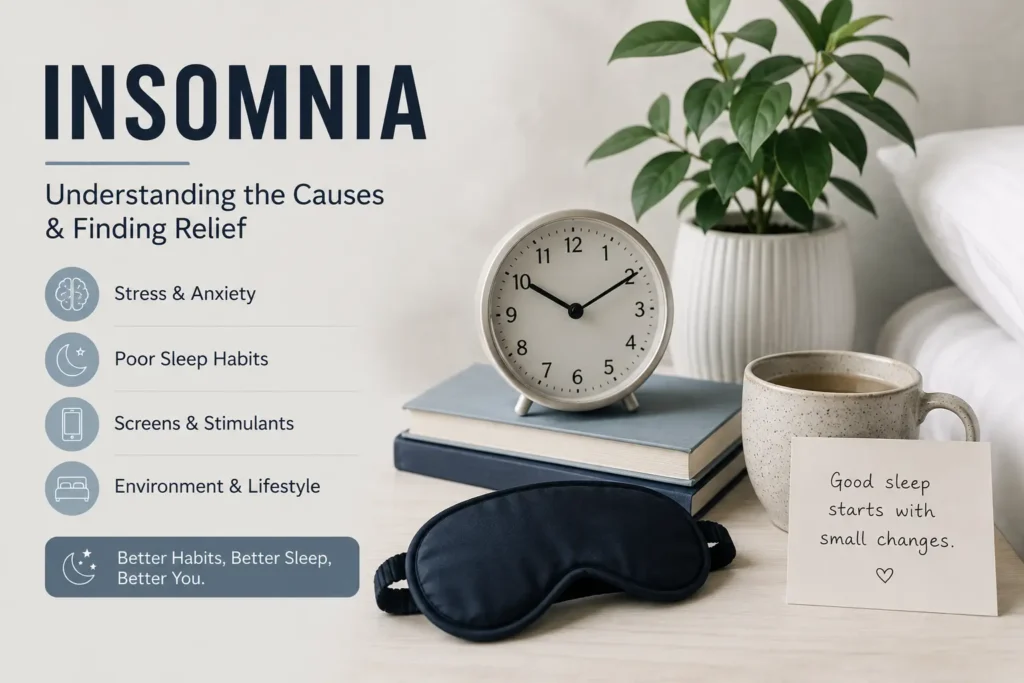
Insomnia Causes: 10 Proven Reasons You Can’t Sleep & Fixes Few things are as draining as lying awake when your body wants to rest. You watch the hours pass. You work out how little sleep you will get. And the frustration builds with every restless minute. Insomnia means having trouble falling asleep or staying asleep. It is one of the most common health complaints there is, and one of the most tiring, because poor sleep affects everything: your mood, your energy, your focus, and your health. The good news is that understanding why you cannot sleep is the first step to sleeping better. The reassuring truth is that most insomnia has clear, fixable causes. Stress, poor sleep habits, an unhelpful sleep environment, and lifestyle are the main ones. It is rarely a mysterious inability to sleep. Your body is built to sleep, guided by its internal circadian rhythm. Insomnia usually means something is getting in the way of that natural process and upsetting your normal sleep patterns. Once you know what is causing your trouble sleeping, you can deal with it. And for most people, good sleep habits and tackling the causes lead to real improvement in sleep quality. This guide covers the common causes of insomnia, proven ways to sleep better, and when sleep problems warrant seeing a doctor. Quick Overview Question Short answer What is insomnia? Difficulty falling or staying asleep, or poor-quality sleep Most common causes Stress, anxiety, poor sleep habits, lifestyle Usually serious? No — most insomnia relates to addressable factors Key fix Good sleep habits (sleep hygiene) Often overlooked Caffeine, screens, irregular sleep times When to see a doctor Persistent insomnia affecting your daily life Understanding Insomnia Insomnia means having difficulty falling asleep, staying asleep, or getting good-quality sleep, despite having the opportunity to sleep — and feeling the effects during the day, such as tiredness, low mood, or poor concentration. It can be short-term, often triggered by a specific stress or event and lasting days or weeks, or longer-term, persisting over months. Both are common. The important thing to understand is that sleep is a natural process your body is designed to do. Insomnia usually means something is interfering with it, rather than a real inability to sleep. That “something” is most often stress, habits, environment, or lifestyle, and each of these can be addressed. This is why understanding the cause of your insomnia matters so much: it points you straight to the solution. Persistent insomnia can also feed itself. Worry about not sleeping makes sleep harder, which creates a cycle. But understanding and addressing the causes, including that worry, breaks it. Our guide on fatigue causes covers the daytime tiredness that poor sleep produces. 10 Common Causes of Insomnia 1. Stress. One of the biggest causes. A busy, worried mind makes it hard to switch off and fall asleep. Stress from work, relationships, finances, or life events commonly disrupts sleep, often temporarily. 2. Anxiety. Anxiety and a racing mind are closely linked with insomnia. Worrying thoughts at bedtime, including worry about sleep itself, keep the mind alert when it needs to wind down. 3. Poor sleep habits. Irregular sleep and wake times, napping too much, using the bed for activities other than sleep, and an inconsistent routine all disrupt the body’s sleep patterns. 4. Caffeine and stimulants. Caffeine, particularly later in the day, can interfere with sleep, as it is a stimulant that stays in the system for hours. Nicotine is also stimulating. 5. Screens and light before bed. Using phones, tablets, and other screens before bed, and exposure to bright light, can make it harder to fall asleep by interfering with the body’s natural wind-down. 6. An uncomfortable sleep environment. A room that is too warm, too bright, or noisy, or an uncomfortable mattress, can all disrupt sleep. 7. Irregular routine and shift work. Going to bed and waking at different times, or shift work that disrupts the body’s natural circadian rhythm, commonly causes disrupted sleep and ongoing sleep problems. Over time, this kind of irregular pattern can lead to genuine sleep deprivation. 8. Alcohol. While alcohol may make you feel drowsy initially, it disrupts the quality of sleep later in the night, leading to poorer, more broken sleep. 9. Eating patterns. Eating heavy meals late at night, or going to bed hungry, can interfere with sleep for some people. 10. Underlying medical conditions and medications. Physical discomfort or pain, certain medical conditions, some medications, and mental health issues can all affect sleep, which is why persistent insomnia is worth discussing with a doctor. Trouble Falling Asleep vs Staying Asleep The pattern of your insomnia can offer clues to what is behind it. Difficulty falling asleep at the start of the night is often linked to a busy or anxious mind, stress, stimulation from caffeine or screens, or an irregular routine that means your body is not ready for sleep at bedtime. Addressing the wind-down before bed, reducing stimulation, and calming the mind often help this pattern. Difficulty staying asleep — waking during the night and struggling to get back to sleep — can relate to factors like alcohol, an uncomfortable environment, needing the toilet, physical discomfort, or waking in the early hours with a worried mind. Some people experience both. Noticing your particular pattern, and what tends to accompany your sleepless nights, helps you target the likely causes. Keeping a simple sleep diary — noting when you go to bed, how you slept, and factors like caffeine, stress, and screen use — often reveals patterns that point clearly to what is disrupting your sleep. How to Sleep Better: Sleep Hygiene The foundation of better sleep is good sleep habits, often called sleep hygiene. These genuinely work for most people and are the first-line approach to insomnia: Consistency is key — these habits work over time rather than instantly. For most people, sticking with good sleep hygiene leads to real improvement. Breaking the Worry Cycle A crucial part of tackling insomnia
Vitamin C Benefits: 9 Proven Ways It Supports Your Health

Vitamin C Benefits: 9 Proven Ways It Supports Your Health Vitamin C is probably the most famous of all the vitamins — the one people reach for at the first sign of a cold, the one splashed across juice cartons and supplement bottles. Yet its actual role in the body goes far beyond the immune-boosting reputation it is known for. This single vitamin supports your skin, your blood vessels, your healing, your absorption of iron, and much more, working quietly behind the scenes in ways most people never realise. Understanding what vitamin C really does helps you appreciate why it matters and how to get enough. What makes vitamin C particularly important is that, unlike many animals, the human body cannot make its own — we must get it from our diet. This is why a varied diet rich in fruits and vegetables matters, and why severe, long-term deficiency, though rare today, causes real problems. The good news is that vitamin C is abundant in many everyday foods, so most people can meet their needs easily through what they eat, without needing high-dose supplements. This guide covers what vitamin C does, its proven benefits, the best food sources, how much you need, and how to get enough safely. Quick Overview Question Short answer What is vitamin C? An essential vitamin the body cannot make itself Key roles Immunity, skin, healing, iron absorption, antioxidant Best sources Citrus fruits, berries, peppers, many vegetables Can the body store it? Not well — regular intake is needed Deficiency today Rare, but possible with a very poor diet Best way to get it A varied diet rich in fruits and vegetables Why Vitamin C Matters Vitamin C, also known as ascorbic acid, is an essential nutrient involved in many important functions in the body. Because humans cannot produce it, and because the body does not store it well, we need a regular supply from food. It is water-soluble, meaning excess is generally passed out in the urine rather than stored, which is another reason regular intake matters. Vitamin C plays several key roles. It is a powerful antioxidant, helping protect cells from damage. It is essential for making collagen, a protein that gives structure to skin, blood vessels, bones, and connective tissue, which is why it is so important for skin health and wound healing. It supports the immune system, contributes to the health of blood vessels and gums, and significantly improves the body’s absorption of iron from plant foods — a connection explored in our guide on iron deficiency. This wide range of roles explains why vitamin C is genuinely important, well beyond its cold-fighting fame, and why getting enough supports many aspects of health. 9 Proven Benefits of Vitamin C 1. Supports the immune system. Vitamin C contributes to normal immune function, which is the basis of its famous reputation. While it will not necessarily prevent colds, it supports the immune system’s proper working, and adequate intake matters for immune health. 2. Acts as a powerful antioxidant. Vitamin C helps protect the body’s cells from damage caused by unstable molecules called free radicals, contributing to overall health. 3. Essential for collagen and skin health. Vitamin C is needed to make collagen, the protein that gives skin its structure and strength. This makes it important for healthy skin, and it is why vitamin C features so heavily in skincare. 4. Aids wound healing. Because of its role in collagen production, vitamin C is essential for proper wound healing and tissue repair. 5. Improves iron absorption. Vitamin C significantly enhances the absorption of iron from plant-based foods, making it valuable for preventing iron deficiency, particularly for those eating little or no meat. 6. Supports blood vessels and gums. Vitamin C contributes to the health of blood vessels and gums, through its role in collagen and connective tissue. Bleeding gums are a classic sign of deficiency. 7. Supports bones and connective tissue. Through collagen, vitamin C contributes to the health of bones, cartilage, and connective tissue throughout the body. 8. May support heart and blood vessel health. As an antioxidant with a role in blood vessel health, adequate vitamin C, as part of a diet rich in fruits and vegetables, is associated with cardiovascular wellbeing. 9. Supports energy and reduces tiredness. Vitamin C contributes to normal energy-yielding metabolism and helps reduce tiredness and fatigue, part of its wider role in the body. Signs of Vitamin C Deficiency Severe vitamin C deficiency is rare today but does occur, particularly with a very poor diet lacking fruits and vegetables. Because vitamin C is involved in collagen and many functions, deficiency can cause: Severe, prolonged deficiency causes a condition called scurvy, historically known among sailors who lacked fresh food. While rare now, it can still occur in people with very limited diets. Milder inadequacy is more common and worth avoiding through good dietary habits. Because these signs overlap with other conditions, they are prompts to consider your diet rather than proof of deficiency. Best Food Sources of Vitamin C Vitamin C is abundant in many fruits and vegetables, making it easy to obtain from a varied diet: A helpful point: vitamin C is sensitive to heat and water, so some is lost in cooking, particularly boiling. Eating a range of raw or lightly cooked fruits and vegetables, and not overcooking them, helps preserve their vitamin C. Because so many common foods contain it, a diet with plenty of fruits and vegetables easily provides enough for most people, without any need for supplements. How Much Vitamin C Do You Need? Most people can get all the vitamin C they need from a balanced diet that includes fruits and vegetables, and food is the ideal source. Needs are modest and easily met — a couple of portions of vitamin-C-rich fruits and vegetables typically cover daily requirements comfortably. Because vitamin C is water-soluble and not stored well, a regular daily supply matters more than large occasional amounts. The body uses what
Back Pain Causes: 10 Proven Reasons Your Back Hurts

Back Pain Causes: 10 Proven Reasons Your Back Hurts Back pain is one of the most common health complaints in the world — something the majority of people will experience at some point in their lives. It ranges from a mild, nagging ache to sharp, disabling pain, and it can make everyday activities like sitting, standing, bending, and sleeping genuinely difficult. Because the back is central to almost every movement, back pain has a way of dominating your day. Yet despite how common and disruptive it is, the reassuring truth is that most back pain is not caused by anything serious and improves with time and sensible self-care. Understanding this is important, because back pain often causes worry out of proportion to its usual seriousness. The vast majority of back pain — particularly the common lower back pain most people experience — is what doctors call non-specific, meaning it is not due to any dangerous underlying condition, and it tends to settle within weeks. Knowing the common causes helps you ease the pain, look after your back, and recognise the small number of situations where back pain needs prompt medical attention. This guide covers the common causes of back pain, how to ease it, how to look after your back, and when back pain warrants seeing a doctor. Quick Overview Question Short answer How common is it? Very — most people experience it at some point Most common type Non-specific lower back pain Common causes Posture, strain, lifting, inactivity, tension Usually serious? No — most back pain is not due to anything dangerous Easing it Staying active, gentle movement, heat, pain relief Key modern message Rest less, keep moving gently When to worry Specific warning signs (see below) Understanding Back Pain The back is a complex structure of bones (the spine), discs that cushion them, muscles, ligaments, and nerves, all working together to support the body and allow movement. Back pain can arise from any of these structures, and often the exact source cannot be precisely identified — which is why most back pain is termed “non-specific.” Importantly, non-specific does not mean the pain is not real; it means there is no serious underlying disease causing it, which is actually reassuring. Most back pain, particularly in the lower back, is mechanical — related to the muscles, ligaments, joints, and discs and how they are used — rather than caused by a dangerous condition. This kind typically improves within days to weeks. Understanding this helps counter the worry that back pain often provokes, and it shapes modern advice, which emphasises staying active rather than resting in bed. Only a small proportion of back pain relates to something needing specific medical treatment, usually signalled by particular warning signs. Knowing the common causes and the reassuring nature of most back pain helps you respond calmly and effectively. 10 Common Causes of Back Pain 1. Poor posture. Sitting or standing with poor posture for long periods, particularly hunching over desks and screens, strains the back and is a very common contributor to back pain. 2. Muscle or ligament strain. Lifting incorrectly, a sudden awkward movement, or overdoing an activity can strain the muscles and ligaments of the back, causing pain and stiffness. This is one of the most common causes. 3. Lifting and bending. Lifting heavy objects, especially with poor technique — bending the back rather than the knees, or twisting while lifting — frequently triggers back pain. 4. Inactivity and weak muscles. A sedentary lifestyle and weak core and back muscles provide less support for the spine, making back pain more likely. Too little movement can both cause and worsen back pain. 5. Prolonged sitting. Sitting for long periods, particularly with poor posture and without breaks, places strain on the lower back and is a common feature of modern, desk-based life. 6. Being overweight. Excess weight, particularly around the middle, places additional strain on the back and can contribute to pain. 7. Stress and tension. Stress causes muscles to tense, including in the back, contributing to pain and tightness. The connection between stress and back pain is well recognised. 8. Sleeping position or mattress. An unsupportive mattress or awkward sleeping positions can contribute to back pain or stiffness, particularly on waking. 9. Age-related changes. With age, natural changes to the spine and its discs can contribute to back pain, though these are often manageable and not necessarily a cause for alarm. 10. Specific conditions. Less commonly, back pain relates to a specific condition, such as a problem with a disc pressing on a nerve (which can cause pain radiating down a leg), or other conditions. These are less common than everyday mechanical back pain but are why certain warning signs matter. The Modern Approach: Keep Moving One of the most important shifts in how back pain is understood is the move away from bed rest towards staying active — and it is worth explaining, because old advice still lingers. It was once common to advise resting in bed for back pain, but we now know this is usually counterproductive. Prolonged rest can actually slow recovery, stiffen the back, and weaken the muscles that support the spine. The modern, evidence-based message is to stay as active as the pain allows, keep moving gently, and continue with normal activities as much as possible, even if you need to modify them at first. Movement helps the back recover, maintains flexibility, and keeps the supporting muscles strong. This does not mean pushing through severe pain or doing vigorous activity that worsens things. It means avoiding the trap of complete rest, staying gently mobile, and gradually returning to full activity. Gentle walking, everyday movement, and specific back exercises all support recovery. For most people with common back pain, this active approach, combined with the self-care measures below, leads to improvement within days to weeks. Our guides on related aches, muscle pain causes and joint pain causes, reflect the same principle of sensible movement. How to Ease Back
Muscle Pain Causes: 10 Proven Reasons Your Muscles Ache

Muscle Pain Causes: 10 Proven Reasons Your Muscles Ache Muscle pain is something almost everyone experiences — the stiffness after an unaccustomed workout, the ache of a tense neck and shoulders after a stressful day, the deep soreness that comes with a bout of flu. Most of the time it is easily explained and passes on its own, but muscle pain can also be puzzling when it appears without an obvious reason or affects the whole body. Understanding the common causes helps you make sense of what you are feeling, ease it effectively, and recognise the less common situations that need a doctor. The reassuring reality is that the vast majority of muscle pain comes from benign, temporary causes: overexertion, minor strains, tension, and the aches that accompany common illnesses. These respond well to simple self-care and settle within days. Only occasionally does muscle pain signal something needing medical attention, and this is usually suggested by specific features — pain that is severe, persistent, unexplained, or accompanied by other concerning symptoms. Knowing the difference lets you handle everyday muscle aches confidently while staying alert to the rest. This guide covers the common causes of muscle pain, how to ease it, and when muscle pain warrants seeing a doctor. Quick Overview Question Short answer What is muscle pain? Aching, soreness, or discomfort in the muscles Medical name Myalgia Most common causes Overexertion, strain, tension, illness Localised or widespread? Both — the pattern gives clues to the cause Usually serious? No — most muscle pain is benign and temporary Easing it Rest, gentle movement, heat, hydration, pain relief When to worry Severe, unexplained, or persistent pain, or with other symptoms Understanding Muscle Pain Muscle pain, known medically as myalgia, is aching, soreness, or discomfort felt in the muscles. It can affect a single muscle or muscle group — often after using or straining it — or be felt more widely across the body, which more often relates to illness, tension, or a general cause. It can be mild or intense, brief or lingering. The pattern of muscle pain is one of the most useful clues to its cause. Pain in a specific muscle after physical activity almost always points to overuse or a minor strain. Widespread muscle aches all over the body, on the other hand, more commonly accompany illnesses like the flu, or relate to general causes. Understanding this distinction helps you interpret your own muscle pain and respond appropriately. The great majority of muscle pain is benign and temporary, which is why self-care resolves most of it, but knowing the causes also helps you recognise when something needs a doctor’s attention. 10 Common Causes of Muscle Pain 1. Overexertion and exercise. Using muscles harder or more than usual causes soreness, including the familiar delayed muscle soreness that appears a day or two after unaccustomed exercise. This is normal and settles within a few days. 2. Muscle strain. Overstretching or tearing muscle fibres, often during activity or lifting, causes localised pain, sometimes with swelling or stiffness. Most minor strains recover with rest and care. 3. Tension and stress. Stress and anxiety cause muscles to tense, particularly in the neck, shoulders, and back, leading to aching and tightness. Stress-related muscle pain is very common. 4. Poor posture. Sitting or standing with poor posture for long periods strains muscles and leads to aching, especially in the neck, shoulders, and back. Desk work and screen use are common contributors. 5. Viral illness. Widespread muscle aches are a classic feature of viral infections like the flu, part of the body’s response to the infection. These aches ease as the illness resolves. Our guides on home remedies for cold and home remedies for cough cover soothing illness symptoms. 6. Dehydration and electrolyte imbalance. Not drinking enough, or an imbalance in the body’s salts, can contribute to muscle aches and cramps, particularly around exercise. 7. Muscle cramps. Sudden, involuntary muscle contractions cause sharp, intense pain, often in the legs, and can relate to overuse, dehydration, or staying in one position. Some nutrients, such as magnesium, are involved in muscle function — see our guide on magnesium benefits. 8. Lack of activity. Too little movement can lead to stiff, achy muscles, and prolonged inactivity weakens muscles, making aches more likely. 9. Medications. Some medications can cause muscle pain as a side effect. If muscle pain began after starting a medication, mention it to your doctor rather than stopping on your own. 10. Underlying conditions. Less commonly, persistent or widespread muscle pain relates to specific medical conditions affecting the muscles or the body more generally, which is why unexplained, persistent muscle pain should be assessed. Localised vs Widespread Muscle Pain Distinguishing pain in one area from aching all over is one of the most helpful things you can do, because the two tend to have different causes. Localised muscle pain — confined to one muscle or area — usually results from a specific cause affecting that muscle: overuse, a strain, tension, or poor posture. This kind is very common, easy to link to an activity or position, and typically responds well to rest, gentle movement, and self-care. Widespread muscle pain — aching in many muscles or all over the body — more often relates to a general cause. Viral illnesses like the flu are a classic example, causing body-wide aches as part of the infection. Widespread aches can also accompany stress, poor sleep, or, less commonly, certain underlying conditions. Muscle pain that is widespread, persistent, and unexplained, or that comes with other symptoms, is more likely to warrant a doctor’s assessment than a simple localised ache after activity. Paying attention to whether your pain is in one spot or all over, and what accompanies it, helps you interpret it and decide whether self-care is enough or medical advice is wise. How to Ease Muscle Pain For common, everyday muscle pain, these measures often help: Most everyday muscle pain settles within a few days with this kind of care.
Joint Pain Causes: 10 Proven Reasons Your Joints Hurt
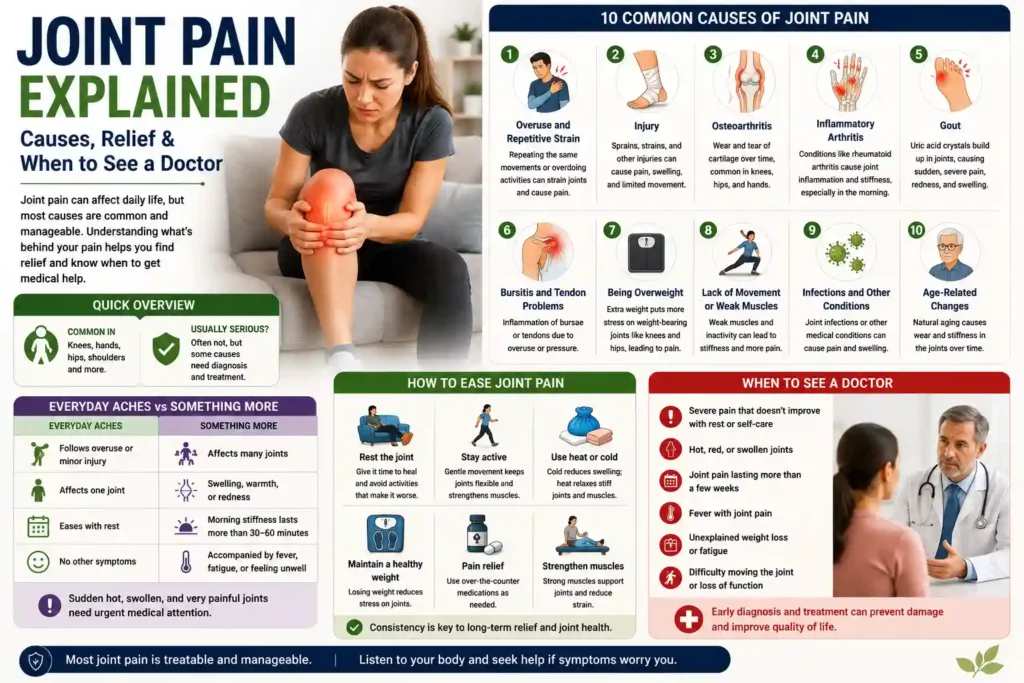
Joint Pain Causes: 10 Proven Reasons Your Joints Hurt Joint pain is one of the most common physical complaints there is, and one of the most limiting, because our joints are involved in almost everything we do. When a knee aches with every stair, a shoulder protests when reaching, or fingers stiffen and hurt in the morning, it affects not just comfort but the simple freedom to move through the day. Joint pain ranges from a mild, occasional ache to persistent, disabling discomfort, and it has a wide range of causes — which is why understanding what is behind yours makes a real difference to easing it. The reassuring reality is that a great deal of joint pain comes from common, manageable causes: overuse, minor injuries, and wear-related changes that respond well to self-care and sensible adjustments. Some joint pain, though, relates to conditions like the various forms of arthritis, which benefit from proper diagnosis and management. Knowing the common causes, and the features that distinguish everyday aches from something needing medical attention, helps you respond effectively and know when to seek help. This guide covers the common causes of joint pain, how to ease it, and when joint pain warrants seeing a doctor. Quick Overview Question Short answer What is joint pain? Pain, aching, or stiffness in one or more joints Common causes Overuse, injury, osteoarthritis, inflammation Common in Knees, hands, hips, shoulders Usually serious? Often not, but some causes need diagnosis Easing it Rest, movement, weight management, pain relief When to worry Hot swollen joints, severe pain, fever, lasting symptoms Understanding Joint Pain A joint is where two bones meet, cushioned and supported by cartilage, ligaments, and other structures that allow smooth, comfortable movement. Joint pain — pain, aching, or stiffness in a joint — arises when any of these structures is irritated, inflamed, worn, or injured. It can affect a single joint or many, come on suddenly or gradually, and range from mild to severe. Because so many things can affect a joint, joint pain is a symptom with many possible causes rather than a single condition. The pattern often gives clues: pain in one joint after activity suggests overuse or injury, while pain and stiffness in many joints, particularly with morning stiffness, may point towards a form of arthritis. Understanding the likely cause guides both self-care and when to seek medical advice. Most everyday joint aches are manageable, but because some causes need proper diagnosis and treatment, persistent or concerning joint pain is worth having assessed. 10 Common Causes of Joint Pain 1. Overuse and repetitive strain. Repeating the same movements, or overdoing an activity, can strain a joint and the tissues around it, causing pain. This is common in the knees, shoulders, and elbows, and often eases with rest. 2. Injury. Sprains, strains, and other injuries to a joint or its surrounding ligaments and tendons commonly cause pain, swelling, and reduced movement. Most minor joint injuries recover with appropriate care. 3. Osteoarthritis. The most common form of arthritis, osteoarthritis involves wear-related changes to the cartilage cushioning the joints. It typically causes pain and stiffness that worsen with use, often in the knees, hips, and hands, and becomes more common with age. 4. Inflammatory arthritis. Conditions like rheumatoid arthritis involve inflammation of the joints driven by the immune system. These often cause pain, swelling, and stiffness in multiple joints, frequently with prolonged morning stiffness, and need medical diagnosis and management. 5. Gout. Gout is a form of arthritis caused by crystals forming in a joint, classically causing sudden, severe pain, redness, and swelling, often in the big toe. It comes in attacks and is treatable. 6. Bursitis and tendon problems. Inflammation of the small fluid-filled sacs that cushion joints (bursitis) or of the tendons around them can cause pain, often related to overuse or pressure on a joint. 7. Being overweight. Excess weight puts additional strain on weight-bearing joints like the knees and hips, contributing to pain and accelerating wear over time. 8. Lack of movement or weak muscles. Weak muscles around a joint provide less support, and inactivity can lead to stiffness. Paradoxically, too little movement can worsen joint pain. 9. Infections and other conditions. Occasionally a joint becomes infected, causing a hot, swollen, very painful joint that needs urgent attention. Various other conditions can also cause joint pain as part of their picture. 10. Age-related changes. With age, natural changes to the joints and their cartilage make aches and stiffness more common, though these are often manageable with the right approach. Everyday Aches vs Something More Telling apart ordinary joint aches from joint pain that needs medical attention is genuinely useful, and some features point one way or the other. Joint pain that follows obvious overuse or a minor injury, affects one joint, and eases with rest is usually an everyday ache that self-care handles well. Joint pain that affects many joints, comes with swelling, warmth, or redness, is accompanied by prolonged morning stiffness, or comes with feeling generally unwell is more likely to reflect an inflammatory condition needing diagnosis. A single joint that becomes suddenly hot, swollen, and severely painful, especially with a fever, needs urgent assessment, as this can indicate infection or gout. This is why paying attention to the pattern of your joint pain — how many joints, whether there is swelling, how long stiffness lasts, and whether you feel unwell — is so helpful. It guides whether simple self-care is appropriate or whether a doctor’s assessment is needed. Our guide on related aches, such as muscle pain causes, covers overlapping causes of general body discomfort. How to Ease Joint Pain For common, everyday joint pain, these measures often help: For persistent joint pain, or pain from a condition like arthritis, these measures work best alongside proper medical guidance, as specific treatments and exercises can make a substantial difference. Which Joints Are Affected and What It Suggests The location of joint pain, and whether it affects one joint or many,