Chigger bites can cause intense itching, red bumps, and skin irritation. Chiggers are tiny mites found in grassy areas, gardens, forests, and other outdoor places. Their bites may become itchy within hours and can last for several days or even weeks
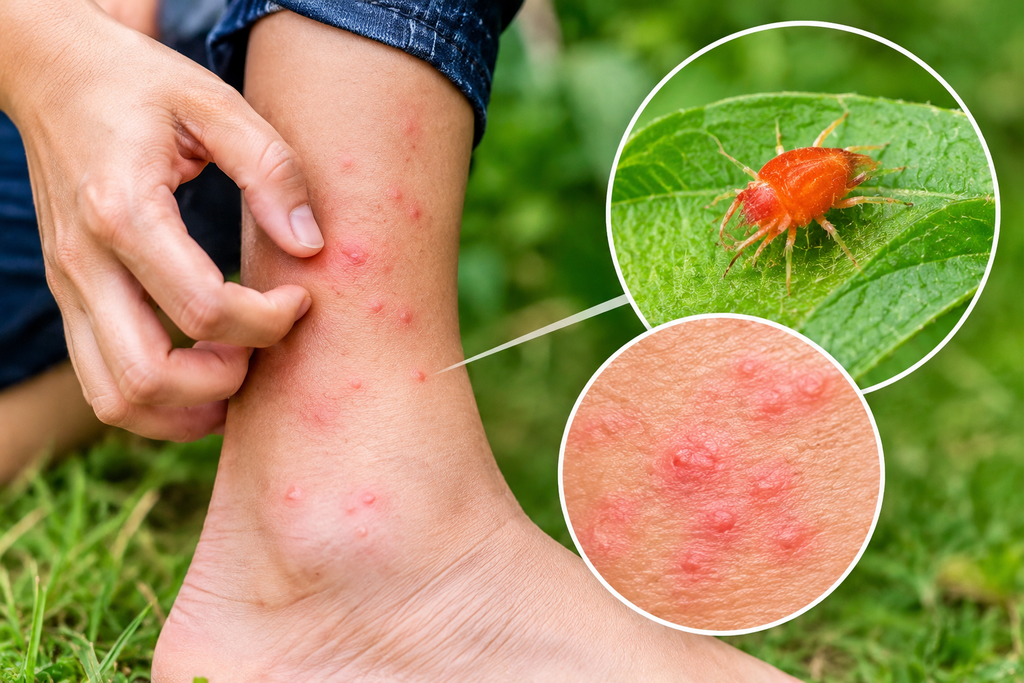
What Are Chiggers?
Chiggers are tiny larvae of mites that feed on skin cells. They attach to the skin and release saliva that breaks down skin tissue. This process causes itching and irritation.
Chiggers do not burrow under the skin. They usually detach after feeding, but the itching may continue after they are gone.
What Do Chigger Bites Look Like?
Chigger bites often appear as small red bumps, pimples, or raised welts. They may occur in clusters or lines.
Common areas include:
- Ankles and lower legs
- Behind the knees
- Waist and belt lines
- Armpits
- Groin area
The bites may become more itchy over the first day or two.
Chigger Bites Symptoms
Common symptoms include:
- Intense itching
- Red bumps or welts
- Skin irritation
- Swelling around the bites
Scratching can damage the skin and increase the risk of bacterial infection.

How to Treat Chigger Bites
You can relieve itching and irritation with simple steps:
- Wash your skin: Shower with soap and water after outdoor exposure.
- Use a cold compress: Apply a cool cloth to reduce itching.
- Apply calamine lotion: It may help soothe irritated skin.
- Use hydrocortisone cream: It may reduce itching and inflammation.
- Take antihistamines: These may help control itching.
Avoid scratching the bites. Nail polish, bleach, and other harsh substances should not be applied to the skin to treat chigger bites.
How Long Do Chigger Bites Last?
Chigger bites may remain itchy for several days or up to two weeks. The duration depends on your skin’s reaction and whether the bites become irritated from scratching.
Are Chigger Bites Dangerous?
Most chigger bites cause temporary skin irritation. However, scratching may lead to a skin infection.
In some parts of Asia, including Pakistan, infected chiggers can transmit scrub typhus. Symptoms may include fever, headache, muscle pain, weakness, and a dark scab at the bite site. Seek medical care if these symptoms develop after outdoor exposure.
How to Prevent Chigger Bites
To reduce your risk of chigger bites:
- Wear long sleeves and long pants in grassy areas.
- Tuck pants into socks when walking through vegetation.
- Use insect repellents such as DEET or picaridin as directed.
- Consider permethrin-treated clothing.
- Shower and change clothes after outdoor activities.
When to See a Doctor
Most chigger bites improve on their own with basic skin care. However, some symptoms may need medical attention. Watch the affected area and look for signs that the skin is becoming infected.
Contact a healthcare professional if you notice:
- Increasing pain or swelling around the bites
- Skin that feels warm or becomes more red
- Pus or fluid coming from the affected area
- Redness that continues to spread
- Severe itching that does not improve with home treatment
- Bites that do not begin to heal or keep getting worse
You should also seek medical care if you develop a fever, headache, muscle pain, or unusual weakness after spending time in an area where chiggers may be present.
In some regions, including parts of Asia, infected chiggers can spread scrub typhus. This illness may cause fever, headache, muscle pain, and sometimes a dark, scab-like mark called an eschar at the bite site. These symptoms should not be treated as ordinary skin irritation.
Avoid scratching the bites because broken skin can become infected. A healthcare professional can examine the affected area, check your symptoms, and recommend the right treatment.
Frequently Asked Questions
Do chiggers burrow into the skin?
No. Chiggers do not burrow under the skin. They feed on skin tissue and detach after feeding.
Can chigger bites spread from person to person?
Chigger bites themselves are not contagious. Chiggers are picked up from infested outdoor environments.
What helps chigger bites itch?
Calamine lotion, cool compresses, hydrocortisone cream, and oral antihistamines may help relieve itching.
Can chigger bites become infected?
Yes. Excessive scratching may damage the skin and lead to bacterial infection.
Conclusion
Chigger bites can cause small red bumps, skin irritation, and intense itching. They often appear in clusters around areas where clothing fits tightly, such as the ankles, waist, groin, and behind the knees. Although chiggers do not burrow under the skin, their bites can remain itchy for several days or up to two weeks.
Simple care can help reduce discomfort. Wash your skin with soap and water after outdoor exposure, use a cool compress, and consider calamine lotion or other suitable treatments to control itching. Avoid scratching the affected areas, as this can damage the skin and increase the risk of infection.
Prevention is also important. Wear long sleeves and trousers when walking through grassy or wooded areas, use an appropriate insect repellent, and shower and change clothes after outdoor activities.
Most bites improve with basic care. However, worsening skin symptoms or signs of illness, such as fever and headache, should not be ignored. Seek medical advice when these symptoms appear so you can receive proper care.