Reproductive health is an important part of overall health. It affects both men and women. Some conditions affect the reproductive organs, while others affect hormones, periods, sexual health, or fertility.
Common reproductive health conditions include PCOS, endometriosis, uterine fibroids, erectile dysfunction, and reproductive cancers. Some infections, such as HPV, can also affect reproductive health.
Learning about these conditions can help you understand your body and know when to seek medical advice.
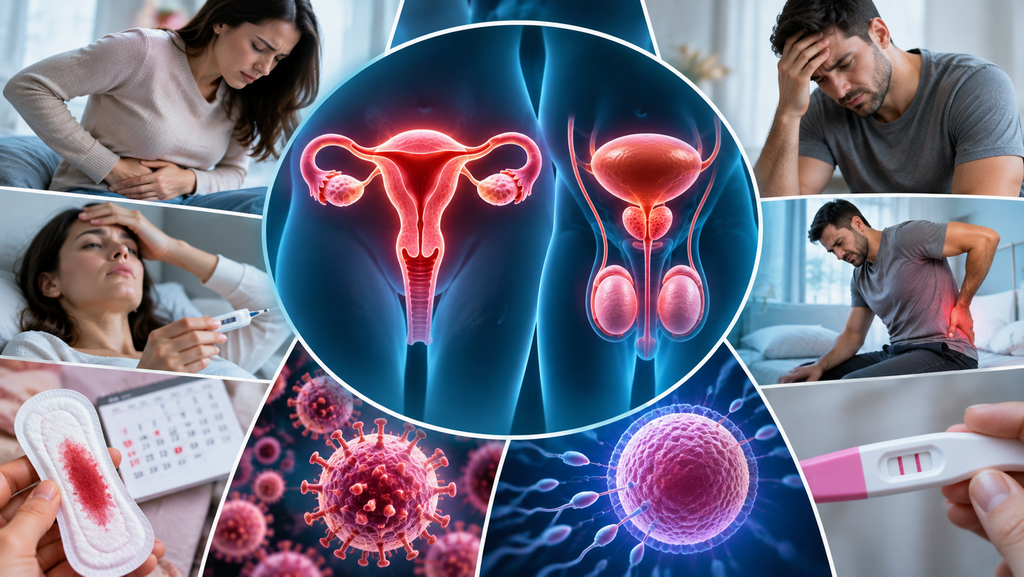
What Are Reproductive Health Conditions?
Reproductive health conditions are health problems that affect the male or female reproductive system.
The female reproductive system includes the ovaries, uterus, and other organs. The male reproductive system includes the testicles, prostate, and other organs.
These systems also depend on hormones. Hormones help control periods, sperm production, and other body functions linked to reproduction.
Some conditions may affect fertility. Others may cause changes in periods or sexual function. Not all reproductive health problems have clear symptoms.
Common Female Reproductive Health Conditions
Women can experience different health problems that affect their reproductive organs, hormones, and menstrual cycles. Here are some common examples.
1. Endometriosis
Endometriosis is a condition in which tissue similar to the lining of the uterus grows outside the uterus.
It is a recognised reproductive health condition. It may cause pelvic pain and can affect fertility in some women.
Symptoms can differ from person to person. Some women may have strong discomfort, while others may have few noticeable symptoms.
A doctor can check for ongoing pelvic pain and other concerns.
2. Polycystic Ovary Syndrome (PCOS)
Polycystic ovary syndrome, also called PCOS, is a hormonal condition that affects the ovaries.
Women with PCOS may have higher levels of certain male hormones. The condition can also affect normal ovulation and menstrual cycles.
PCOS may make it harder for some women to become pregnant. However, its effects are not the same for everyone.
If your periods are often irregular or you have concerns about your hormones, speak with a healthcare professional.
3. Uterine Fibroids
Uterine fibroids are noncancerous growths that develop in the uterus.
Some women with fibroids have no symptoms. Others may have changes in their menstrual bleeding or other discomfort.
The size and location of fibroids can vary. A doctor can use medical tests to check for them and decide whether treatment is needed.
4. Menstrual Problems
Menstrual problems include changes in the usual pattern of periods.
Examples include:
- Heavy menstrual bleeding
- Irregular periods
- Changes in the length of a menstrual cycle
These changes can have different causes. If your periods change for a long time or cause concern, seek medical advice.
5. Female Infertility
Infertility is a reproductive health concern that affects the ability to become pregnant.
Some female reproductive conditions, such as PCOS and endometriosis, may be linked to fertility problems.
However, infertility can have different causes. A medical checkup can help find the reason and guide the next steps.
Common Male Reproductive Health Conditions
Men can also develop conditions that affect their reproductive organs, sexual function, and fertility.
1. Erectile Dysfunction
Erectile dysfunction, or ED, is the inability to get or keep an erection firm enough for sexual activity.
It is a recognised male reproductive health condition. It can affect sexual function and may need medical care.
Men who have ongoing erection problems should speak with a healthcare professional. A doctor can help assess the possible cause.
2. Low Sperm Count
Low sperm count means that a man’s semen contains fewer sperm than expected.
Sperm are made in the testicles. They play an important role in natural pregnancy.
A low sperm count may make it harder for a couple to conceive. However, sperm count is only one part of male fertility.
A doctor can suggest tests to check sperm health and identify possible problems.
3. Prostate Cancer
The prostate is a small gland that is part of the male reproductive system.
Prostate cancer develops when cells in the prostate grow in an uncontrolled way. It is one of the cancers that can affect male reproductive health.
Not all men have clear symptoms in the early stages. Men with concerns about prostate health should speak with a doctor about suitable checks.
4. Testicular Cancer
Testicular cancer is a type of cancer that starts in the testicles.
The testicles are important parts of the male reproductive system. They produce sperm and male hormones.
Any unusual change in the testicles should be checked by a healthcare professional. Early medical advice helps people understand the cause of the change.
Sexually Transmitted Infections and Reproductive Health
Some infections can affect reproductive health. One example is human papillomavirus (HPV).
HPV is a common sexually transmitted infection. Many people with HPV do not notice any symptoms.
Some types of HPV can cause genital warts. Other types can cause certain cancers.
How Can You Lower the Risk of HPV?
The HPV vaccine helps protect against certain types of HPV that can cause disease and cancer.
Condoms can lower the chance of HPV spread, but they do not give full protection. This is because HPV can affect areas of skin that condoms do not cover.
The HPV vaccine does not replace cervical cancer screening. Women should follow the screening advice given by their healthcare professional.
Can Environmental Factors Affect Reproductive Health?
Yes. Some environmental factors may affect the reproductive systems of men and women.
The National Institute of Environmental Health Sciences (NIEHS) studies how exposure to certain substances may affect fertility and reproductive health.
For example, research has linked lead exposure with reduced fertility in men and women. Scientists are also studying chemicals that may affect hormones.
These findings do not mean that every exposure will cause a health problem. The possible effects depend on many factors.

How to Protect Your Reproductive Health
Not all reproductive health conditions can be prevented. However, you can take steps to care for your health and seek help when needed.
Here are some useful steps:
- Notice body changes: Pay attention to changes in your periods, sexual health, or reproductive organs.
- Get medical advice: Speak with a healthcare professional about problems that continue or cause concern.
- Ask about screening: Follow the screening advice that is right for your age and health.
- Learn about HPV vaccination: Ask your doctor whether the HPV vaccine is suitable for you or your family.
- Know about environmental risks: Learn about substances that may affect reproductive health.
- Discuss fertility concerns: Seek medical advice if you have concerns about becoming pregnant or sperm health.
These steps support better health awareness. They cannot prevent every reproductive health condition.
When Should You See a Doctor?
You should speak with a doctor if you notice changes in your reproductive health that continue or cause concern.
For example, seek medical advice about:
- Ongoing changes in your menstrual cycle
- Pelvic pain or other lasting discomfort
- Problems with sexual function
- Concerns about fertility
- Unusual changes in the testicles
- Questions about HPV or other infections
Do not try to diagnose yourself. Different conditions can have similar signs. Some reproductive health problems may also have no clear symptoms.
A healthcare professional can review your concerns and suggest suitable tests or care.
10 Examples of Reproductive Health Conditions
Here are ten examples of reproductive health conditions and concerns in men and women:
- Endometriosis
- Polycystic ovary syndrome (PCOS)
- Uterine fibroids
- Menstrual problems
- Female infertility
- Erectile dysfunction
- Low sperm count
- Prostate cancer
- Testicular cancer
- Human papillomavirus (HPV) infection
This is a list of examples, not a ranking of the most common conditions.
Frequently Asked Questions
1. What are reproductive health conditions?
Reproductive health conditions are problems that affect the reproductive system. They can affect organs, hormones, periods, sexual function, or fertility.
2. What are common female reproductive health problems?
Common examples include endometriosis, PCOS, uterine fibroids, menstrual problems, and infertility.
3. What are common male reproductive health problems?
Examples include erectile dysfunction, low sperm count, prostate cancer, and testicular cancer.
4. Can reproductive health problems affect fertility?
Yes. Some conditions can make it harder to become pregnant. Certain male reproductive problems can also affect fertility.
5. Can HPV affect reproductive health?
Yes. HPV is a sexually transmitted infection. Some types can cause genital warts or certain cancers. The HPV vaccine helps protect against some harmful types.
6. Can environmental factors affect fertility?
Some environmental exposures may affect reproductive health. Research has linked certain substances, including lead, with fertility concerns.
Conclusion
Reproductive health conditions can affect both men and women. They may involve the reproductive organs, hormones, periods, sexual function, or fertility.
Common examples include PCOS, endometriosis, uterine fibroids, erectile dysfunction, and reproductive cancers. HPV can also affect reproductive health.
Learn about your body and pay attention to changes. If you have ongoing concerns, speak with a healthcare professional. Early medical advice can help you understand your condition and make informed choices.