Calcium-rich foods help provide the calcium your body needs for strong bones and teeth, normal muscle movement, nerve function, and blood clotting. Milk, yogurt, cheese, fish with edible bones, certain vegetables, fortified drinks, and tofu are useful sources of this mineral.
Eating a variety of calcium-rich foods can help you meet your daily needs. The amount of calcium in each food depends on the serving size, preparation method, and whether it has been fortified.

Why Is Calcium Important?
Calcium is the most abundant mineral in the body. Most of it is stored in bones and teeth, where it supports their structure. The body also uses calcium for muscle contraction, nerve signaling, and blood clotting.
Vitamin D helps the body absorb calcium. Eating calcium-rich foods as part of a balanced diet is one way to support normal bone health.
10 Best Calcium-Rich Foods
1. Milk
Milk is a convenient source of calcium. One cup of nonfat cow’s milk provides approximately 299 mg of calcium, while one cup of whole milk provides around 276 mg.
You can include milk in breakfast, smoothies, or other meals according to your dietary preferences.
2. Yogurt
Plain low-fat yogurt provides about 415 mg of calcium per 8-ounce serving. It can be eaten on its own or served with fruit and oats.
Check nutrition labels because calcium amounts vary between yogurt products.
3. Cheese
Cheese can provide substantial calcium in a small serving. Around 1.5 ounces of part-skim mozzarella contains approximately 333 mg of calcium.
Because cheese products vary in sodium and saturated fat, consider the overall nutrition label and serving size.
4. Sardines and Canned Salmon
Sardines and canned salmon with edible bones provide calcium. A 3-ounce serving of sardines with bones contains about 325 mg, while canned pink salmon with bones provides approximately 181 mg.
Choose products with edible bones, as these are an important source of calcium.
5. Leafy Green Vegetables
Some vegetables contain useful amounts of calcium. One cup of cooked kale provides approximately 94 mg, while half a cup of cooked turnip greens contains about 99 mg.
Collard greens are another option. The amount of calcium varies with the vegetable and serving size. Some greens, including spinach, contain compounds that reduce calcium absorption.
6. Fortified Plant-Based Milk
Fortified soy, almond, and other plant-based drinks can help people who do not drink dairy milk. One cup of fortified soy milk provides about 299 mg of calcium in the NIH reference table.
Calcium levels differ by brand. Shake fortified drinks when instructed on the packaging and check the nutrition label to confirm the amount.
7. Tofu Made With Calcium
Tofu can be a useful plant-based calcium source when it is prepared with calcium salts. Half a cup of firm tofu made with calcium sulfate provides approximately 253 mg of calcium in the NIH reference table.
The calcium content varies considerably by product and preparation method, so check the label when available.
8. Fortified Orange Juice
Some orange juice products have calcium added. One cup of fortified orange juice provides approximately 349 mg of calcium.
Choose a fortified product if you want this benefit, because ordinary orange juice does not necessarily contain the same amount.
9. Soybeans and Beans
Soybeans and other beans contribute calcium alongside protein and other nutrients. Half a cup of cooked soybeans provides about 131 mg of calcium, while half a cup of canned, drained pinto beans contains around 54 mg.
Beans can be added to soups, salads, and main meals.
10. Seeds and Nuts
Some seeds and nuts contain calcium. One tablespoon of chia seeds provides approximately 76 mg, while one tablespoon of tahini provides around 154 mg in the USDA reference table.
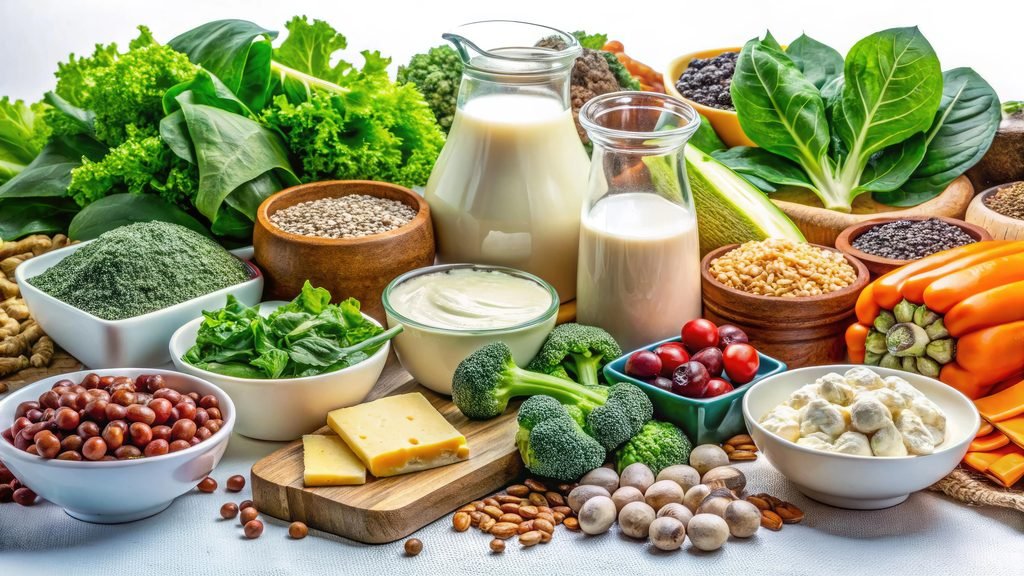
Calcium Content of Common Foods
- Plain low-fat yogurt: 415 mg per 8 oz
- Fortified orange juice: 349 mg per cup
- Part-skim mozzarella: 333 mg per 1.5 oz
- Sardines with bones: 325 mg per 3 oz
- Nonfat milk: 299 mg per cup
- Fortified soy milk: 299 mg per cup
- Firm tofu made with calcium sulfate: 253 mg per half cup
- Canned pink salmon with bones: 181 mg per 3 oz
- Cooked soybeans: 131 mg per half cup
- Cooked kale: 94 mg per cup
- Chia seeds: 76 mg per tablespoon
Daily Calcium Requirements by Age
- Birth to 6 months: 200 mg daily (AI)
- 7–12 months: 260 mg daily (AI)
- 1–3 years: 700 mg daily
- 4–8 years: 1,000 mg daily
- 9–18 years: 1,300 mg daily
- Adults 19–50 years: 1,000 mg daily
- Men 51–70 years: 1,000 mg daily
- Women 51–70 years: 1,200 mg daily
- Adults 71 years and older: 1,200 mg daily
Tips for Getting More Calcium From Food
- Include calcium-rich foods such as yogurt, milk, tofu, or fortified plant drinks in meals.
- Eat a variety of vegetables, beans, seeds, and other calcium-containing foods.
- Check nutrition labels on fortified drinks and tofu.
- Include sources of vitamin D, which helps the body absorb calcium.
- Choose foods according to your dietary needs and overall eating pattern.
Calcium absorption differs between foods. For example, the body absorbs a smaller proportion of the calcium in spinach than in milk because spinach contains oxalates. This is why calcium content alone does not tell the whole story.
Frequently Asked Questions
What foods are highest in calcium?
Plain low-fat yogurt, fortified orange juice, part-skim mozzarella, sardines with edible bones, and fortified soy milk are among the calcium-rich options in the reference table above.
Can I get calcium without dairy products?
Yes. Options include sardines or canned salmon with edible bones, calcium-set tofu, fortified plant-based drinks, certain leafy greens, soybeans, and seeds.
Does vitamin D help calcium absorption?
Yes. Vitamin D helps the body absorb calcium, making it an important part of normal bone health.
Should I take a calcium supplement?
Food can provide calcium for many people. Whether you need a supplement depends on your diet, age, health, and individual circumstances. Ask a qualified healthcare professional before starting one.
Conclusion
Calcium-rich foods include dairy products, fish with edible bones, fortified drinks, calcium-set tofu, certain vegetables, beans, and seeds. Eating a variety of these foods can help you meet your daily calcium needs. Check food labels for accurate amounts, and remember that vitamin D helps the body absorb calcium.
Disclaimer: This article is for general educational purposes only and is not medical advice. Consult a qualified healthcare professional for guidance about your individual nutrition needs.