Acne clogged pores are closely linked to blackheads, whiteheads, and other acne lesions. When excess oil and dead skin cells build up inside a hair follicle, the follicle can become blocked and form a comedone.
Blackheads are open comedones, while whiteheads are closed comedones. Understanding clogged pores and acne can help you recognize different breakouts and understand which acne treatment options may help.

What Are Acne Clogged Pores?
Clogged pores develop when material builds up inside a hair follicle. Excess sebum and changes in the cells lining the follicle can contribute to this blockage.
A clogged follicle can form a comedone. If the follicle stays open, it forms a blackhead, also called an open comedone. If it closes, it forms a whitehead, also called a closed comedone.
These are forms of comedonal acne. (DermNet: Comedonal Acne)
Why Do Pores Become Clogged?
The main causes of Acne Clogged Pores are linked to oil production and changes inside the hair follicle.
Excess Oil and Dead Skin Cells
Excess oil and dead skin cells can contribute to blocked follicles. When this material builds up inside the follicle, a comedone can form.
Certain oily or occlusive products can also contribute to comedonal acne. (DermNet: Comedonal Acne)
Can Skincare Products Acne Clogged Pores?
Some products may contribute to comedone formation. If you are concerned about skincare products that Acne Clogged Pores, look for non-comedogenic products or products labeled “won’t clog pores.”
The American Academy of Dermatology recommends products labeled non-comedogenic, oil-free, or “won’t clog pores” for people with acne. (AAD: Acne Overview)
How Do Acne Clogged Pores Contribute to Acne?
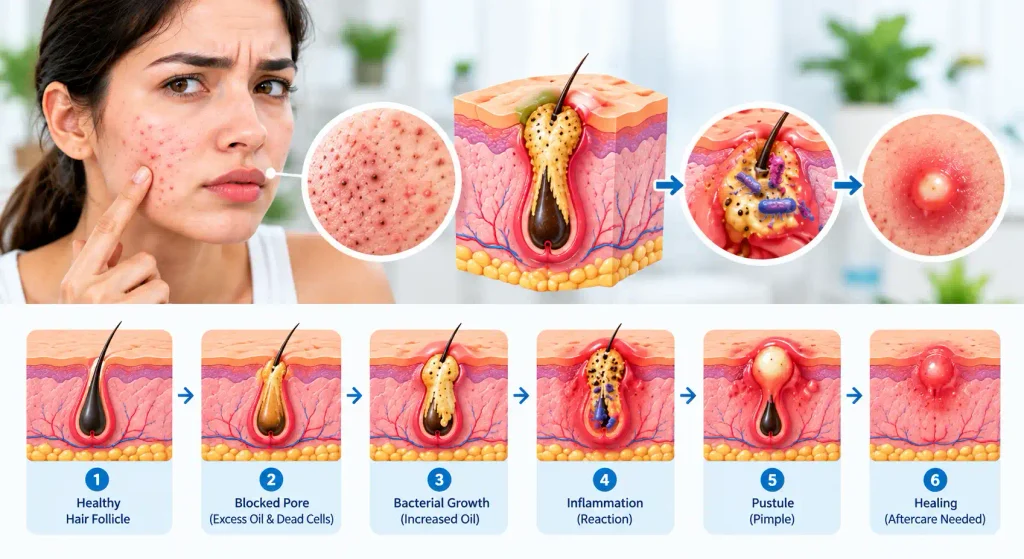
Clogged follicles can be linked to different types of acne.
Blackheads and whiteheads develop when follicles become clogged. Acne can also become inflammatory. When inflammation develops deeper in the skin, lesions such as papules and pustules can appear.
More severe acne can include nodules and cysts. These deeper acne pimples can cause scarring and may require professional treatment. (AAD: How to Treat Different Types of Acne)
Different Types of Acne
TypeDescriptionBlackheadsOpen comedonesWhiteheadsClosed comedonesPapulesSmall, inflamed bumpsPustulesInflamed bumps containing pusNodulesDeep acne lesionsCystsDeep lesions that can cause scarring
Knowing the different types of acne matters because each type may need a different treatment option. (AAD: How to Treat Different Types of Acne)
How to Unclog Pores
If you want to know how to unclog pores, the right approach depends on the type of acne you have.
Several acne treatment ingredients are used to treat clogged pores and acne.
Salicylic Acid for Clogged Pores
Salicylic acid for clogged pores can help with blackheads and whiteheads.
DermNet explains that salicylic acid helps reduce the buildup of cells inside hair follicles. It can also help break down blackheads and whiteheads. (DermNet: Salicylic Acid)
This makes salicylic acid for acne useful when comedones are a major concern.
Salicylic acid can cause skin irritation, especially when overused, so follow the product instructions.
Retinoids for Acne
Retinoids for acne are another important treatment option.
Topical retinoids help prevent dead skin cells from building up inside hair follicles. They can treat comedonal acne and are also used for inflammatory acne. (DermNet: Topical Retinoids)
Examples include adapalene and tretinoin. Improvement can take several weeks, so consistent use is important.
The NHS states that topical retinoids should not be used during pregnancy. (NHS: Acne Treatment)
Benzoyl Peroxide for Acne
Benzoyl peroxide for acne can reduce acne-causing bacteria and inflammation. It can also help with blackheads and whiteheads. (NHS: Acne Treatment)
Benzoyl peroxide may cause dryness, redness, peeling, burning, or itching. Using more than recommended can increase irritation.
How Can You Prevent Clogged Pores?
You cannot always prevent clogged pores, but suitable products and acne treatment can help manage breakouts.
Choose Non-Comedogenic Products
Use non-comedogenic products when possible if you are prone to acne. These products are designed to be less likely to clog pores.
Check labels for terms such as “non-comedogenic,” “oil-free,” or “won’t clog pores.” (AAD: Acne Overview)
Avoid Aggressive Scrubbing
Washing your face can be part of an acne-friendly routine, but aggressive scrubbing is not recommended.
The AAD advises against scrubbing blackheads because this can worsen acne. (AAD: How to Treat Different Types of Acne)
The goal is not simply removing dead skin cells by scrubbing harder. Acne treatment should address the processes that contribute to blocked follicles.
Give Treatments Time
Effective treatments usually need time to work. The AAD says it can take about 6 to 8 weeks before you begin to see fewer breakouts. The NHS notes that some acne treatments can take 2 to 3 months to work. (AAD: Acne Diagnosis and Treatment; NHS: Acne Treatment)
Changing treatments too quickly can make it difficult to know whether a treatment is working.
When Should You See a Dermatologist?
Professional advice may be appropriate if acne is severe, painful, scarring, or does not improve with pharmacy treatments.
Deep nodules and cysts can cause permanent scarring and may require professional acne treatment. (AAD: How to Treat Different Types of Acne)
A dermatologist can also help determine whether the affected areas are caused by acne or another skin condition.
Frequently Asked Questions
What are the main causes of clogged pores?
The main causes include excess oil and changes in the cells inside hair follicles. Oily or occlusive products can also contribute to comedonal acne. (DermNet: Comedonal Acne)
How do you unclog pores?
If you want to unclog pores, treatment depends on the type of acne. Salicylic acid can help with blackheads and whiteheads, while topical retinoids can help prevent buildup inside hair follicles.
Are blackheads clogged pores?
Yes. Blackheads are open comedones associated with clogged hair follicles.
Are whiteheads clogged pores?
Yes. Whiteheads are closed comedones that develop when a follicle becomes blocked.
Can clogged pores cause acne pimples?
Clogged follicles are associated with blackheads and whiteheads. Acne can also become inflammatory acne, producing lesions such as papules and pustules. (AAD: How to Treat Different Types of Acne)
What is the best acne treatment?
There is no single treatment that works for every type of acne. Salicylic acid, topical retinoids, and benzoyl peroxide are established acne treatment ingredients, but the appropriate choice depends on the type and severity of acne.
Final Takeaway
Acne clogged pores usually involve blocked hair follicles associated with excess oil, dead skin cells, and comedones. Blackheads are open comedones, while whiteheads are closed comedones.
If you want to unclog pores, treatments such as salicylic acid and topical retinoids can help with clogged pores and comedonal acne. Benzoyl peroxide is another established treatment for acne.
Choosing non-comedogenic products, avoiding aggressive scrubbing, and giving treatments enough time to work can help prevent acne breakouts. If acne is severe, painful, or causing scars, professional medical advice is appropriate.