Fat-soluble vitamins are essential nutrients that include vitamins A, D, E, and K. Each has a different job in the body. They also come from different foods and have different safety concerns.
This guide covers the four fat-soluble vitamins, their food sources, deficiencies, supplements, and safety.
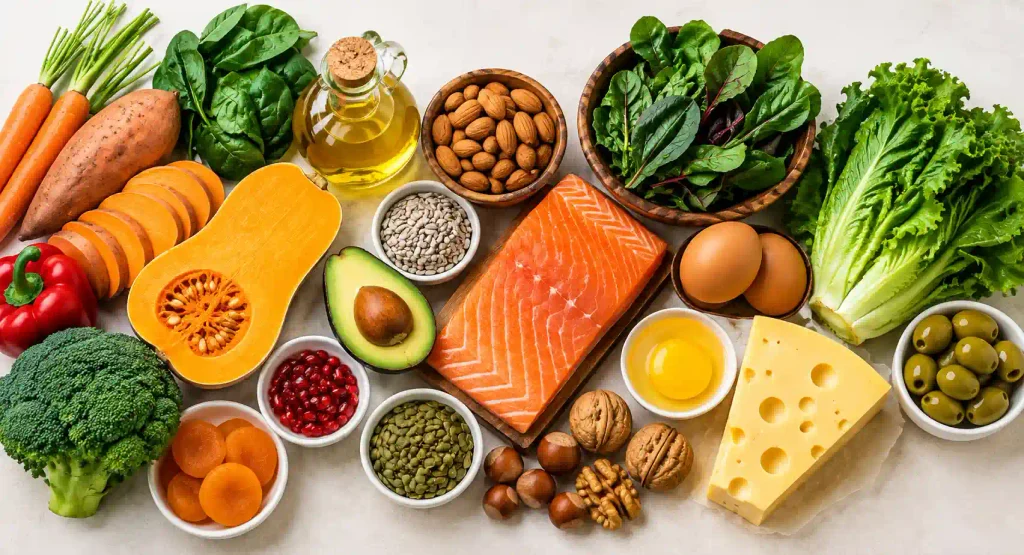
What Are Fat-Soluble Vitamins?
The four fat-soluble vitamins are:
- Vitamin A
- Vitamin D
- Vitamin E
- Vitamin K
They are called fat-soluble because their absorption is linked to dietary fat.
These types of vitamins support different functions. Vitamin A supports vision and immune function. Vitamin D helps the body absorb calcium. Vitamin E has antioxidant activity. Vitamin K supports normal blood clotting.
Fat-Soluble Vitamins at a Glance
VitaminMain roleFood sourcesVitamin AVision and immune function Animal foods and carotenoid-rich foodsVitamin DCalcium absorption and bone health Certain and fortified foodsVitamin EAntioxidant activityNuts, seeds, and vegetable oilVitamin KNormal blood clotting Leafy greens and vegetables
For nutrient amounts, USDA FoodData Central provides food composition information for people in the United States and elsewhere.
Vitamin A Foods and Vitamin A Deficiency
Vitamin A supports normal vision, immune function, growth, and development.
Vitamin A Foods
Vitamin A foods include certain animal foods. Other foods contain carotenoids that contribute to vitamin A nutrition.
Some foods, including egg yolk, provide vitamin A. Fruits and vegetables can also provide carotenoids.
Vitamin A Deficiency
Vitamin A deficiency can affect normal vision and immune function. Symptoms can have other causes, so they cannot confirm a deficiency by themselves.
Both low and excessive intake can be a concern. Needs vary with age and life stage.
Vitamin D Foods and Vitamin D Deficiency
Vitamin D helps the body absorb calcium and supports bone health. The body can also produce vitamin D after sunlight exposure.
Vitamin D Foods
Vitamin D foods include certain foods and foods fortified with vitamin D.
Vitamin D Deficiency
Vitamin D deficiency can affect bone health and calcium regulation.
A healthcare professional may use a blood test to assess vitamin D status when appropriate.
A vitamin D supplement may be useful for some people. Supplement needs depend on individual circumstances and total intake.
Vitamin E Foods
Vitamin E has antioxidant activity. It helps protect cells from oxidative damage involving free radicals.
Vitamin E Foods
Common vitamin E foods include:
- Nuts
- Seeds
- Vegetable oils
- Some other plant foods
A variety of foods can provide vitamin E from different sources.
Vitamin K Foods
Vitamin K supports normal blood clotting.
Vitamin K Foods
Vitamin K foods include leafy greens and other vegetables.
Vitamin K is also important if you take certain medicines that affect blood clotting. Talk with a healthcare professional before making major changes to vitamin K supplements or your diet.
Fat-Soluble Vitamins vs Water-Soluble Vitamins
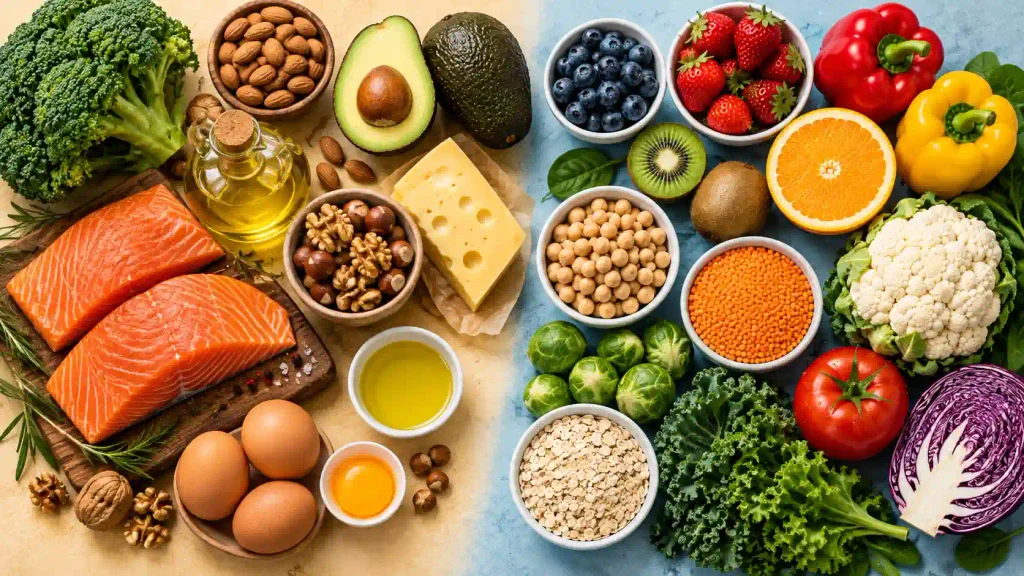
Fat-soluble vitamins vs water-soluble vitamins are two different vitamin groups.
Fat-soluble vitamins are A, D, E, and K. Water-soluble vitamins include vitamin C and the B vitamins.
The body handles these groups differently. Each vitamin also has its own function.
Fat-Soluble Vitamin Deficiency
There is no single sign of fat-soluble vitamin deficiency.
The effects depend on the vitamin:
- Vitamin A deficiency may affect vision and immune function.
- Vitamin D deficiency may affect bones and calcium regulation.
- Vitamin E deficiency can cause problems in certain circumstances.
- Vitamin K deficiency can affect normal blood clotting.
If you are concerned about deficiency, a healthcare professional can decide whether further evaluation is needed.
Fat-Soluble Vitamin Safety
Fat-soluble vitamin safety matters because excessive intake can be harmful for some vitamins.
High doses of vitamin supplements can greatly increase total intake. Consider nutrients from food, fortified foods, multivitamins, and individual supplements together.
Possible side effects depend on the vitamin and amount consumed.
The benefit of vitamin intake comes from getting an appropriate amount. Taking more does not always provide more benefit.
Fat-Soluble Vitamin Supplements
Fat-soluble vitamin supplements are not needed by everyone.
Some people may need supplements because of their diet or nutritional needs. Others may get enough from food and fortified foods.
If you take medicines or plan to use high-dose supplements, speak with a healthcare professional first.
Vitamin D3 Without K2
The question of vitamin D3 without K2 is common.
Vitamin D and vitamin K have different roles. Vitamin D helps with calcium absorption and bone health. Vitamin K supports normal blood clotting.
The supplied NIH information discusses vitamin D and vitamin K separately. It does not establish that everyone taking vitamin D3 must also take vitamin K2.
If you are considering either supplement, discuss your needs with a healthcare professional.
Fat-Soluble Vitamin Food Sources
Fat-soluble vitamin food sources vary by vitamin:
- Vitamin A: Certain animal foods and foods with carotenoids
- Vitamin D: Certain and fortified foods
- Vitamin E: Nuts, seeds, and vegetable oils
- Vitamin K: Leafy greens and other vegetables
Eating a variety of foods can help provide different nutrients and support overall health.
Frequently Asked Questions
What are the four fat-soluble vitamins?
The four fat-soluble vitamins are vitamins A, D, E, and K.
What are fat-soluble vitamin food sources?
Vitamin A comes from certain animal foods and carotenoids. Vitamin D comes from certain foods and fortified foods. Vitamin E is found in nuts, seeds, and vegetable oils. Vitamin K is found in leafy greens and other vegetables.
What are the signs of fat-soluble vitamin deficiency?
Signs depend on the vitamin. Vitamin A deficiency may affect vision, while vitamin D deficiency may affect bone health. Vitamin E and K deficiency can also cause problems in certain circumstances.
Do you need fat-soluble vitamin supplements?
Not everyone needs supplements. Some people may benefit from them, while others can meet their needs through food and fortified foods.
Can you take vitamin D3 without K2?
The supplied sources do not establish that everyone taking vitamin D3 must also take vitamin K2. These are separate nutrients with different functions.
Final Thoughts
The fat-soluble vitamins are vitamins A, D, E, and K. They support vision, immune function, calcium absorption, bone health, antioxidant activity, and normal blood clotting.
Good fat-soluble vitamin food sources include vegetables, nuts, seeds, certain animal foods, and fortified foods.