Dizziness Causes: 10 Surprising Reasons You Feel Dizzy
Dizziness is one of those symptoms that is surprisingly hard to describe, which is part of what makes it unsettling. For one person it means the room seems to spin; for another, a lightheaded, faint feeling; for someone else, an unsteadiness on their feet or a floating, off-balance sensation. All of these get called “dizziness,” and yet they can have quite different causes. That vagueness, combined with how disorienting the feeling itself is, makes dizziness a symptom people often find alarming — even though most causes are not serious.
The reassuring reality is that the majority of dizziness comes from common, treatable causes: problems with the inner ear balance system, drops in blood pressure, dehydration, or simple lightheadedness on standing. Understanding what you are actually experiencing — whether it is a spinning sensation, a faint feeling, or unsteadiness — is the first step to identifying the cause and easing it. And knowing the warning signs of the rarer serious causes means you can act appropriately without worrying about every fleeting moment of feeling off-balance.
This guide covers the common causes of dizziness, how to tell the main types apart, ways to ease it, and when dizziness warrants seeing a doctor.
Quick Overview
| Question | Short answer |
|---|---|
| What is dizziness? | A term covering spinning, faintness, or unsteadiness |
| Main types | Vertigo (spinning) and lightheadedness (faintness) |
| Common causes | Inner ear problems, low blood pressure, dehydration |
| Usually serious? | No — most dizziness has treatable causes |
| Easing it | Rest, hydration, moving slowly, addressing the cause |
| When to worry | Dizziness with neurological signs, chest pain, or fainting |
What Do We Mean by Dizziness?
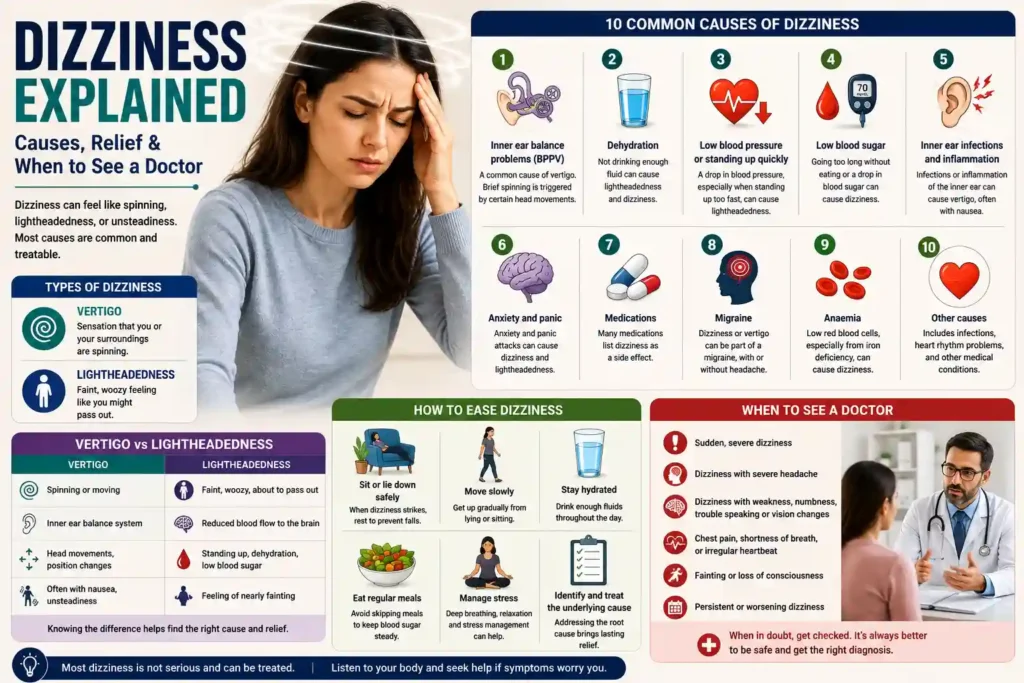
“Dizziness” is an umbrella term for several different sensations, and pinning down which one you experience genuinely helps identify the cause. Broadly, it falls into two main types.
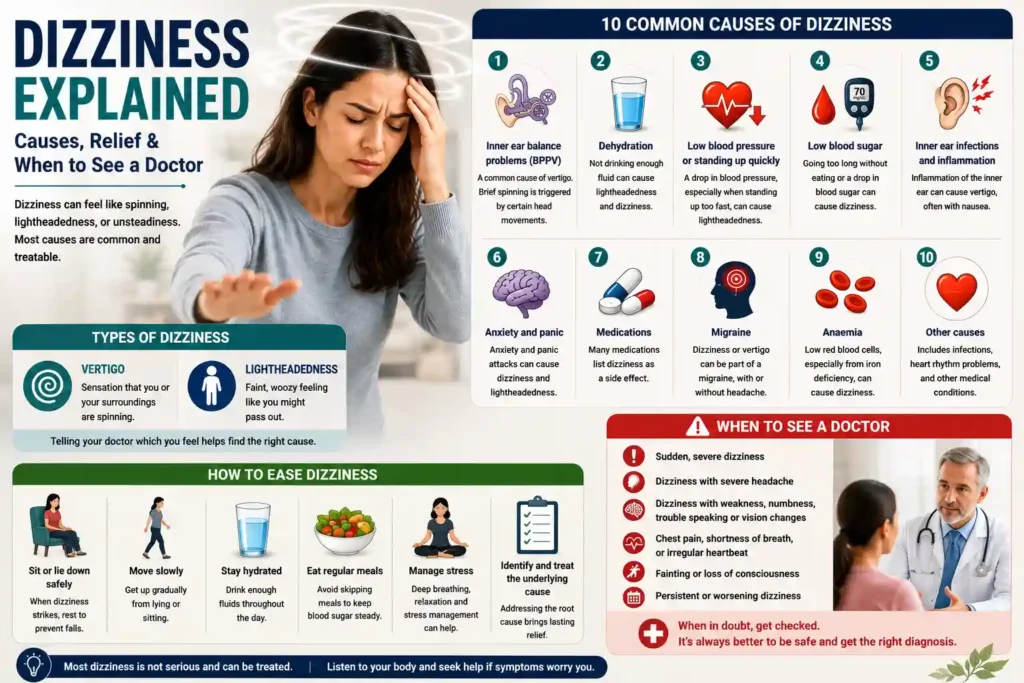
Vertigo is the sensation that you or your surroundings are spinning or moving when they are not. It usually points to a problem with the inner ear, which houses the body’s balance system, or less commonly the parts of the brain involved in balance. Lightheadedness is a faint, woozy feeling, as though you might pass out, often related to reduced blood flow to the brain — from a drop in blood pressure, dehydration, or standing up too quickly. Some people also describe a general unsteadiness or loss of balance.
Being able to tell your doctor which of these you feel — spinning, faintness, or unsteadiness — is one of the most useful pieces of information for working out the cause, because each points in a different direction. Most causes across all these types are common and treatable, which is why dizziness, while disorienting, is usually not a sign of anything dangerous.
10 Common Causes of Dizziness
1. Inner ear balance problems (BPPV). A very common cause of vertigo is benign paroxysmal positional vertigo (BPPV), where brief spinning is triggered by certain head movements, like rolling over in bed. It results from tiny particles in the inner ear and is usually treatable.
2. Dehydration. Not drinking enough fluid reduces blood volume and can cause lightheadedness and dizziness, often eased by rehydrating.
3. Low blood pressure or standing up quickly. A drop in blood pressure, including the brief drop when standing up too fast (postural hypotension), commonly causes lightheadedness. This is a frequent and usually harmless cause.
4. Low blood sugar. Going too long without eating, or a drop in blood sugar, can cause dizziness alongside other symptoms, often relieved by eating.
5. Inner ear infections and inflammation. Infections or inflammation affecting the inner ear or its nerve can cause vertigo, sometimes with nausea, often following a viral illness.
6. Anxiety and panic. Anxiety and panic attacks can cause dizziness and lightheadedness, sometimes with rapid breathing, reflecting the strong link between emotional state and physical symptoms.
7. Medications. Many medications list dizziness as a side effect. If dizziness began after starting a new medication, mention it to your doctor rather than stopping on your own.
8. Migraine. Some people experience dizziness or vertigo as part of migraine, sometimes with or without the headache.
9. Anaemia. A low level of healthy red blood cells, as in iron-deficiency anaemia, can cause dizziness alongside fatigue and breathlessness. Our guide on iron deficiency covers this cause.
10. Other causes. Dizziness can accompany infections, heart rhythm problems, and other conditions, which is why persistent, severe, or unexplained dizziness, or dizziness with warning signs, should be assessed.
Vertigo vs Lightheadedness: Why the Difference Matters
Distinguishing these two main types is one of the most helpful things you can do, because they point towards different causes.
| Feature | Vertigo | Lightheadedness |
|---|---|---|
| Sensation | Spinning or moving | Faint, woozy, about to pass out |
| Common source | Inner ear balance system | Reduced blood flow to the brain |
| Common triggers | Head movements, position changes | Standing up, dehydration, low blood sugar |
| Often with | Nausea, unsteadiness | A feeling of nearly fainting |
If your dizziness is a spinning sensation, especially triggered by head movements, it points towards the inner ear balance system, and conditions like BPPV are common and treatable. If it is a faint, woozy feeling, particularly on standing, it points towards blood pressure, hydration, or blood sugar. Noticing which you experience, and what brings it on, gives your doctor valuable clues and helps direct the right approach.
How to Ease Dizziness
For common, non-serious dizziness, these measures often help:
- Sit or lie down safely. When dizziness strikes, sitting or lying down reduces the risk of falling and often eases the feeling.
- Move slowly. Getting up gradually from lying or sitting helps prevent the blood-pressure drop that causes lightheadedness.
- Stay hydrated. Drinking enough fluid helps if dehydration is a factor.
- Eat regularly. Avoiding long gaps without food helps prevent blood-sugar-related dizziness.
- Avoid sudden head movements if these trigger vertigo, until the cause is identified.
- Rest. Giving yourself time to recover, especially after a viral illness affecting the inner ear, helps.
- Manage anxiety if that is a contributor, with calming techniques and, if needed, support.
For BPPV specifically, there are simple repositioning techniques a doctor or physiotherapist can perform or teach that are often very effective. Because the right approach depends on the cause, persistent or troubling dizziness is worth having assessed so the most effective treatment can be used.
Staying Safe When You Feel Dizzy
Because dizziness affects your balance and can come on suddenly, a practical priority is avoiding falls and injuries while it lasts — a point especially important for older adults, in whom falls can have serious consequences.
The moment you feel dizzy, the safest immediate response is to stop what you are doing and sit or lie down. If you are standing, lower yourself carefully rather than risking a fall, and hold onto something stable if you can. Avoid activities that could be dangerous if dizziness strikes — driving, operating machinery, climbing ladders, or being near open water or heights — until you understand what is causing your dizziness and it is under control. This is not being overly cautious; it is simple, sensible protection.
At home, a few adjustments reduce the risk of falls for anyone prone to dizziness: keeping floors clear of clutter and trailing cables, ensuring good lighting, using handrails on stairs, and being careful on slippery surfaces. Getting up slowly from lying or sitting, particularly first thing in the morning or after resting, helps prevent the blood-pressure drop that causes lightheadedness on standing.
For older adults or anyone with frequent dizziness, discussing fall prevention with a doctor is worthwhile, since reducing the risk of a fall is as important as treating the dizziness itself. Taking these precautions lets you manage dizziness safely while its cause is identified and addressed.
Preventing Dizzy Spells
For people who experience recurrent dizziness, some everyday habits can reduce how often it happens, depending on the underlying cause.
Staying well hydrated through the day helps prevent the dizziness that comes from dehydration and supports steady blood pressure. Eating regular meals avoids the blood-sugar dips that can cause lightheadedness. Getting up slowly and steadily, rather than springing up from lying or sitting, prevents the sudden blood-pressure drop behind much standing-related dizziness. Managing stress and anxiety helps where these are contributors, and moderating alcohol, which can affect balance and blood pressure, is worthwhile too.
If a particular head movement reliably brings on vertigo, a doctor or physiotherapist can advise on techniques and exercises that help, and for the common cause BPPV, specific repositioning manoeuvres are often very effective. Where dizziness relates to a medication, discussing alternatives with your doctor may help.
Keeping a simple record of when dizziness occurs and what precedes it — position changes, meals, stress, or specific movements — can reveal patterns that point to the cause and guide prevention. For most people, a combination of these sensible measures, alongside treating any identified underlying cause, keeps dizzy spells to a minimum.
When to See a Doctor
See a doctor if:
- Dizziness is persistent, frequent, or keeps returning
- Dizziness is affecting your daily life or balance
- You have recurrent vertigo or dizzy spells
- Dizziness began after starting a new medication
- Dizziness comes with hearing changes or ringing in the ears
- You have had a fall due to dizziness
Seek emergency care immediately for dizziness with any of these warning signs:
- Sudden severe headache
- Chest pain, or an irregular or racing heartbeat
- Difficulty speaking, weakness, numbness, or facial drooping (possible stroke)
- Difficulty walking or loss of coordination
- Fainting or loss of consciousness
- Double vision or loss of vision
- Difficulty breathing
These can signal a serious problem, and dizziness with signs of a stroke in particular needs emergency help immediately. The NHS guidance on dizziness explains when to seek help.
Final Thoughts
Dizziness is disorienting and often frightening in the moment, but understanding that it is an umbrella term for different sensations — spinning, faintness, unsteadiness — takes much of the mystery out of it. The majority of dizziness comes from common, treatable causes: inner ear balance problems, drops in blood pressure, dehydration, low blood sugar, and the like. Identifying what you are actually feeling, and what brings it on, is the key to finding the cause and easing it.
The balanced approach is to manage everyday dizziness with simple measures — sitting down safely, moving slowly, staying hydrated and eating regularly — while getting persistent or troubling dizziness assessed so the right treatment, such as repositioning techniques for BPPV, can be used. At the same time, knowing the warning signs — dizziness with neurological symptoms, chest pain, fainting, or a severe headache — means you can act fast in the rare serious situations.
For the common, benign dizziness most people experience, though, understanding the cause and taking sensible precautions is usually all it takes to feel steady again. And because dizziness affects balance, remembering to protect yourself from falls while it lasts — sitting down when it strikes and avoiding risky activities until it settles — is just as important as treating the underlying cause.
Medical disclaimer: This article is for general educational information and is not a substitute for professional medical advice, diagnosis, or treatment. Seek emergency care for dizziness with signs of a stroke, chest pain, fainting, or a sudden severe headache.
Frequently Asked Questions
What are the most common causes of dizziness? Common causes include inner ear balance problems like BPPV, dehydration, drops in blood pressure (including on standing up), low blood sugar, inner ear infections, anxiety, medications, migraine, and anaemia. Most causes are common and treatable rather than serious.
What is the difference between vertigo and lightheadedness? Vertigo is a spinning sensation, where you or your surroundings seem to move, usually pointing to the inner ear balance system. Lightheadedness is a faint, woozy feeling, often related to reduced blood flow to the brain from low blood pressure, dehydration, or standing up too quickly.
Why do I feel dizzy when I stand up? Feeling dizzy on standing is usually due to a brief drop in blood pressure as you rise, known as postural hypotension. It is common and often harmless, and getting up more slowly and staying hydrated can help. If it is frequent or severe, mention it to a doctor.
Can dehydration cause dizziness? Yes. Not drinking enough reduces blood volume and can cause lightheadedness and dizziness. This type of dizziness usually eases once you rehydrate, so staying well hydrated through the day helps prevent it.
Can anxiety cause dizziness? Yes. Anxiety and panic attacks can cause dizziness and lightheadedness, sometimes with rapid breathing and other symptoms. This reflects the strong connection between emotional state and physical sensations, and managing anxiety often reduces this kind of dizziness.
When should I worry about dizziness? Seek emergency care for dizziness with a sudden severe headache, chest pain, an irregular heartbeat, difficulty speaking, weakness, numbness, facial drooping, difficulty walking, fainting, or vision changes. Dizziness with signs of a stroke needs immediate help. Persistent dizziness should also be assessed.
How is vertigo treated? Treatment depends on the cause. For the common inner-ear cause BPPV, simple repositioning techniques performed or taught by a doctor or physiotherapist are often very effective. Other causes are treated accordingly, which is why having troubling vertigo assessed helps identify the right approach.
Can low iron cause dizziness? Yes. Iron-deficiency anaemia, where there are too few healthy red blood cells to carry oxygen, can cause dizziness alongside fatigue, pale skin, and breathlessness. If dizziness comes with these symptoms, it is worth having your iron levels checked with a blood test.
Why do I feel dizzy when I haven’t eaten? Going too long without food can lower your blood sugar, which can cause dizziness, lightheadedness, and weakness, often relieved by eating something. Eating regular, balanced meals helps prevent this kind of dizziness, particularly in people prone to blood-sugar dips.
Is dizziness a sign of something serious? Most dizziness comes from common, treatable causes and is not serious. However, dizziness with warning signs — a sudden severe headache, chest pain, difficulty speaking, weakness, numbness, facial drooping, fainting, or vision changes — can signal a serious problem like a stroke and needs emergency care. Persistent dizziness should also be assessed.