Difficulty Swallowing: 9 Causes of Dysphagia & When to Worry
Swallowing is something we do thousands of times a day without a moment’s thought — until it stops working smoothly. When food or drink suddenly feels like it sticks, catches, or takes real effort to get down, it is unsettling in a way few symptoms are, because it interferes with something so fundamental. That difficulty, known medically as dysphagia, is a symptom that always deserves attention, ranging from causes that are simple and temporary to some that need prompt medical assessment.
The important thing to understand is that persistent difficulty swallowing is not something to ignore or push through. While an occasional sensation of food catching when you eat too fast is usually harmless, ongoing or worsening trouble swallowing is a signal worth taking seriously — because identifying the cause matters, and some causes need timely treatment. This is a symptom where erring on the side of getting it checked is genuinely wise.
This guide covers the common causes of difficulty swallowing, the warning signs that need urgent care, and when to see a doctor.
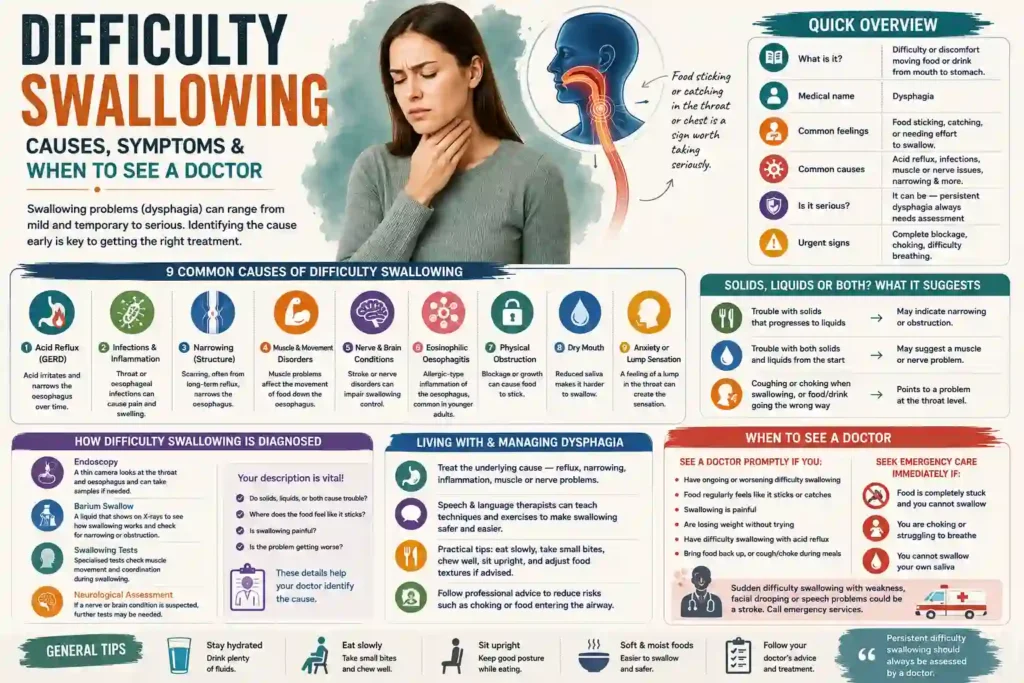
Quick Overview
| Question | Short answer |
|---|---|
| What is it? | Difficulty or discomfort moving food or drink from mouth to stomach |
| Medical name | Dysphagia |
| Common feelings | Food sticking, catching, or needing effort to swallow |
| Common causes | Acid reflux, infections, muscle or nerve issues, narrowing |
| Is it serious? | It can be — persistent dysphagia always needs assessment |
| Urgent signs | Complete blockage, choking, difficulty breathing |
| Key message | Ongoing difficulty swallowing should always be checked |
What Is Dysphagia?
Dysphagia is the medical term for difficulty swallowing. Swallowing is a surprisingly complex process involving the coordinated action of many muscles and nerves, moving food and drink from the mouth, through the throat, down the oesophagus, and into the stomach. A problem at any point along this journey can cause difficulty.
Doctors often distinguish between difficulty at the top — trouble getting the swallow started, sometimes with coughing or choking, which points to the throat and its muscles or nerves — and difficulty lower down, a sensation of food sticking in the chest after swallowing, which points to the oesophagus. This distinction helps identify where the problem lies. Some people also experience painful swallowing, called odynophagia, which can occur with or without difficulty.
Because swallowing is so essential, and because persistent dysphagia can sometimes signal a condition needing treatment, it is a symptom that should always be assessed rather than ignored. Some causes are minor and temporary; others need timely attention, and only proper evaluation can tell them apart.
9 Common Causes of Difficulty Swallowing
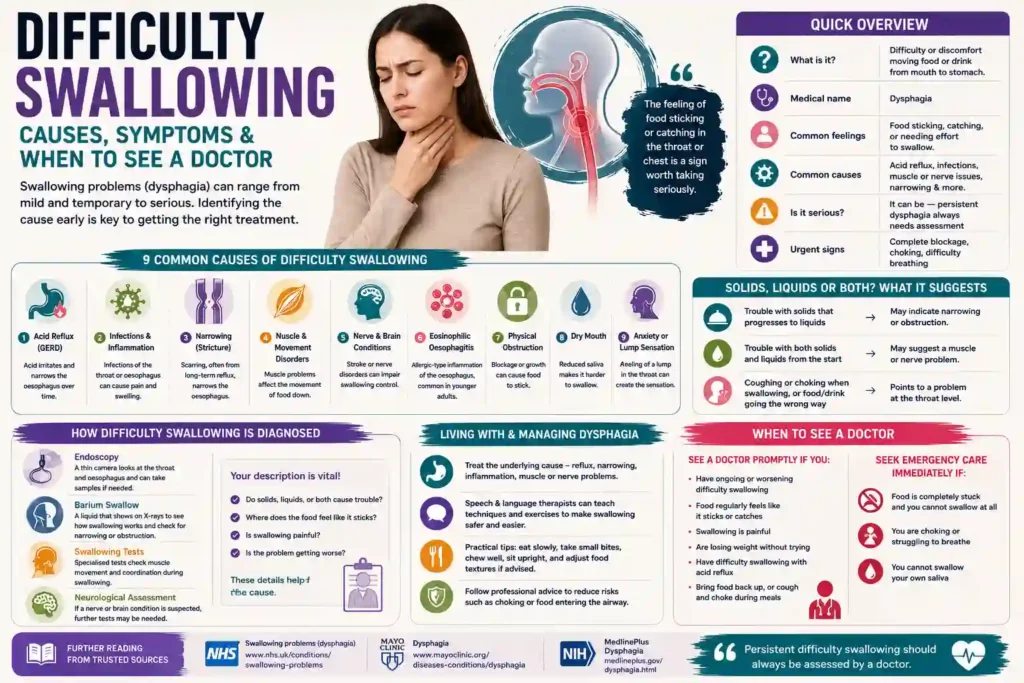
1. Acid reflux (GERD). Long-standing acid reflux is a common cause. Over time, acid can inflame and, in some cases, narrow the oesophagus, making swallowing difficult. Reflux-related swallowing problems are one reason persistent reflux should be managed — see our guide on GERD symptoms.
2. Infections and inflammation. Infections of the throat or oesophagus, and inflammation from various causes, can make swallowing painful or difficult, usually temporarily. A severe sore throat, for instance, can make swallowing uncomfortable.
3. A narrowing of the oesophagus (stricture). Scarring, often from long-term acid reflux, can narrow the oesophagus, causing food to feel like it sticks. This tends to affect solid foods more than liquids at first.
4. Muscle and movement disorders. Conditions affecting the muscles that move food down the oesophagus can disrupt the coordinated waves of contraction needed for swallowing, causing food to move poorly.
5. Nerve and brain conditions. Because swallowing relies on nerve control, conditions affecting the nervous system — such as a stroke or certain neurological disorders — can impair swallowing, sometimes with coughing or choking during meals.
6. Eosinophilic oesophagitis. An allergic-type inflammation of the oesophagus, increasingly recognised, that can cause food to stick, particularly in younger adults, and is often linked with other allergic conditions.
7. A physical obstruction. Something partially blocking the passage, including in some cases a growth, can cause difficulty swallowing. This possibility is exactly why persistent or worsening dysphagia always needs assessment.
8. Dry mouth. Reduced saliva, whether from medications, certain conditions, or dehydration, can make swallowing harder simply because food is not adequately moistened.
9. Anxiety and the sensation of a lump. A feeling of a lump in the throat, sometimes linked to anxiety or reflux, can create a sensation of difficulty, though true dysphagia — food genuinely sticking — should always be distinguished from this and assessed.
Solids, Liquids, or Both? What It Suggests
A useful clue lies in whether you struggle with solids, liquids, or both:
- Trouble with solids that progresses to liquids often points towards a narrowing or obstruction of the oesophagus, which should be assessed promptly
- Trouble with both solids and liquids from the start more often suggests a problem with the muscles or nerves controlling swallowing
- Coughing or choking when trying to swallow, or food or drink “going the wrong way,” points towards a problem at the throat level and needs assessment
These patterns help a doctor work out where the problem lies, so noting your own experience is genuinely useful information to bring to an appointment.
How Difficulty Swallowing Is Diagnosed
Because dysphagia has so many possible causes, a doctor uses your description of the problem alongside tests to identify what is going on. Your account of the symptom is genuinely valuable here — whether solids or liquids are affected, whether food sticks high in the throat or lower in the chest, whether swallowing is painful, and whether the problem is getting worse all help point towards the cause.
Depending on what is suspected, a doctor may recommend investigations such as an endoscopy, where a thin flexible camera is passed down to look directly at the throat and oesophagus and take samples if needed; a barium swallow, where you swallow a liquid that shows up on X-rays to reveal how swallowing is working and whether there is any narrowing; or specialised tests of the swallowing muscles and their coordination. Where a nerve or brain cause is suspected, further neurological assessment may be involved.
This range of tests reflects why persistent difficulty swallowing warrants medical evaluation rather than guesswork — the cause could lie in the structure of the oesophagus, the muscles and nerves that control swallowing, inflammation, or an obstruction, and each is investigated and treated differently. Getting the right diagnosis is what leads to the right treatment, and for a symptom this important, that is well worth doing properly.
Living With and Managing Swallowing Difficulties
The right treatment for dysphagia depends entirely on its cause, which is why diagnosis comes first. That said, understanding the general approaches can be reassuring.
When reflux is behind the problem, managing the reflux — through lifestyle changes and appropriate treatment — often improves swallowing over time. A narrowing of the oesophagus can sometimes be treated with procedures that widen it. Muscle and nerve-related swallowing problems may be helped by working with a speech and language therapist, who specialises in swallowing and can teach techniques and exercises to make eating safer and easier. Where an underlying condition like a neurological disorder is involved, treating that condition is part of managing the swallowing difficulty.
For anyone with ongoing swallowing difficulties, practical measures can help day to day: eating slowly, taking smaller bites, chewing thoroughly, sitting upright while eating, and adjusting food textures where advised. However, these should be guided by a professional, because the safest approach depends on the specific cause — and some swallowing problems carry a risk of food or drink going into the airway, which needs proper management. This is another reason why professional assessment, rather than self-management alone, is so important for persistent dysphagia. The right support can make eating safer, more comfortable, and more enjoyable again.
Who Is More Likely to Experience Dysphagia
While difficulty swallowing can affect anyone, some groups are more prone to it, and recognising this helps put the symptom in context.
Older adults experience swallowing difficulties more commonly, partly through natural changes in the swallowing muscles with age and partly because conditions that affect swallowing become more common later in life. This is one reason new swallowing difficulty in an older person should always be assessed rather than dismissed as simply ageing. People with a history of long-standing acid reflux are at higher risk of reflux-related narrowing of the oesophagus, which is another reason persistent reflux is worth managing well.
Those with neurological conditions, or who have had a stroke, may experience swallowing difficulties as part of the effect on nerve and muscle control. People with certain allergic conditions may be more prone to eosinophilic oesophagitis. And anyone with a very dry mouth — whether from medications, dehydration, or certain conditions — may find swallowing harder simply through lack of saliva. Recognising whether you fall into one of these groups does not diagnose the cause, but it can help you and your doctor consider the most likely explanations. Regardless of risk group, though, the guiding principle is the same: persistent or worsening difficulty swallowing is a symptom to have checked.
When to See a Doctor
Persistent difficulty swallowing should always be assessed by a doctor. Unlike some symptoms that can be safely watched at home, dysphagia is one where getting it checked is the right default. See a doctor promptly if:
- You have ongoing or worsening difficulty swallowing
- Food regularly feels like it sticks or catches
- Swallowing is painful
- You are losing weight without trying
- You have difficulty swallowing alongside acid reflux symptoms
- You are bringing food back up, or coughing and choking during meals
Seek emergency care immediately if:
- Food is completely stuck and you cannot swallow at all
- You are choking or struggling to breathe
- You cannot swallow your own saliva
These are emergencies. And if difficulty swallowing comes on suddenly alongside weakness, facial drooping, or difficulty speaking, this could indicate a stroke — call emergency services immediately. The NHS guidance on swallowing problems explains when and how it is assessed.
Final Thoughts
Difficulty swallowing is a symptom that stands apart, because unlike many everyday complaints, it is one where the right response is almost always to get it checked rather than wait and see. The causes range widely — from treatable acid reflux and temporary infections to muscle, nerve, and structural problems — and while many are manageable, some need timely attention. Only proper assessment can tell them apart, which is exactly why persistent dysphagia should never be ignored or pushed through.
The reassuring side is that many causes of difficulty swallowing are treatable once identified, and even the more serious ones benefit greatly from being caught early. If you are noticing that food sticks or catches, that swallowing takes effort or hurts, or that the problem is getting worse, take it as your body asking for attention. Note whether solids, liquids, or both are affected, and see a doctor — and treat complete blockage, choking, or breathing difficulty as the emergency it is. This is one symptom where prompt action is genuinely the wise choice.
Medical disclaimer: This article is for general educational information and is not a substitute for professional medical advice, diagnosis, or treatment. Persistent difficulty swallowing should always be assessed by a doctor, and complete blockage, choking, or difficulty breathing requires emergency care.
Frequently Asked Questions
What causes difficulty swallowing? Common causes include acid reflux (GERD), infections and inflammation of the throat or oesophagus, a narrowing of the oesophagus, muscle and nerve disorders, eosinophilic oesophagitis, dry mouth, and physical obstructions. Because causes vary widely, persistent difficulty swallowing should always be assessed.
Is difficulty swallowing serious? It can be, which is why it should always be checked. Some causes are minor and temporary, but others need timely treatment, and only proper assessment can tell them apart. Persistent or worsening dysphagia, in particular, should never be ignored.
What does it mean when food gets stuck in my throat or chest? A sensation of food sticking after swallowing often points to a problem in the oesophagus, such as a narrowing or a movement disorder. If this happens regularly or is worsening, it needs prompt medical assessment to identify the cause.
Can acid reflux cause difficulty swallowing? Yes. Long-standing acid reflux can inflame and, over time, narrow the oesophagus, making food feel like it sticks. Difficulty swallowing is one of the warning signs that reflux needs proper assessment rather than ongoing self-treatment.
When is difficulty swallowing an emergency? Seek emergency care if food is completely stuck and you cannot swallow at all, if you are choking or struggling to breathe, or if you cannot swallow your own saliva. Sudden difficulty swallowing with weakness, facial drooping, or slurred speech could signal a stroke and needs immediate help.
Can anxiety cause a feeling of difficulty swallowing? Anxiety can cause a sensation of a lump in the throat, which may feel like difficulty. However, this should always be distinguished from true dysphagia, where food genuinely sticks or catches. Because the causes overlap, persistent symptoms should still be assessed by a doctor.
Should I see a doctor for difficulty swallowing? Yes. Persistent difficulty swallowing is a symptom that should always be assessed, rather than watched at home. See a doctor promptly if food regularly sticks, swallowing is painful, you are losing weight, or the problem is worsening, and treat complete blockage or choking as an emergency.
Does difficulty swallowing get better on its own? It depends entirely on the cause. Difficulty from a temporary infection or a severe sore throat often settles as that resolves. But persistent or worsening dysphagia usually reflects an ongoing cause that needs identifying and treating, which is why it should be assessed rather than assumed it will pass.
Can dry mouth make swallowing difficult? Yes. Saliva moistens food and helps it move smoothly, so a dry mouth — whether from medications, dehydration, or certain conditions — can make swallowing harder. Staying hydrated helps, but if dry mouth is persistent or linked to a medication, it is worth discussing with a doctor.
What is the difference between difficulty swallowing and painful swallowing? Difficulty swallowing (dysphagia) means food or drink is hard to move from the mouth to the stomach — it may stick, catch, or take effort. Painful swallowing (odynophagia) means swallowing hurts, often from infection or inflammation. The two can occur together or separately, and both are worth mentioning to a doctor.